
Signs You Lost Your Disability Hearing: What Matters
A stern judge, difficult questions, missing records or a VE naming jobs are not verdicts. See which evidence problems matter and when the written decision controls.
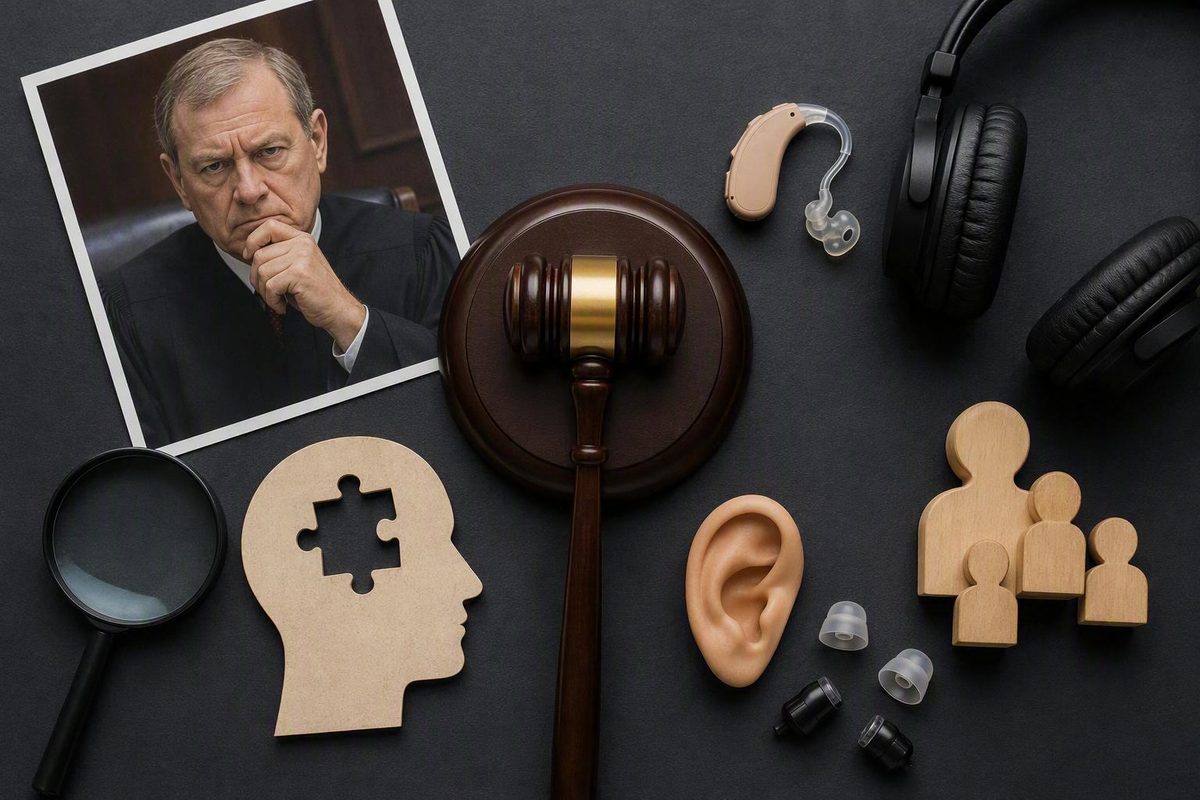
There is usually no definite hearing-room sign that you lost your Social Security disability hearing. A stern judge, difficult questions, missing records, or a vocational expert naming jobs may identify issues in the case, but none is a verdict. The dependable answer ordinarily arrives in the administrative law judge’s written decision.
The short answer: you usually cannot know until the written decision
After the hearing, the administrative law judge (ALJ) considers the testimony and evidence in the record and ordinarily issues a written decision explaining the outcome. The hearing office mails that decision to you and your representative, if you have one. An ALJ may occasionally announce a favorable bench decision at the hearing, but that is not how most claimants learn the result, as this overview of post-hearing outcomes explains.
This article concerns Social Security disability hearings before an ALJ. It does not address Department of Veterans Affairs disability claims, VA ratings, or compensation and pension (C&P) examinations.
Do not abandon the pending claim, give up possible review rights, or assume you must start over with a new application merely because the hearing felt difficult. Wait for the written decision, read the reasons given, and then determine the appropriate response.
Possible case weaknesses versus commonly misread signals
The most useful distinction is between an actual weakness in the evidence and an emotionally alarming event at the hearing. A weakness may affect how the ALJ evaluates the claim. An uncomfortable question or procedural development may simply reflect an effort to complete or clarify the record.
| Potential evidentiary concern | Not proof of denial |
|---|---|
| Medical evidence does not support the claimed work-related limitations | The judge uses a stern or skeptical tone |
| Testimony materially conflicts with earlier forms, treatment notes, activities, onset dates, or earnings records without explanation | The judge asks difficult or repeated follow-up questions |
| Work activity conflicts with the alleged limitations and lacks context | The hearing is unusually short or long |
| Important medical or vocational evidence is missing or was submitted late | The judge requests additional records or keeps the record open |
| Records do not explain treatment gaps, unsuccessful work, accommodations, or changes in symptoms | The judge orders post-hearing development or a supplemental hearing |
| Vocational evidence identifies jobs under limitations the ALJ ultimately accepts | A vocational expert names jobs in response to one hypothetical |
Hard questions may be intended to clarify dates, reconcile records, or understand how symptoms affect work. A request for additional records or another hearing may mean the file is incomplete—not that the ALJ has already decided against you. Vocational testimony is evidence for the judge to assess, not the decision itself.
Some commercial law-firm articles describe judicial skepticism or questioning style as a possible warning sign. Those are experience-based interpretations, not official Social Security predictors, and the same sources caution that such behavior does not guarantee denial. One such discussion of perceived hearing signals likewise emphasizes that the result generally cannot be known until it is issued.
Four evidence problems that may affect the decision
Unlike demeanor or hearing length, weak documentation of functional limitations, major unexplained inconsistencies, important missing evidence, and conflicting work activity can make a claim harder to approve. Their significance depends on the complete record and any credible explanation, according to this overview of possible evidentiary problems.
1. Weak support for work-related limitations
A diagnosis identifies a medical condition, but it does not by itself establish an inability to perform sustained work. The record must address what the condition does to the claimant’s functioning.
Depending on the claim, relevant limitations may involve:
- Maintaining attendance and arriving on time
- Sustaining concentration, pace, or persistence
- Remembering and carrying out instructions
- Interacting with supervisors, coworkers, or the public
- Lifting, carrying, reaching, or using the hands
- Sitting, standing, or walking for meaningful periods
- Needing extra breaks, position changes, or time away from the workstation
- Managing medication effects during a normal work schedule
For example, records may confirm migraines but say little about their frequency, duration, recovery time, or effect on attendance. That gap can matter because the work-related consequences—not merely the diagnostic label—are central to the disability analysis.
2. Material inconsistencies without context
An ALJ may compare hearing testimony with earlier disability forms, treatment notes, daily activities, onset dates, earnings records, and prior statements. A minor difference is not necessarily important. Symptoms may fluctuate, a question may have been understood differently, and a person may complete an activity slowly, with help, or only occasionally.
More consequential conflicts need an honest explanation. If a form says you prepare meals but your testimony says you cannot cook, explain whether “preparing meals” meant reheating food, whether someone helped or supervised you, how long the task took, and how often you could do it.
Do not change an answer merely to make it sound more favorable. Likewise, do not exaggerate a limitation to eliminate an apparent conflict. Accurate context is more useful than an absolute statement that the broader record may contradict.
3. Treatment gaps or unaddressed recommendations
A long gap in care or failure to follow a treatment recommendation may prompt questions about symptom severity, but the circumstances can matter.
Useful documentation might include:
- Insurance termination notices
- Pharmacy records
- Messages seeking lower-cost treatment
- Missed-appointment notes
- Transportation records
- Documentation of medication reactions
The goal is not to create an excuse after the fact. It is to ensure that the record accurately explains why treatment stopped, changed, or became unavailable.
4. Work after the alleged onset date without enough detail
Working after the date you say your disability began is not automatically disqualifying. Relevant context may include earnings, actual duties, productivity, attendance, extra breaks, assistance from coworkers, reduced expectations, accommodations, how long the work lasted, and why it ended.
Suppose you held a short job after the alleged onset date, performed reduced duties, missed work frequently, and stopped when your symptoms worsened. Describe:
- The exact start and end dates
- Your assigned duties and what you actually completed
- Any reduced duties or productivity expectations
- Help received from supervisors or coworkers
- Extra breaks and attendance problems
- Any documented accommodation
- The symptoms that worsened
- Who ended the work and why
That account is more useful than omitting the job or simply saying it “did not work out.” It allows the ALJ to evaluate the work under its actual conditions.
Why a vocational expert naming jobs does not automatically mean denial
A vocational expert (VE) supplies work-related evidence. The expert does not approve or deny the disability claim.
An ALJ may ask the VE several hypothetical questions, each containing a different combination of work-related limitations. Consider this simplified exchange:
- First hypothetical: The person can perform certain physical and mental tasks, maintain regular attendance, and use ordinary scheduled breaks. The VE identifies several jobs.
- Second hypothetical: The same person would also be absent frequently or need unpredictable, unscheduled breaks. The VE says no jobs would be available.
Both answers are conditional. The first does not automatically establish denial, and the second does not require approval. The outcome depends on which limitations the ALJ finds supported by the medical evidence, other records, and testimony.
The written decision explains the result and its reasons. Until it arrives, hearing the VE name jobs tells you only that the expert identified work under one particular set of assumed limitations.
Missing evidence, an open record, and procedural dismissal are different issues
For a disability hearing, written evidence generally must be submitted—or Social Security must be informed about it—no later than five business days before the hearing. Failure to comply may result in the ALJ declining to consider the evidence, according to Social Security’s evidence-submission guidance.
Applicable exceptions may affect whether late evidence can still be considered, so a missed submission deadline does not by itself prove that the claim will be denied. Do not assume that late evidence is either automatically accepted or automatically excluded.
The ALJ may request updated records, leave the record open, send post-hearing questions, obtain further evidence, or schedule a supplemental hearing. These actions may show that the file needs more development. They do not establish that the judge has reached an unfavorable conclusion.
A procedural dismissal is different from an unfavorable decision on the merits:
- An unfavorable decision means the ALJ considered the disability claim and ruled against it.
- A dismissal may result from a procedural problem, such as missing a hearing or filing deadline without good cause. It can end the pending proceeding without determining whether the claimant is disabled. Social Security’s hearing-process guidance warns that dismissal may also affect access to further review.
Respond promptly to every hearing-office request. Keep copies of records, cover letters, fax receipts, upload confirmations, postal tracking, and notes showing when you called and whom you spoke with. If you have a representative, confirm who is responsible for obtaining and submitting each outstanding item.
What to do while waiting—and after an unfavorable decision
You cannot control how the ALJ interprets every part of the record, but you can prevent avoidable communication and deadline problems.
While waiting:
- Keep your mailing address, phone number, and email address current with the hearing office.
- Monitor postal mail and other messages closely.
- Respond promptly if the hearing office requests records, forms, or clarification.
- Preserve copies of evidence and proof that it was submitted.
- Discuss unresolved records, late evidence, or post-hearing requests with your representative.
- Check the status of your hearing request through a personal my Social Security account, but do not treat an online status label as a substitute for the written decision.
The SSA hearing-process page explains both the online status option and the availability of Appeals Council review for a claimant who disagrees with an ALJ decision.
What comes next depends on the document you receive:
- Favorable or partially favorable decision: Read the entire decision and follow its written instructions. If it is only partially favorable, determine precisely what the ALJ granted and what remains disputed.
- Unfavorable decision: Read the ALJ’s findings and reasons, then promptly assess whether to request Appeals Council review.
- Procedural dismissal: Obtain case-specific guidance quickly because the appropriate response may depend on why the proceeding was dismissed.
A request for Appeals Council review generally must be filed within 60 calendar days after receipt of the ALJ’s decision. Social Security ordinarily presumes that the decision was received five days after the date on the notice unless later receipt can be established. Because deadline calculations and possible exceptions are case-specific, do not wait until the end of the period. These timing rules and the risks of substituting a new application for review are summarized in this post-hearing guidance.
When the notice arrives:
- Note the date printed on the notice and the date you actually received it.
- Preserve the envelope.
- Read the findings and reasons rather than relying only on the outcome heading.
- Identify possible factual errors, omitted evidence, unsupported findings, or legal issues.
- Contact your representative or seek qualified Social Security disability guidance promptly.
- Follow the filing instructions in the notice and retain proof of filing.
Do not assume that filing a new application is an adequate substitute for seeking review. A new claim may address a different period and may not preserve the filing date, possible benefits, or review rights associated with the existing claim. Obtain individualized advice before choosing between review, a new application, or another response.
This article provides general information, not individualized legal advice. Social Security deadlines and review strategy may depend on the facts and procedural history of a particular case.
Can an ALJ announce the disability decision at the hearing?
Yes. An ALJ may occasionally announce a favorable bench decision at the hearing, but that is not the usual way claimants learn the result. In most cases, the ALJ issues a written decision explaining the outcome, and the hearing office mails it to the claimant and any representative.
Unless the judge clearly announces a decision, do not infer one from the judge’s tone, the length of the hearing, or the vocational expert’s testimony.
How can I check my Social Security hearing status while I wait?
You can check the status of your hearing request through a personal my Social Security account. Keep your contact information current with the hearing office and continue watching for mailed notices because the online status is not the written decision.
A difficult hearing may expose questions about the evidence, but it is not the decision. Wait for and carefully review the written ruling, preserve your records, keep your contact details current, and act promptly on any review deadline instead of abandoning the claim based on perceived signals.