
What Is the VA Disability Rating for Tinnitus?
Sources report one 10% schedular evaluation for recurrent tinnitus. Entitlement requires evidence linking it to service or another service-connected disability.
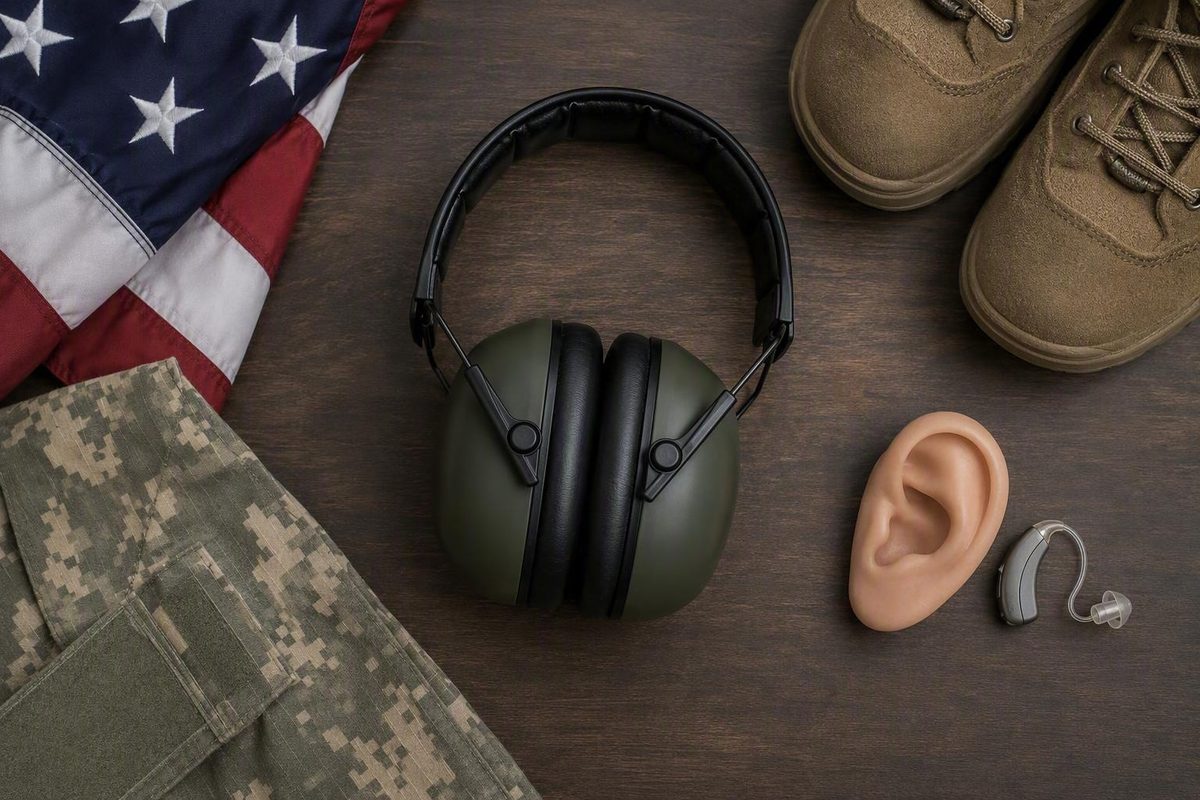
The short answer: one 10% schedular evaluation for recurrent tinnitus
Source-based answer: The supplied third-party veterans-benefits sources consistently describe recurrent, service-connected tinnitus as receiving one 10% schedular evaluation under 38 C.F.R. § 4.87, Diagnostic Code 6260. They report that the single evaluation applies whether tinnitus is perceived in one ear, both ears, or inside the head—not 10% for each ear. CCK Law summarizes the reported one-rating rule under Diagnostic Code 6260.
Under that reported framework, bilateral tinnitus does not produce two separate 10% evaluations. Constant, louder, or more disruptive tinnitus also does not create a 20% or 30% schedular level. The schedule described by the sources treats recurrent tinnitus as one disability rather than grading it according to loudness, frequency, functional disruption, or the number of affected ears.
That can feel disconnected from daily experience. One veteran may notice intermittent buzzing mainly in quiet rooms, while another may experience intrusive ringing that affects sleep, concentration, communication, or work. Those functional experiences can be very different even though the ordinary schedular percentage reported for tinnitus remains the same.
Symptom details still matter. They can help establish that tinnitus is recurrent, clarify when it began, support treatment decisions, document occupational effects, and distinguish tinnitus from another diagnosed condition. What they ordinarily do not do is create a higher schedular tinnitus percentage.
Tinnitus is the perception of ringing, buzzing, hissing, clicking, humming, whistling, or a similar sound without a corresponding external source. Most claims involve subjective tinnitus, meaning only the affected person perceives it.
The central distinction is between eligibility and evaluation:
- Service connection asks whether tinnitus is legally connected to military service or to another service-connected disability.
- The disability evaluation asks what percentage applies after service connection is established.
- Compensation depends on the resulting evaluation and the veteran’s broader service-connected disability picture.
A veteran can experience genuine recurrent tinnitus yet be denied compensation if the evidence does not establish the necessary connection to service. Conversely, once recurrent tinnitus is service connected under the framework described by the sources, proving that it has become louder or more constant generally does not create a higher schedular tinnitus evaluation.
Primary-authority limitation — August 11, 2026: The evidence supplied for this article does not contain a publication-date excerpt from the official Electronic Code of Federal Regulations. Accordingly, this article reports what the cited third-party sources say about Diagnostic Code 6260 rather than independently representing that description as a verified statement of current law. The current eCFR should be checked before publication or reliance.
Why proving service connection matters more than proving that symptoms are severe
Because the ordinary tinnitus percentage is described as fixed, the decisive issue in many claims is whether tinnitus should be service connected at all.
Direct service connection is commonly organized around three questions:
- Does the veteran currently experience recurrent tinnitus?
- Was there a relevant event, injury, illness, or exposure during military service?
- Does the evidence connect the current tinnitus to that in-service occurrence?
Avard Law describes these three general elements and reports that the absence of an in-service complaint does not automatically defeat a claim, although the consistency and credibility of the veteran’s history may still be evaluated. Its tinnitus overview also discusses lay evidence and common military exposures.
Relevant military noise can include weapons fire, artillery, explosions, aircraft, flight-line work, jet or vehicle engines, engine rooms, heavy equipment, and industrial machinery. Personnel records, assignment histories, deployment documents, or military occupational information can help establish that a veteran worked in such an environment.
Exposure alone, however, does not necessarily establish causation. A file may show years of artillery work but leave unanswered when the tinnitus began, whether it continued or recurred after separation, and whether later occupational or recreational noise provides another possible explanation.
An in-service diagnosis or complaint can be valuable, but the cited sources do not describe it as the only possible route to service connection. Some service members may have regarded temporary ringing after weapons fire as ordinary, lacked access to care, or focused on more immediate medical concerns.
Silence in the service treatment records should not simply be ignored. A detailed explanation of the timeline is more useful than a bare statement that military noise occurred. The veteran should explain when the sound was first noticed, what was happening at the time, whether it returned, and why the reported timeline is reliable.
The symptom itself does not establish its cause. VA may consider the complete history, including:
- Military duties and likely exposure
- Hearing tests and service treatment records
- Blast, head-injury, or ear-injury history
- The reported onset and course of symptoms
- Medical findings
- Civilian occupational noise
- Recreational exposure involving firearms, machinery, or loud music
- Other possible medical explanations
Secondary service connection is an alternative theory. A veteran may contend that tinnitus was caused or aggravated by another service-connected disability. A veteran may also claim that a distinct diagnosed disability was caused or aggravated by service-connected tinnitus.
Either direction requires evidence specific to the individual claim. A general statement that two conditions can occur together does not establish that one caused or aggravated the other in a particular veteran.
The supplied sources conflict over whether tinnitus may qualify under a one-year presumption after separation, and the evidence pack contains no controlling primary authority resolving that disagreement. Tinnitus therefore should not be described here as categorically presumptive or categorically non-presumptive.
A practical evidence checklist for a tinnitus claim
A useful tinnitus file does more than collect records. It organizes the evidence around four questions: what the veteran experiences, what happened during service, what occurred after separation, and why the current tinnitus is connected to service.
1. Current symptoms
Describe the tinnitus in specific, ordinary language:
- What does the sound resemble—ringing, buzzing, hissing, humming, clicking, or something else?
- Is it perceived in the right ear, left ear, both ears, or inside the head?
- Does it recur?
- Approximately how often does it occur?
- When was it first noticed?
- Has its pattern changed?
- Does it affect sleep, concentration, communication, or other activities?
- Has it been discussed with an audiologist, physician, or other clinician?
These details help establish the identity, recurrence, and history of the condition. They should not be exaggerated in pursuit of a higher tinnitus percentage, because the sources do not describe greater severity as creating another schedular level.
2. In-service event or exposure
Potentially useful evidence includes:
- Service treatment records
- Personnel and assignment records
- Military occupational information
- Deployment records
- Unit histories
- Entrance, periodic, and separation hearing tests
- Records of blast, head, or ear injuries
- Documentation of work around weapons, artillery, aircraft, engines, vehicles, heavy equipment, or industrial machinery
- Statements from people who served with the claimant
No single record must necessarily tell the whole story. Personnel documents may establish the duty environment, while the veteran’s statement explains the particular exposure and when the ringing began.
Hearing protection should be discussed accurately. The fact that protection was issued does not prove it was available, properly fitted, or practical during every event. But a claimant should not deny using protection when it was used. Precision is more credible than trying to shape the history around an assumed formula for approval.
3. Continuity after service
Continuity evidence helps explain what happened between military service and the current claim. It may include:
- A detailed first-person statement
- Medical records mentioning tinnitus
- Earlier benefit applications or hearing questionnaires
- Statements from a spouse, relative, friend, coworker, or fellow service member
- Employment records showing later noise exposure—or the absence of it
- Records reflecting hearing complaints or evaluations over time
A witness does not need to hear the tinnitus. With subjective tinnitus, a witness may instead describe observable facts: when the veteran began reporting ringing, whether the veteran regularly used background sound, or whether hearing-related difficulties were noticed after deployment.
Witnesses should describe what they personally observed rather than offer unsupported medical conclusions. “She began telling me about ringing after returning from deployment” is different from “Her deployment medically caused tinnitus.”
4. Evidence connecting tinnitus to service
The connection may be addressed through the record as a whole, including the veteran’s account, service documents, medical records, and a qualified medical opinion when needed.
A medical opinion may be especially useful when:
- The onset date is disputed
- Service records contain no tinnitus complaint
- Significant post-service noise is documented
- There are plausible alternative causes
- A secondary causation or aggravation theory is being pursued
- A prior opinion relied on an inaccurate factual history
That does not mean every veteran must buy a private nexus letter. The sources disagree about whether formal medical documentation is necessary in every tinnitus claim, and the answer may depend on the facts being disputed.
A practical outline for a personal statement
A clear statement can address:
- When symptoms first appeared. Give an approximate date or period and explain why it is remembered.
- What was happening. Identify the deployment, duty, training exercise, blast, accident, weapon system, aircraft, engine, or work environment.
- Hearing protection. Explain what was available, what was used, and any circumstances in which it was ineffective or impractical.
- What happened afterward. State whether the sound continued, subsided and returned, or gradually became more noticeable.
- Post-service exposure. Describe civilian employment, firearms use, machinery, concerts, or other relevant noise honestly.
- Why the timeline is reliable. Connect the memory to an assignment, deployment, injury, major event, or contemporaneous conversation.
- Current pattern. Describe how the tinnitus recurs and what functional effects it has now.
Subjective tinnitus may not be confirmed through an objective test, so a competent and consistent account can be important. VA Claims Academy distinguishes internally perceived subjective tinnitus from some objective sounds that may be audible to a clinician. Its filing guide discusses that medical distinction.
A personal statement does not automatically establish medical causation or guarantee service connection. Its value depends on its detail, consistency, plausibility, and relationship to the rest of the record.
Diagnosis and the tinnitus C&P examination
Subjective and objective tinnitus should not be treated as interchangeable.
Subjective tinnitus is perceived only by the affected person. Its existence, recurrence, and history are therefore often known primarily through the veteran’s report and the resulting clinical record.
Objective tinnitus involves an internally generated sound that may be audible to an examiner or associated with an identifiable underlying process. That distinction may affect the medical investigation and the rating approach described by the sources.
The supplied sources disagree over whether every claimant must have a formal diagnosis or undergo a Compensation and Pension examination. The more careful conclusion is that medical documentation can be useful without declaring it universally mandatory.
Stone Rose Law reports that VA may schedule a C&P examination but that a sufficiently supported claim may sometimes be decided without one. Its tinnitus guide discusses both examinations and supporting evidence.
If an examination is scheduled, the discussion may include:
- The sound the veteran perceives
- When it began
- Whether and how often it recurs
- Where the sound is perceived
- Military duties and noise exposure
- Blast, head-injury, or ear-injury history
- Hearing history
- Civilian occupational and recreational noise
- Relevant medical conditions or medications
- Functional effects
The best preparation is accuracy, not coaching. Review the timeline and important records beforehand so duties and dates can be described consistently. At the examination, use plain language and do not exaggerate or minimize the symptoms.
If the exact onset date cannot honestly be recalled, the veteran can explain the approximate period and the basis for the memory—for example, that the ringing began during a particular deployment or after a specific training event. That is more useful than manufacturing an exact date.
A normal audiogram does not directly measure whether a person perceives subjective ringing. Tinnitus and hearing loss involve different questions: tinnitus concerns perceived sound, while hearing loss concerns reduced hearing ability. Wingman Med reported as of February 15, 2026, that the tinnitus framework it reviewed did not require documented hearing loss and could apply despite a normal audiogram. Its dated analysis distinguishes Diagnostic Code 6260 from the hearing-loss criteria.
Hearing tests are still relevant. Audiometric results can document the broader hearing history, identify a separate hearing-loss condition, and help a clinician evaluate possible explanations. They simply do not reproduce or directly detect the subjective sound.
After an unfavorable examination, compare the report carefully with the evidence:
- Did the examiner use the correct military occupational history?
- Did the report overlook weapons, blast, aircraft, or engine exposure?
- Did it state that symptoms began after service when the veteran reported in-service onset?
- Did it overlook a spouse’s or fellow service member’s statement?
- Did it treat a normal separation audiogram as the entire analysis?
- Did it accurately address post-service noise?
- Did it answer the claimed theory, including aggravation if that theory was raised?
Disagreement with the result is not enough by itself. Identify the factual error, omitted evidence, or reasoning problem. Depending on the record, corrective evidence could include missing service records, a clarifying statement, treatment records, witness evidence, or a qualified medical opinion addressing the earlier rationale.
Exact examination procedures can change, and the evidence pack does not contain a current official VA examination protocol. Appointment instructions and current official VA guidance should therefore control over any generalized checklist.
Tinnitus, hearing loss, and other separately evaluated conditions
The supplied sources do not describe hearing loss as a prerequisite for the ordinary tinnitus evaluation. A veteran may report recurrent tinnitus despite a normal or near-normal audiogram, while another veteran may have measurable hearing loss without tinnitus.
The conditions involve different medical and rating questions:
- Tinnitus concerns perceived sound without a corresponding external source.
- Hearing loss concerns reduced ability to detect sounds or understand speech.
Hearing loss is described as being evaluated through audiometric criteria, including pure-tone thresholds and controlled speech-discrimination results, rather than through the single-percentage framework reported for tinnitus. Veterans Benefits Law Group summarizes the separate hearing-loss testing approach.
When tinnitus and hearing loss are independently diagnosed and service connected, the sources report that they may potentially receive separate evaluations. A tinnitus award does not automatically establish hearing loss, and a hearing-loss award does not automatically establish tinnitus. Each condition must satisfy the applicable service-connection and evaluation requirements.
The same caution applies to other ear, balance, neurologic, mental-health, sleep, or headache disorders. Separate consideration generally requires:
- A distinct diagnosed disability
- Evidence supporting direct service connection, secondary causation, or secondary aggravation
- Distinct manifestations that are not being compensated twice
Association is not causation. The fact that two conditions sometimes occur together does not establish that tinnitus caused or worsened another diagnosis in a particular veteran.
The sources also describe a general anti-duplication principle: separate diagnostic labels do not justify separate compensation when both evaluations would pay for the same manifestation. Genuinely distinct manifestations may receive separate consideration only when the evidence and applicable criteria support doing so.
Objective tinnitus associated with an underlying disorder may be evaluated through that underlying cause rather than as ordinary recurrent subjective tinnitus. The Veterans Law Office discusses both that treatment and potentially separate ear-condition evaluations.
The practical lesson is not to claim every condition listed on a tinnitus webpage. Identify the actual diagnoses, determine which manifestations belong to each condition, and develop evidence for the relevant service-connection theory.
Monthly compensation, combined ratings, TDIU, and exceptional cases
Four concepts are frequently blurred together:
- Service connection: Recognition that a disability is related to service or to another service-connected disability.
- The tinnitus percentage: The single 10% schedular evaluation reported by the supplied sources.
- The combined disability rating: The result of combining tinnitus with other service-connected evaluations under VA’s combined-ratings method.
- Monthly compensation: Payment based on the resulting compensable evaluation and the official rate table applicable to the payment period.
Separate disability percentages are not simply added using ordinary arithmetic. Consequently, adding a 10% tinnitus evaluation to an existing disability picture does not necessarily increase the combined evaluation by 10 percentage points. Capovilla & Williams describes tinnitus and hearing loss as potentially separate evaluations that are then combined under VA’s formula. Its guide discusses the reported tinnitus rule and separate hearing-loss framework.
A tinnitus award therefore should not be advertised as guaranteeing a particular increase in an existing combined rating. The result depends on the other evaluations and the applicable combining and rounding rules.
The evidence pack contains two commercial sources reporting a particular 2026 payment amount for a 10% evaluation, but it does not contain the official VA compensation table needed to verify that figure or its effective period. The amount is therefore omitted here. Readers should use the official VA table applicable to the payment period rather than relying on an unverified commercial estimate.
Separately service-connected disabilities may increase the combined evaluation, but a diagnosis, symptom overlap, or general medical association does not itself produce a separate rating. Each claimed disability needs an adequate legal and evidentiary basis, and duplicate compensation must be avoided.
Total disability based on individual unemployability, commonly called TDIU, is not a 100% tinnitus rating. The sources describe it as a separate analysis of how the veteran’s complete service-connected disability picture affects the ability to maintain substantially gainful employment. They also report that tinnitus itself does not receive a 100% schedular evaluation under the ordinary framework.
Severe tinnitus does not automatically establish eligibility for TDIU. The analysis would need to address the relevant service-connected disabilities, occupational effects, work history, and applicable eligibility rules.
Extraschedular consideration is likewise separate from the ordinary tinnitus schedule. The cited sources present it as an unusual, evidence-dependent concept rather than a routine way to convert a 10% tinnitus evaluation into a higher percentage. Avard Law discusses both TDIU and extraschedular consideration as distinct from the ordinary tinnitus rating. Its analysis does not present either route as automatic.
In practical terms, higher overall compensation generally depends on the full service-connected disability picture, not on proving that ordinary tinnitus is louder or more intrusive.
Proposed changes to the tinnitus schedule: separate history from current policy
Several supplied sources discuss a proposal to delete Diagnostic Code 6260 and evaluate tinnitus through an underlying condition instead. They trace the proposal to rulemaking activity beginning in 2022.
A proposed rule and an effective final rule are not the same thing. The dated sources describe a proposal under which tinnitus would be treated as a symptom evaluated through another diagnostic code rather than as an independently compensable disability.
Evidence-status box — August 11, 2026
- Sources dated February and March 2026 reported that the proposed deletion of Diagnostic Code 6260 had not taken effect at those times.
- Those reports establish only what their publishers said on their stated dates.
- The evidence pack does not establish whether a final rule was issued after March 2026.
- It also does not establish an effective date, transition rules, or protections for existing evaluations.
- Current status must be checked in the eCFR, Federal Register, and relevant Regulations.gov docket before publication or reliance.
Capovilla & Williams reported in March 2026 that the proposed change had not taken effect as of that date and continued to describe recurrent tinnitus as receiving one 10% evaluation. Its dated discussion separates the reported rating framework from the proposal.
That historical reporting should not be converted into an unsupported statement that the proposal remained pending, was abandoned, or became final by August 11, 2026. Social-media posts and headlines are not enough to establish the operative regulatory text.
Veterans also should not assume that existing evaluations would necessarily be “grandfathered.” Any transition or protection would depend on the text and effective-date provisions of an adopted final rule and any other applicable protections.
Before accepting a claim that “VA eliminated tinnitus ratings,” ask:
- Was a final rule published?
- What is its effective date?
- What does the current eCFR say?
- Are there transition provisions?
- Which claims or existing evaluations are covered?
If those questions cannot be answered from current primary authority, the claim remains unverified.
What to review after a denial or an incorrect decision
A tinnitus dispute does not always concern the percentage. Common disputed issues include:
- Whether service connection was granted
- Whether the reported onset history was found credible
- Whether lay evidence was considered
- Whether an examination relied on accurate facts
- Whether an opinion adequately addressed military noise exposure
- Whether a secondary theory was considered
- Whether the effective date is correct
- Whether a separate condition was evaluated independently
A veteran who receives 10% may still have a legitimate dispute. The effective date could remain contested, or the decision may have failed to address separately claimed hearing loss or another distinct condition. Receiving the reported maximum tinnitus percentage does not resolve every issue in the claim.
Three commonly identified decision-review paths are:
- Higher-Level Review
- Supplemental Claim
- Board appeal
Hill & Ponton generally describes Higher-Level Review as review of the existing record and a Supplemental Claim as a route for submitting new and relevant evidence. It identifies a Board appeal as a separate review option. Its tinnitus discussion lists the three review paths.
A practical, non-case-specific framework is:
- Consider existing-record review when the alleged error and favorable evidence are already documented. Examples may include an examiner using the wrong military occupation or a decision overlooking a documented deployment.
- Consider a Supplemental Claim when material evidence is missing, such as a detailed onset statement, treatment record, service document, witness statement, or medical opinion addressing the stated reason for denial.
- Consider a Board appeal only after reviewing the available Board options and their evidentiary consequences.
- Seek accredited assistance when the record is complicated, multiple theories are involved, or the procedural choice is unclear.
Do not select a path solely because it sounds more forceful. The practical question is whether the asserted error can be evaluated from the existing record or whether additional evidence is needed.
The evidence pack does not provide sufficient current primary authority for filing deadlines, forms, continuous-pursuit consequences, or detailed evidence restrictions. Those matters should be verified through current official VA materials before action is taken. No review route should be assumed to guarantee another examination.
Individual Board of Veterans’ Appeals decisions may illustrate how a particular record was evaluated, but they are fact-specific. A favorable result for one veteran does not guarantee the same outcome where the duties, medical history, statements, or expert evidence differ.
Ultimately, the ordinary tinnitus percentage described by the supplied sources is straightforward: one 10% schedular evaluation. Entitlement is not automatic. The central work is usually building a consistent record of recurrent symptoms, military exposure, onset, continuity, and nexus while identifying any genuinely distinct condition that may warrant separate consideration.
Before acting, verify the current regulation, compensation table, rulemaking status, and review procedures through official VA and federal materials. Hear Review provides VA-rating material as general information rather than legal or medical advice; its terms direct readers to accredited Veterans Service Organizations and audiologists for professional help.
Can a veteran receive a separate 10% tinnitus rating for each ear?
Ordinarily, no under the framework consistently described by the supplied sources. They report that Diagnostic Code 6260 provides one 10% evaluation whether recurrent tinnitus is perceived in one ear, both ears, or inside the head. Bilateral tinnitus therefore does not produce two separate 10% evaluations. CCK Law summarizes the reported single-evaluation rule.
Can constant or severe tinnitus receive more than a 10% schedular rating?
Not under the ordinary schedular framework described by the sources. Constant, louder, or more disruptive recurrent tinnitus does not create a 20% or 30% schedular tinnitus level. Distinct disabilities, TDIU, and extraschedular consideration involve separate requirements and are not automatic increases for tinnitus itself. Werner, Hoffman, Greig describes 10% as the reported maximum ordinary rating, including for bilateral tinnitus.
Is hearing loss required to qualify for a tinnitus evaluation?
The supplied sources say no. Tinnitus and hearing loss are treated as distinct conditions evaluated under different criteria. A veteran may potentially establish service-connected tinnitus without a compensable hearing-loss evaluation, although the tinnitus claim still requires adequate evidence of service connection. Wingman Med’s February 2026 analysis states that hearing loss was not required under the framework it reviewed.
How much does a 10% tinnitus evaluation pay per month?
The evidence pack does not include an official VA compensation table verifying the amount applicable on the publication date. Because payment rates and effective periods can change, no dollar figure is stated here. Check the official VA disability compensation table for the payment period involved.
Did VA finalize the proposal to eliminate standalone tinnitus ratings?
The supplied evidence does not establish the proposal’s status as of August 11, 2026. Sources published in February and March 2026 reported that the proposed deletion of Diagnostic Code 6260 had not taken effect at those times, but those dated reports do not prove what happened later. Verify the current eCFR, Federal Register, and relevant Regulations.gov docket for a final rule, effective date, and any transition provisions before relying on a claim that standalone tinnitus evaluations were eliminated.