
Benefits of the Meritorious Service Medal: What It Means for VA Claims
The Meritorious Service Medal recognizes outstanding service. Learn its career value, VA benefit limits, and possible role in a hearing-related claim.
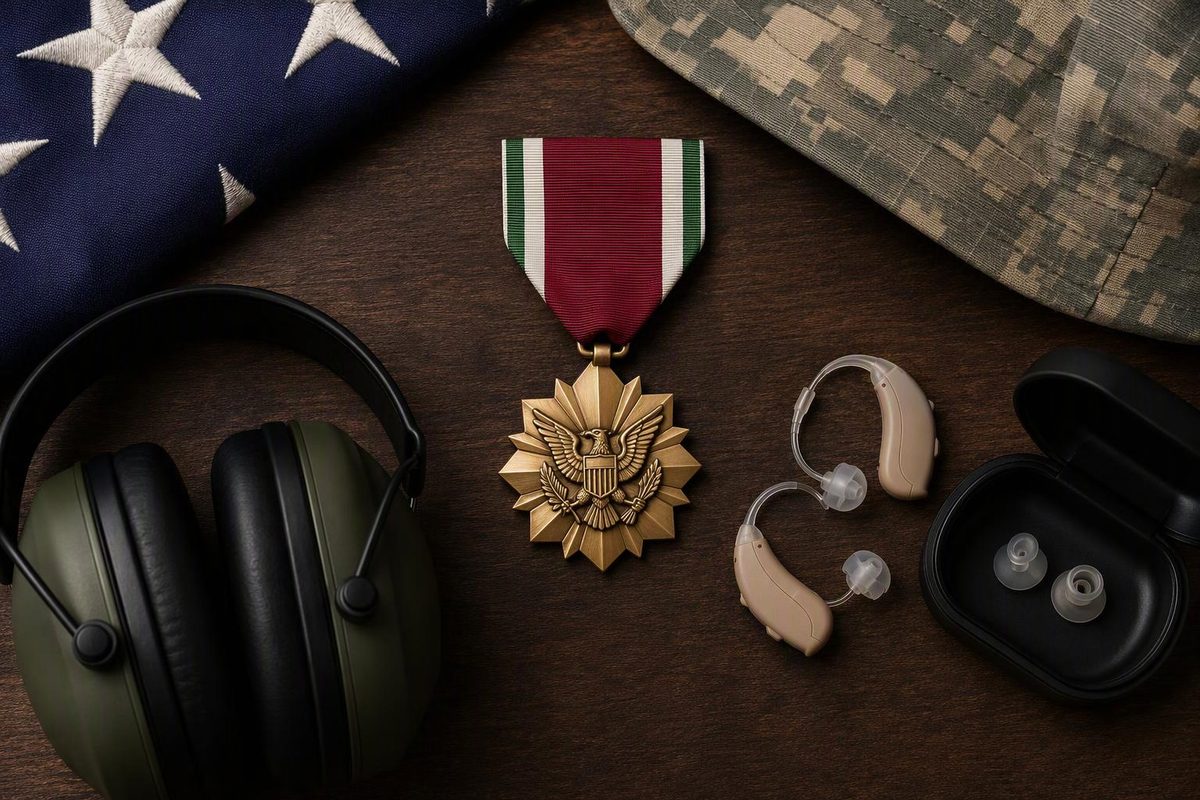
The U.S. Meritorious Service Medal (MSM) recognizes outstanding achievement or service; it does not automatically qualify you for VA disability payments or hearing care. Its practical value is recognition of your work, possible military promotion credit under applicable rules, and documentation of service circumstances when the award citation contains relevant details.
For veterans pursuing tinnitus or hearing-loss benefits, the distinction is important: the citation may help document what you did, but the medal itself does not establish a disability or its connection to service.
What the medal recognizes
The executive order establishing the MSM authorizes it for “outstanding meritorious achievement or service.” It is a military decoration, not a medical finding or a disability award. The Air Force describes its original purpose as recognition of meritorious noncombatant service. Receiving it alone therefore should not be treated as proof of combat exposure, injury, or hazardous noise. (National Archives executive order; Air Force award criteria)
Its clearest benefits are:
- Formal recognition: It records that your achievement or service met the award’s criteria.
- A way to explain accomplishments: On a résumé, use the award alongside specific, understandable achievements rather than assuming a civilian employer knows what “MSM” means. It is not a hiring guarantee.
- Possible military promotion credit: The Air Force’s MSM fact sheet lists a value of five points under its Weighted Airman Promotion System. That is a branch-specific promotion provision—not five federal hiring preference points or a VA rating. Confirm the rules for your branch, grade, and promotion cycle with your personnel office. (Air Force fact sheet)
Does it bring money or special VA eligibility?
Do not expect a special monthly VA payment simply for receiving the MSM. VA disability compensation is based on a qualifying service-connected condition—an illness or injury caused or worsened by military service—not recognition for meritorious performance. (VA disability eligibility)
Likewise, the MSM is not listed among VA’s grounds for enhanced health-care eligibility. VA does identify the Purple Heart and Medal of Honor, alongside disability, service, exposure, income, and other qualifying circumstances. You may qualify through those other routes, but the MSM itself is not the basis. (VA health-care eligibility)
For federal employment, do not confuse the MSM with a qualifying campaign medal. OPM bases veterans’ preference on defined eligibility categories, including qualifying service periods, campaigns, and disability. Holding an MSM alone does not establish preference, although your underlying service or disability may qualify you. (OPM veterans’ preference guide)
Can the citation help a tinnitus or hearing-loss claim?
Possibly—if it documents something relevant. An award citation describing aircraft maintenance duties, for example, could help establish the context of your service. A citation that only praises leadership may add little to a noise-exposure claim. The useful evidence is the citation’s specific description of your duties or events, not simply the fact that you received the medal.
For an ordinary direct service-connection claim, VA generally looks for evidence of:
- A current disability.
- An in-service event, injury, or disease.
- A link between the current disability and that event, injury, or disease.
VA considers medical evidence and lay evidence—statements from you or others with relevant knowledge. VA says it usually needs medical records or a health care provider’s opinion to support the link, though it may also accept lay evidence. The MSM citation is potential supporting context, not a substitute for the evidence needed to establish those elements. (VA claim evidence requirements)
Keep the citation and award orders with your DD214, duty records, service treatment records, and hearing-test results. Explain which detail supports your claim, and separately describe the noise sources, approximate dates, hearing protection, and when symptoms began. If records are missing, you can request your personnel file through the National Archives. For the distinction between establishing entitlement and assigning a percentage, see how VA rates tinnitus and decides claims.
Hearing care is a separate decision
You do not need an MSM to seek VA audiology care. VA provides hearing services to veterans who are enrolled and eligible for VA care. Audiology can be scheduled directly without a primary-care referral; when hearing aids are recommended, VA provides them at no cost to eligible veterans. (VHA Audiology Services)
For help deciding whether your award documents add useful claim evidence, contact a VA-accredited Veterans Service Organization representative. Their assistance with VA benefit claims is free. This is general benefit information as of October 14, 2026, not individual legal or medical advice.