
Crackling Sound in Ear: Causes, Relief, and When to Get Help
A crackling sound in the ear may be a brief pressure-related pop when you swallow, yawn, or travel by air. It can also occur with congestion, impacted earwax,…
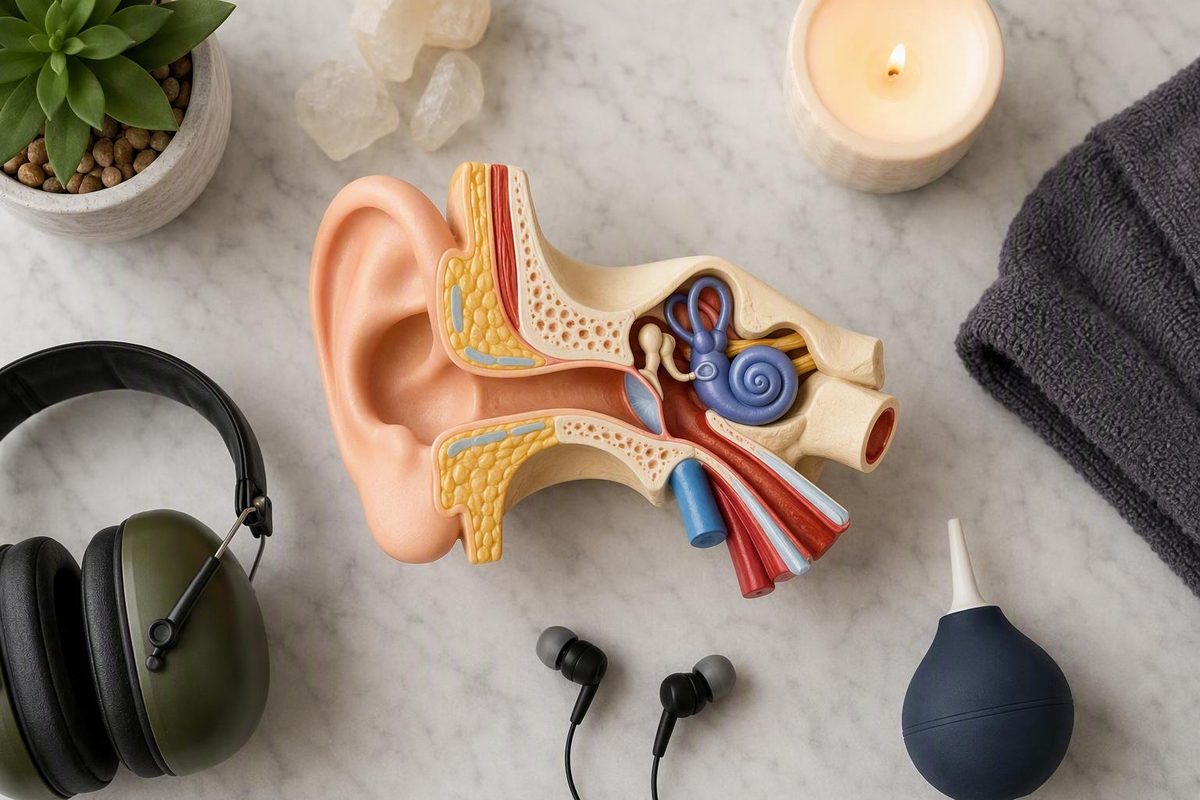
A crackling sound in the ear may be a brief pressure-related pop when you swallow, yawn, or travel by air. It can also occur with congestion, impacted earwax, middle-ear fluid, infection, jaw-joint problems, tinnitus, or less common ear conditions.
The sound alone cannot identify the cause. More useful clues include when it happens, whether it affects one or both ears, and whether it comes with pain, fever, drainage, dizziness, jaw symptoms, fullness, or a change in hearing.
Occasional, painless popping with swallowing or a temporary altitude change may need only gentle observation. Persistent, recurrent, worsening, or unexplained crackling should be examined, especially if it affects hearing or balance. Crackling accompanied by sudden hearing loss or substantial symptoms after trauma, flying, or diving calls for prompt professional assessment.
This article provides general educational information, not an individual diagnosis or a clinically validated emergency-care protocol. The available evidence consists largely of consumer medical references and ear- or hearing-clinic educational material rather than formal clinical guidelines. If you are uncertain how urgently to seek care, contact an appropriate medical service for individualized advice.
What a Crackling Sound in the Ear Can Mean
People use “crackling” to describe several different sounds or sensations:
- Small pops during swallowing or yawning
- Clicking while chewing or talking
- Bubbling or fizzing behind the eardrum
- Rustling, crunching, or shifting
- Repeated fluttering or rhythmic clicks
- An intermittent sound that comes and goes
- A persistent sound present for long periods
The symptom may affect one ear or both. It may appear only with a particular movement, follow a respiratory illness, or begin without an obvious trigger. Some people also feel pressure or fullness; others notice only the sound.
Crackling is a symptom, not a diagnosis. Similar noises can result from pressure equalization, fluid moving behind the eardrum, blockage in the ear canal, jaw movement near the ear, or activity in small middle-ear muscles. An examination may therefore be needed when crackling persists or occurs with hearing changes, pain, pressure, or dizziness (overview of crackling patterns and associated symptoms).
The trigger can still provide a useful clue:
- Swallowing or yawning: May reflect ordinary pressure equalization or difficulty opening a Eustachian tube.
- Chewing or talking: May relate to jaw movement, earwax shifting in the canal, or pressure equalization.
- A cold, allergies, or sinus congestion: May involve swelling that interferes with middle-ear ventilation and drainage.
- Flying, diving, or mountain travel: Suggests that changing outside pressure may be involved.
- Changing body position: Can make movement of middle-ear fluid more noticeable.
- A steady or recurring rhythm: May raise the possibility of involuntary middle-ear muscle activity.
None of these patterns proves a diagnosis. Crackling while chewing, for example, does not automatically mean you have a temporomandibular joint disorder. Jaw movement can also make earwax more noticeable or briefly affect pressure in the middle ear.
The most useful distinction is between a brief, mild event with an obvious pressure-related trigger and a symptom that is persistent, unexplained, disruptive, or accompanied by other problems. Hearing loss, substantial dizziness, marked pain, fever, bleeding, or drainage makes professional assessment more appropriate than simple observation.
Common Causes and the Clues That Help Separate Them
The following table can help organize your symptoms, but it cannot diagnose the cause. Earwax, fluid, infection, and eardrum changes generally require someone to inspect the ear, and several conditions can produce overlapping symptoms.
| Possible explanation | Typical trigger or pattern | Accompanying clues | Appropriate next step |
|---|---|---|---|
| Eustachian tube dysfunction or temporary pressure imbalance | Swallowing, yawning, chewing, a recent cold, allergies, sinus congestion, flying, diving, or mountain travel | Fullness, pressure, intermittent popping, or fluctuating muffled hearing | If symptoms are mild and painless, try only gentle swallowing or yawning. Arrange an examination if symptoms persist, worsen, or affect hearing or balance. |
| Impacted earwax | May become noticeable after cotton-swab use or during chewing and jaw movement | Blocked feeling, itching, fullness, muffled hearing, or discomfort | Stop inserting objects and have the ear examined before pursuing removal. |
| Middle-ear fluid | Often follows a cold, respiratory illness, or ear infection; may change with swallowing or body position | Bubbling, squishing, shifting, pressure, or muffled hearing | Arrange assessment if it persists, affects hearing, or occurs with pain or other symptoms. |
| Middle-ear infection | May develop during or after congestion or another respiratory illness | Ear pain or pressure, fever, headache, reduced hearing, or drainage | Seek clinical assessment rather than treating the crackling in isolation. |
| TMJ or related jaw dysfunction | Chewing, talking, yawning, clenching, or opening the mouth | Jaw or facial pain, stiffness, headache, restricted movement, or clicking near the ear | Consider primary care, dental, or TMJ-focused assessment when jaw symptoms are prominent. |
| Tinnitus or middle-ear muscle activity | May occur without an obvious pressure trigger; muscle-related clicking may be rhythmic | Ringing, buzzing, fluttering, repeated clicking, hearing changes, or sleep disruption | Record the pattern and arrange an ear and hearing evaluation if it is persistent, rhythmic, or disruptive. |
These possible causes and their symptoms are described in a medically reviewed consumer overview, although symptoms alone still cannot reliably distinguish among them (earwax, Eustachian tube, infection, muscle, and jaw-related causes).
Eustachian tube dysfunction
The Eustachian tubes connect the middle ears to the back of the throat. They help equalize pressure and drain middle-ear fluid. If inflammation or blockage prevents a tube from opening normally, pressure and fluid may not equalize efficiently.
Possible clues include:
- A recent cold
- Allergy or sinus symptoms
- Ear fullness or pressure
- Intermittent muffled hearing
- Popping while swallowing
- Symptoms during or after altitude changes
These clues make a pressure-related problem plausible, but they do not establish Eustachian tube dysfunction. Earwax, middle-ear fluid, infection, and other conditions can feel similar.
Impacted earwax
Earwax can become compacted or pushed farther into the canal, particularly when cotton swabs are used. Possible symptoms include fullness, itching, muffled hearing, and crackling that becomes noticeable as the jaw moves.
The canal must be inspected to determine whether wax is actually blocking it. Fullness and muffled hearing can also occur with middle-ear pressure or fluid, so treating presumed wax without confirmation may target the wrong problem.
Middle-ear fluid
Fluid can remain behind the eardrum after a cold, respiratory illness, or ear infection. Movement of that fluid may be perceived as bubbling, squishing, or crackling, sometimes changing with swallowing or body position. Fullness and muffled hearing may occur at the same time.
Fluid behind the eardrum does not by itself establish an active infection. An examination is needed to distinguish middle-ear fluid from infection and other eardrum or middle-ear problems.
Middle-ear infection
Crackling accompanied by marked ear pain or pressure, fever, headache, drainage, or reduced hearing may occur with a middle-ear infection. Those associated symptoms justify clinical assessment.
Antibiotics are not a general treatment for ear crackling, and not every ear infection is treated in the same way. Treatment depends on the diagnosis and what the clinician finds during the examination.
TMJ dysfunction
The temporomandibular joint sits close to the ear. Problems involving this joint or the surrounding muscles can create clicking or crackling that seems to come from inside the ear.
Jaw involvement becomes more plausible when chewing, talking, yawning, or opening the mouth reliably triggers the sound and there is also jaw pain, facial discomfort, stiffness, headache, or restricted movement. These features are described alongside earwax, pressure, infection, and inner-ear symptom patterns in hearing-care guidance (comparison of ear and jaw-related patterns).
The possible causes should not be ranked solely by the quality of the sound. The available evidence does not provide reliable comparative rates, and more than one factor may be present—for example, respiratory congestion together with jaw clenching.
Why Colds, Allergies, Swallowing, and Air Travel Can Make Ears Crackle
Each Eustachian tube connects a middle-ear space with the back of the throat. The tubes help equalize air pressure across the eardrum and allow middle-ear fluid to drain.
They normally remain closed much of the time. Swallowing, yawning, and chewing activate nearby muscles that briefly open them. Air moving through a tube, or pressure adjusting across the eardrum, can produce a temporary pop or crackle. A brief sound in that setting can be a pressure-equalizing event rather than evidence of disease.
A cold, allergy flare, or sinus-related illness may interfere with this process. Swelling and mucus around a tube’s opening can affect ventilation and drainage, leading to fullness, pressure, fluctuating muffled hearing, or repeated crackling when you swallow. An ENT explanation describes how the tubes open during yawning, swallowing, and chewing and how inflammation may interfere with pressure regulation and fluid drainage (Eustachian tube function and clogged-ear symptoms).
Air travel creates a related pressure problem. During ascent or descent, cabin pressure changes while pressure in the middle ear may adjust more slowly. Diving and rapid mountain travel can likewise create a mismatch between outside pressure and middle-ear pressure. Temporary fullness, popping, or crackling may result.
Congestion plus crackling therefore suggests—but does not prove—a pressure-related explanation. Fluid, infection, earwax, and eardrum problems can overlap with the same symptoms.
For mild, painless popping during a cold or routine altitude change, gentle swallowing, yawning, or chewing may help the tubes open.
There is no well-supported universal number of days by which post-cold or allergy-related crackling must disappear. Severity, recurrence, hearing changes, pain, drainage, dizziness, and the circumstances of onset are more useful than an arbitrary countdown.
Tinnitus, Rhythmic Clicking, and Less Common Explanations
Tinnitus means perceiving a sound without an external sound source. Although it is often described as ringing or buzzing, some people describe it as clicking or crackling. Tinnitus names the perception; it does not identify one underlying disease.
Hearing loss, loud-noise exposure, and ear infection are among the factors described in association with tinnitus. The sound alone cannot determine which factor, if any, applies to an individual. Persistent tinnitus-like crackling—particularly when accompanied by a hearing change—warrants an ear and hearing evaluation rather than online self-diagnosis (tinnitus, pressure, and earwax explanations for crackling).
A less common possibility is middle-ear myoclonus, involving spasms of the stapedius or tensor tympani muscle. It may produce repeated clicking, buzzing, fluttering, or crackling. The sound may be rhythmic, but rhythm alone does not confirm muscle activity.
Other uncommon explanations become relevant mainly when crackling appears within a broader symptom pattern:
- Ménière’s disease: May be considered when episodes also include vertigo, hearing changes, tinnitus, or pronounced fullness. Crackling alone is not enough to suggest or diagnose it.
- Eardrum injury or barotrauma: Pain, dizziness, bleeding, drainage, or hearing loss after trauma, flying, diving, or another forceful pressure change raises concern for pressure-related or eardrum injury.
- Otosclerosis: This is a possible clinician-evaluated explanation when progressive hearing loss or tinnitus is present, not a conclusion that can be drawn from isolated crackling.
- Other middle-ear conditions: Persistent fluid, infection, or structural changes may need to be excluded through examination and hearing assessment.
These conditions have overlapping symptom patterns, which is why persistent, rhythmic, recurrent, or otherwise unexplained crackling should be evaluated rather than diagnosed from the sound alone (less common crackling explanations and associated symptoms).
What You Can Safely Try—and What to Avoid
Home measures should be limited to a plausible minor trigger and should not delay assessment when concerning symptoms are present.
If the crackling is mild, began with congestion or an ordinary pressure change, and is not accompanied by pain, drainage, substantial dizziness, or hearing loss, you can try:
- Swallowing normally several times
- Yawning gently
- Chewing, provided it does not cause jaw pain
- Pausing to see whether the sensation resolves as pressure adjusts
These are limited pressure-equalizing measures, not treatments for every cause. Stop if an action causes or worsens pain.
Keep objects out of the ear
Do not put cotton swabs, bobby pins, ear-cleaning tools, or other objects into the ear canal. Inserted objects can push wax deeper or injure the canal or eardrum. If fullness or muffled hearing began after cotton-swab use, stop inserting anything and arrange an examination.
Suspected wax should be confirmed by inspecting the ear. When removal is necessary, a trained professional may use appropriate instruments, suction, or irrigation depending on what the examination shows. Hearing-care guidance advises against inserted objects and describes professional wax removal as dependent on the cause and condition of the ear (earwax examination and professional removal).
Do not attempt to irrigate an ear merely because it is crackling. The sound may be coming from pressure, fluid, infection, tinnitus, or the jaw rather than earwax. Seek individualized advice before using a wax-removal product if the cause is uncertain or other ear symptoms are present.
Avoid treating an undiagnosed cause with medication
Decongestants, antihistamines, nasal sprays, antibiotics, anti-inflammatory medicines, and muscle relaxants are not universal treatments for ear crackling. Whether any medication is appropriate depends on the suspected or diagnosed cause, the person’s health, and individual medication risks.
Antibiotics do not treat the sound itself. They may be considered only when a clinician identifies an infection for which they are appropriate. Likewise, allergy treatment will not remove impacted wax or correct a jaw problem, and wax treatment will not address tinnitus or middle-ear pressure.
Prepare a useful symptom record
Before an appointment, write down:
- When the crackling began
- Whether it affects the left ear, right ear, or both
- Whether it is intermittent, persistent, or rhythmic
- Whether swallowing, yawning, chewing, talking, or position changes trigger it
- Whether you have pain, pressure, itching, or fullness
- Any muffled or sudden change in hearing
- Tinnitus, dizziness, vertigo, or balance difficulty
- Drainage or bleeding
- Recent cold, allergy symptoms, sinus trouble, or fever
- Recent flying, diving, mountain travel, loud-noise exposure, or trauma
- Cotton-swab or other ear-object use
- Jaw stiffness, facial pain, headache, clenching, or restricted movement
This record cannot diagnose the cause, but it can make the clinical history more precise.
When Ear Crackling Needs Medical Attention
Brief, mild popping during swallowing or a temporary altitude change is different from crackling that persists, repeatedly returns, becomes disruptive, worsens, or appears without an identifiable trigger.
Seek prompt professional assessment when crackling occurs with:
- Sudden hearing loss or a sudden major hearing change
- Severe or increasing ear pain
-
Fever with ear symptoms
-
Significant dizziness, vertigo, or balance difficulty
- Symptoms after an ear or head injury
- Substantial symptoms after flying, diving, or another major pressure exposure
The available hearing-care evidence identifies sudden hearing loss, pain, discharge, dizziness, and pressure-related injury symptoms as reasons not to rely on prolonged observation, although it does not establish a precise emergency-care timetable (assessment triggers for crackling and sudden hearing changes).
Arrange a nonemergency appointment when persistent or recurrent crackling occurs with:
- Muffled or fluctuating hearing
- Continuing fullness or blockage
- Tinnitus
- Jaw pain, stiffness, or headache
-
Repeated ear infections
-
Symptoms that are worsening or interfering with daily life
One-sided crackling is not automatically dangerous. Localized wax, pressure, fluid, jaw movement, or another ear-specific problem may affect only one side. Record which side is involved and arrange assessment if unilateral symptoms persist or occur with hearing or balance changes.
Duration alone is an imperfect guide. A painless sound that occurs only while recovering from congestion is not equivalent to new one-sided crackling with reduced hearing, drainage, or dizziness. Associated symptoms, severity, recurrence, and the circumstances of onset matter more than a rigid three-day or seven-day cutoff.
These points are cautious reasons to obtain professional assessment, not a complete emergency triage system. If symptoms are severe or you are unsure how quickly to seek care, contact an appropriate medical service for individualized guidance.
What a Clinician May Check
The evaluation usually begins with the history. Expect questions about:
- When and how the symptom started
- Whether one or both ears are involved
- Its timing, rhythm, and triggers
- Recent respiratory illness, allergies, or sinus congestion
- Flying, diving, mountain travel, or other pressure exposure
- Head or ear trauma
- Cotton-swab or other object use
- Pain, fullness, drainage, fever, dizziness, or balance trouble
- Hearing changes or tinnitus
- Jaw pain, stiffness, headache, clenching, or restricted movement
The clinician may inspect the ear canal and eardrum. This can reveal impacted wax, canal irritation, drainage, apparent eardrum injury, or signs of a middle-ear problem.
A hearing test may identify and characterize a hearing change. It can be useful when crackling occurs with muffled hearing, tinnitus, persistent fullness, or concern about a middle- or inner-ear problem. No single test is guaranteed to explain every case.
A jaw assessment may be relevant when chewing or talking reliably triggers the sound, particularly if there is pain, stiffness, headache, facial discomfort, or limited mouth opening.
A reasonable starting point depends on the symptom pattern:
- Primary care clinician: A practical first stop for persistent symptoms, fever, pain, congestion, possible infection, or uncertainty about where to begin.
- ENT clinician: Appropriate for persistent ear symptoms, drainage, trauma, significant pain, recurrent infections, eardrum concerns, or complex pressure-related symptoms.
- Audiologist: Appropriate for hearing assessment and evaluation of accompanying tinnitus or persistent auditory symptoms.
Ear inspection and hearing testing can help investigate wax, fluid, eardrum problems, and hearing changes, while prominent jaw symptoms may require a different assessment pathway (evaluation options for crackling and hearing symptoms).
Further procedures may sometimes be considered, but their use depends on the history and examination.
A Practical Next-Step Guide by Symptom Pattern
Use these scenarios as a decision aid, not as a substitute for diagnosis.
1. Brief popping with swallowing during a cold or altitude change
If there is no pain, drainage, dizziness, or hearing loss, try gentle swallowing or yawning and monitor the symptom. Stop any pressure-equalizing effort that hurts. Arrange care if the crackling persists, worsens, or is joined by another symptom.
2. Fullness or muffled hearing after cotton-swab use
Stop inserting anything into the ear. Arrange an examination for possible impacted wax or canal injury. Do not assume wax is present or try to remove a blockage blindly.
3. Crackling during chewing with jaw stiffness, headache, or facial pain
Consider primary care, dental, or TMJ-focused assessment. Jaw involvement becomes more plausible when movement reliably triggers the sound, although an ear examination may still be useful.
4. Crackling with fever, drainage, marked pain, or reduced hearing
Seek clinical assessment for possible infection, fluid, or eardrum involvement. Do not use leftover antibiotics or treat the sound as an isolated pressure problem.
5. New crackling with sudden hearing loss
Obtain prompt medical assessment rather than waiting to see whether hearing returns. The sudden hearing change—not the particular quality of the noise—is the important concern.
6. Severe pain, dizziness, bleeding, or hearing change after flying, diving, or trauma
Seek prompt assessment for possible pressure-related or eardrum injury.
7. Rhythmic clicking or fluttering without a clear pressure trigger
Record the timing, rhythm, affected side, and associated hearing or balance symptoms. Arrange an ear and hearing evaluation to investigate muscle-related and other possible explanations.
Across these scenarios, treatment should target the diagnosed cause rather than the sound itself. Note the trigger and associated symptoms, use only gentle measures for mild pressure-related popping, and keep objects out of the ear. Arrange an examination when crackling persists, recurs, or occurs with pain, fever, drainage, dizziness, jaw trouble, or hearing changes.
Frequently Asked Questions
Why does my ear crackle when I swallow or yawn?
Swallowing and yawning briefly open the Eustachian tubes, which connect the middle ears to the throat and help equalize pressure and drain fluid. Air movement or a pressure adjustment can produce a short pop or crackle. Congestion from a cold, allergies, or sinus symptoms may make the process more noticeable by interfering with normal tube opening (how Eustachian tubes open and regulate pressure).
A brief, painless sound may be an ordinary pressure event. Persistent crackling or symptoms accompanied by pain, fullness, hearing change, drainage, or dizziness should be assessed.
Can earwax cause crackling and muffled hearing?
Yes. Impacted earwax may be associated with crackling, fullness, itching, or muffled hearing, and jaw movement can make the noise more noticeable. Because these symptoms overlap with middle-ear pressure and fluid problems, wax should be confirmed by inspecting the ear.
Do not insert cotton swabs or tools to check or remove it. They can compact wax or injure the ear. Arrange an examination if blockage is suspected.
Can tinnitus sound like crackling instead of ringing?
Yes. Tinnitus is sound perceived without an external source, and it can be described as ringing, buzzing, clicking, or crackling. It describes the perception rather than proving one particular underlying condition.
Persistent or disruptive tinnitus-like crackling—especially with a hearing change—should be evaluated.
Should I worry if the crackling is only in one ear?
One-sided crackling is not automatically dangerous. Wax, pressure imbalance, fluid, jaw movement, or another localized issue may affect only one ear.
Record which ear is involved and whether the sound is persistent, rhythmic, painful, or accompanied by fullness, tinnitus, dizziness, drainage, or hearing change. Persistent unilateral symptoms or one-sided crackling with hearing or balance changes should be assessed.
Which clinician should I see for persistent ear crackling?
Primary care is a reasonable starting point when the cause is unclear or when congestion, fever, pain, or possible infection is present. An ENT clinician may be appropriate for persistent ear symptoms, drainage, trauma, recurrent infections, eardrum concerns, or substantial pressure-related problems. An audiologist can assess hearing and accompanying tinnitus, while dental or TMJ-focused care may suit symptoms dominated by jaw pain, stiffness, or chewing.
If crackling occurs with sudden hearing loss, severe pain, bleeding, significant dizziness, or substantial symptoms after trauma, flying, or diving, seek prompt medical assessment rather than waiting for a routine appointment.