
Fluttering Sound in the Ear: Causes and When It's Urgent
Sudden pulse-synchronous sound with vision changes, new neurological symptoms or significant balance problems calls for urgent care.
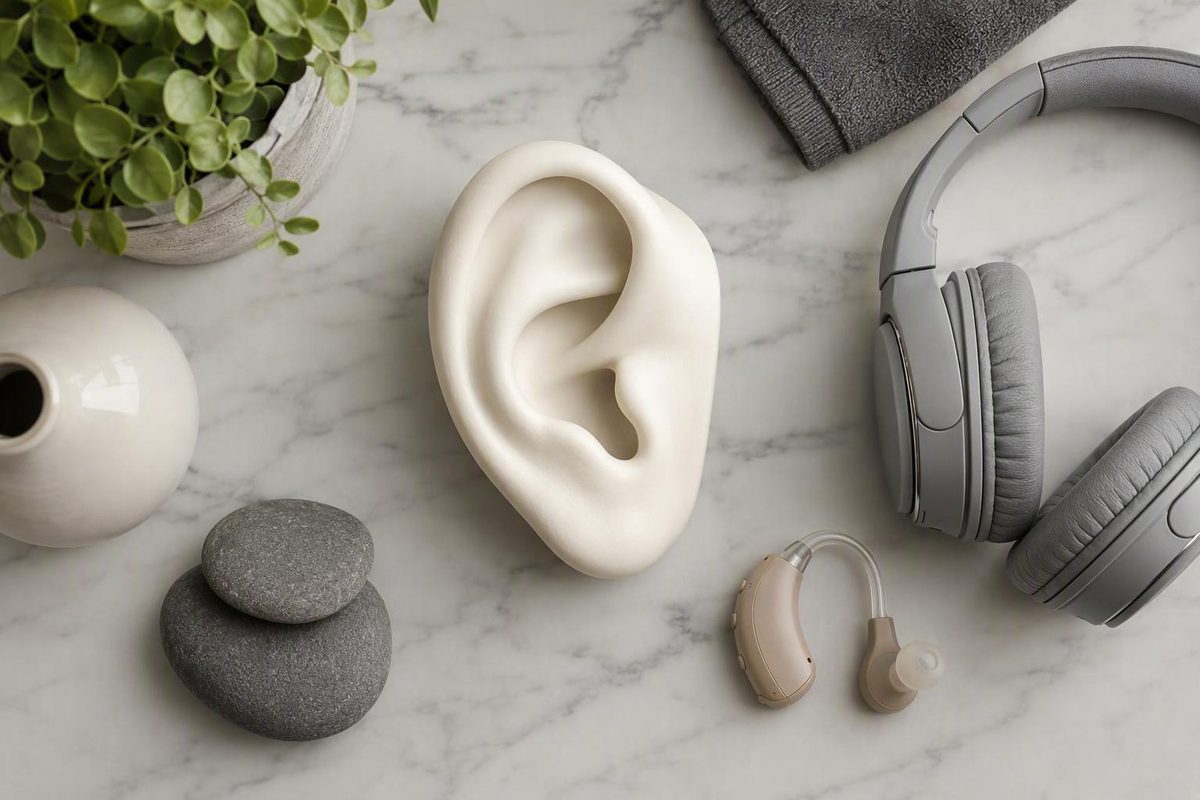
A fluttering sound in the ear can be unsettling, but the description alone cannot identify its cause. This guide provides general information, not a diagnosis or individualized medical advice. Seek medical care rather than relying on an online explanation if your symptoms are sudden, severe, or rapidly changing.
Start here: Does the fluttering match your heartbeat?
People use “fluttering” to describe tapping, clicking, buzzing, vibration, twitching, thumping, whooshing, or rhythmic pulsing. It may be faint or intrusive, intermittent or constant, and present in one or both ears.
A practical first question is: Does the sound keep time with my heartbeat?
While sitting quietly, find your pulse at your wrist and compare it with the sound. Do not repeatedly press on your neck or manipulate your ear.
Ask:
- Does each flutter, thump, or whoosh coincide with a heartbeat?
- Does the sound speed up when your heart rate rises and slow down when it falls?
- Does that synchronization happen consistently rather than occasionally by chance?
A sound that repeatedly tracks the heartbeat may be pulsatile tinnitus. It is often described as rhythmic thumping, whooshing, or throbbing and may change speed with the heart rate. Because its possible causes range from benign changes to medically important conditions, heartbeat-synchronized sound warrants a thorough medical evaluation. Penn Medicine explains the characteristic pattern and need for assessment.
Regularity alone does not make a sound pulse-synchronous. A muscle contraction, for example, may create repeated clicks without following the heartbeat. Sound quality cannot settle the question either: words such as “fluttering,” “thumping,” and “whooshing” mean different things to different people.
An at-a-glance decision path:
- The fluttering consistently matches your pulse: Arrange medical evaluation for possible pulsatile tinnitus.
- It does not match your pulse: Consider whether it occurs with congestion, pressure changes, swallowing, blockage, noise exposure, or irregular muscle-like spasms.
- Either pattern comes with warning signs: Follow the urgent-care guidance below instead of waiting to see whether it disappears.
Music, a fan, or white noise may make a pulse-synchronous sound less noticeable, but successful masking does not remove the need for medical assessment.
What a fluttering sound can represent
“Fluttering sound in ear” describes an experience, not a standalone diagnosis. Tinnitus, Eustachian tube dysfunction, earwax impaction, pulsatile tinnitus, and middle-ear muscle activity can produce overlapping sensations. A medically reviewed consumer-health overview also identifies patulous Eustachian tube dysfunction and Ménière’s disease as possibilities in the appropriate broader symptom patterns. Review the range of possible presentations.
| Possible explanation | Typical pattern | Useful accompanying clues | Usual next step |
|---|---|---|---|
| Nonpulsatile tinnitus | Internally perceived fluttering, clicking, buzzing, tapping, roaring, or whooshing without an external source | May follow noise exposure or occur with hearing changes, although neither must be present | Consider an ear examination and hearing assessment if it persists, recurs, or affects daily life |
| Pulsatile tinnitus | Rhythmic sound that consistently follows the heartbeat and may change speed with heart rate | May affect one or both ears; associated headache, dizziness, hearing change, pressure, vision, or balance symptoms matter to the evaluation | Medical assessment, with urgency determined by accompanying symptoms |
| Obstructive Eustachian tube dysfunction | Popping, fluttering, pressure, or muffled hearing associated with difficulty regulating middle-ear pressure | Fullness, a recent cold, allergies, congestion, or changes with swallowing and yawning | Clinical review if symptoms persist, worsen, or affect hearing |
| Patulous Eustachian tube dysfunction | The Eustachian tube remains unusually open | The person’s breathing or voice may sound conspicuously loud, hollow, or echoing | Assessment to distinguish it from obstructive dysfunction and other causes |
| Earwax impaction | A blocked or clogged sensation accompanied by unusual internally perceived sound | Fullness, itching, discomfort, or temporary hearing reduction | Examination before assuming wax is responsible; professional removal if impaction is confirmed |
| Middle-ear myoclonus | Irregular or sometimes rhythmic clicking, buzzing, bubbling, fluttering, or thumping | Brief bursts or spasms that do not consistently match the pulse | Medical evaluation; specialized testing may be considered |
| Inner-ear disorder such as Ménière’s disease | Ear noise occurring within a broader recurring symptom pattern | Episodic vertigo, hearing changes, and ear pressure | Broader hearing and balance evaluation rather than treatment as isolated tinnitus |
Tinnitus does not have to sound like ringing
Tinnitus is the perception of sound without an external source. Although it is commonly called “ringing in the ears,” it may sound like clicking, buzzing, roaring, tapping, fluttering, or other noises. It can affect one or both ears and may come and go or remain fairly constant.
Fluttering therefore can be tinnitus, but it should not automatically be labeled that way—particularly when it follows the heartbeat, occurs with pressure or blockage, or feels like a series of distinct mechanical clicks.
Eustachian tube pressure problems
The Eustachian tube connects the middle ear with the back of the nose and helps regulate middle-ear pressure. With obstructive dysfunction, it may become swollen or fail to open and close normally. Fullness, pressure, muffled hearing, tinnitus, or symptoms following a cold or allergies can make this possibility more relevant.
Patulous dysfunction is different: the tube remains unusually open. A conspicuously loud or echoing perception of one’s own voice or breathing can be an important clue.
Earwax blockage
Impacted wax is one possibility when fluttering occurs with blockage, pressure, itching, discomfort, or temporary hearing reduction. Cotton-swab use can push wax inward and contribute to impaction. These clues are not specific, however, and do not prove that wax is present or that removing it will stop the sound. Wilmington Audiology summarizes the associated symptoms and cautions against inserting objects.
Middle-ear muscle activity
Middle-ear myoclonus is a rare condition involving involuntary contractions of the tensor tympani or stapedius muscles. It may produce clicking, buzzing, bubbling, fluttering, or thumping.
Ménière’s disease is a pattern, not a default explanation
Ménière’s disease is a less common consideration when ear noise occurs with a broader pattern that includes episodes of vertigo, hearing changes, and pressure in the affected ear. Isolated fluttering without that pattern is not enough to point to Ménière’s disease.
Reported associations with limited or context-dependent evidence: Articles about ear fluttering also mention hypertension, thyroid disease, pregnancy-related changes, stress, caffeine, and jaw symptoms. These reported associations do not show that any one factor caused a particular person’s symptoms. Treat them as medical-history context to mention during an appointment—not as a basis for self-diagnosis or an unreviewed treatment trial. Pacific Hearing Services discusses these associations while emphasizing the difficulty of distinguishing causes.
Use the pattern—not just the sound—to describe what is happening
Words such as “fluttering” and “vibrating” are subjective. Two people may use the same word for different sensations.
Rhythm
Note whether the sound is:
- Consistently synchronized with your wrist pulse
- Regular but not synchronized with your pulse
- Irregular or clustered in short bursts
- Continuous rather than separated into beats
Pulse synchronization raises the possibility of pulsatile tinnitus. Irregular clicking or thumping that does not follow the pulse may lead a clinician to consider middle-ear muscle activity, although symptoms alone cannot confirm myoclonus.
Duration and frequency
Fluttering may last seconds, recur throughout the day, or remain continuously noticeable. Record whether it is:
- A single isolated episode
- Intermittent but recurring
- Present for extended periods
- Becoming more frequent, louder, or more disruptive
A more practical reason to seek assessment is that it recurs, does not resolve, worsens, affects hearing, disrupts sleep or concentration, or interferes with daily life.
Affected side
Record whether the sound is in the left ear, right ear, both ears, or seems to be inside the head.
Triggers and timing
Useful details include whether the symptom follows or changes with:
- A cold, allergy flare, or nasal congestion
- Swallowing, yawning, or chewing
- A flight or another pressure change
- Exercise or a change in heart rate
- A loud event or sustained noise exposure
- Lying down, standing, or turning the head
- Earbud or hearing-aid use
- A new medicine or medication change
Symptoms following a cold or allergies—especially with fullness or muffled hearing—can provide context for Eustachian tube dysfunction. Changes with swallowing or yawning are also worth reporting, but they do not confirm a pressure-regulation problem.
Position
Some internal sounds become more noticeable in bed because the surroundings are quiet. Others appear to change with posture or exertion. Record what you notice, but do not repeatedly press on your neck or perform forceful maneuvers to test the sound.
Accompanying symptoms
Tell a clinician about:
- Hearing reduction or fluctuation
- Fullness or pressure
- Ear pain, itching, or discharge
- Dizziness, vertigo, or balance difficulty
- Headache
- Vision changes
- New neurological symptoms
- An unusually loud perception of your own breathing or voice
Pressure and muffled hearing may make blockage or Eustachian tube dysfunction more relevant. Loud or echoing breathing and speech can point toward a patulous Eustachian tube. Vertigo, fluctuating hearing, and ear pressure broaden the evaluation beyond isolated tinnitus.
When fluttering needs emergency, prompt, or routine care
The following three-level framework is practical guidance, not a validated diagnostic rule. If symptoms are abrupt or severe and you are uncertain what to do, seek timely medical advice.
Emergency or urgent evaluation
Seek urgent or emergency evaluation for sudden pulse-synchronous noise accompanied by vision changes, new neurological symptoms, or significant balance problems. Institutional guidance for pulsatile tinnitus treats sudden symptoms and associated balance or vision problems as warning signs because the sound can be related to a condition affecting blood flow. See Cleveland Clinic’s urgent-care guidance for pulsatile tinnitus.
Do not delay urgent evaluation while trying home remedies or attempting to mask the sound. Contact local emergency services or an urgent medical advice line if you are unsure where to seek care.
Prompt medical assessment
Arrange a timely medical appointment for:
- New fluttering that consistently matches your heartbeat, even without emergency symptoms
- Persistent, recurrent, or worsening fluttering
- One-sided symptoms that continue or return
-
Fluttering accompanied by hearing loss or a noticeable hearing change
-
Symptoms that disrupt sleep, concentration, communication, or normal activities
The appropriate timing depends on the full pattern rather than one symptom in isolation. Clinic-based guidance supports assessment when fluttering persists or worsens or occurs with pain, dizziness, or hearing loss; discharge may also indicate an ear problem that needs examination. Review the symptom-based assessment guidance.
Heartbeat-synchronized sound deserves medical evaluation because benign and medically significant causes cannot be separated by sound description alone. Evaluation may include an ear, head, and neck examination, hearing tests, blood-pressure measurement, and selected imaging when clinically indicated. Pacific Neuroscience Institute outlines this pulsatile-tinnitus workup.
Routine monitoring
It may be reasonable to monitor one brief, isolated episode that resolves completely and occurs without other symptoms. Arrange assessment if the fluttering returns, changes, or concerns you.
One-sided fluttering alone is not established as an automatic emergency. It becomes a stronger reason for assessment when it persists, recurs, follows the heartbeat, or appears with other symptoms.
What you can safely do while arranging care
A useful home step is to document the pattern rather than experiment with treatments. Good notes can help a clinician determine which possibilities deserve attention.
Copyable symptom-diary template
Started:
Left ear, right ear, both, or inside the head:
Sound or sensation:
Matches wrist pulse? Yes / No / Unsure
Intermittent or constant:
How long each episode lasts:
Times per day or week:
Changes with exercise or heart rate:
Changes with lying down, standing, or head position:
Changes with swallowing or yawning:
Recent cold, allergies, congestion, flight, or pressure change:
Recent loud-noise exposure:
Hearing change or muffling:
Fullness or pressure:
Pain, itching, or discharge:
Dizziness, vertigo, or balance difficulty:
Headache, vision change, or neurological symptom:
Recent medication changes:
Effect on sleep, concentration, or daily life:
Do not postpone medical care because you have not completed the diary. It is an aid to communication, not a diagnostic test.
Keep objects out of the ear
Do not insert cotton swabs, fingers, ear-cleaning tools, or other objects into the ear canal. They can push wax farther inward. Suspected impaction is better assessed by examining the ear than by using cleaning as a test.
Avoid universal “fixes”
Do not assume that forceful pressure equalization, decongestants, antihistamines, nasal sprays, or wax-softening drops are appropriate for every fluttering sound. The relevant treatment depends on the suspected cause, medical history, other medicines, and examination findings.
Trying a product to see whether it works is not a reliable way to diagnose tinnitus, earwax impaction, Eustachian tube dysfunction, muscle activity, or pulsatile tinnitus. Ask a clinician or pharmacist for individualized advice before using a treatment when you are uncertain about its suitability.
Reduce awareness without mistaking masking for treatment
A fan, white-noise source, or soft music may make tinnitus-like sounds less noticeable in a quiet room, particularly at bedtime. These options reduce the contrast between an internal sound and the surrounding environment.
Masking does not remove impacted wax, restore pressure regulation, stop middle-ear muscle contractions, or treat a vascular or systemic condition. It is a temporary coping strategy, not cause-directed care. Cleveland Clinic likewise distinguishes masking and behavioral support from treatment of an underlying cause. Review that distinction in its pulsatile-tinnitus guidance.
What a clinician may check
An appointment usually begins with a detailed history. Be prepared to describe:
- The sound and whether it matches your pulse
- When it began and how often it occurs
- Whether it affects one or both ears
- Changes with exertion, posture, swallowing, or yawning
- Recent congestion, pressure changes, or noise exposure
- Hearing changes, pain, discharge, dizziness, headache, or vision symptoms
- Current medicines and recent medication changes
- Relevant ear, head, neck, vascular, or neurological history
An ear examination can look for impacted wax, infection, fluid, eardrum changes, or another visible explanation. Hearing tests may be included when hearing has changed or tinnitus is suspected.
Blood pressure may be measured when the sound is rhythmic or pulse-synchronous. The clinician may broaden the examination according to the symptoms and medical history.
Suspected middle-ear myoclonus may lead to specialized testing. The medically reviewed overview discusses tympanometry and the limits of diagnosing middle-ear myoclonus.
For possible pulsatile tinnitus, testing is selected according to the clinical findings. The workup may include a head-and-neck examination, blood tests, or targeted studies such as CT, MRI, vascular imaging, angiography, or ultrasound. Penn Medicine describes these as selective options used to investigate suspected vascular, structural, systemic, or ear-related sources. See its overview of pulsatile-tinnitus testing.
Scans are not routine for every fluttering sound. Their value depends on pulse synchronization, examination findings, hearing results, and accompanying symptoms.
Treatment depends on the cause
Treatment falls into two broad categories:
- Cause-directed treatment, intended to address an identified condition
- Symptom-management strategies, intended to reduce awareness, distress, or disruption
The distinction matters because a reduction in the sound does not necessarily mean that an underlying condition has been identified or resolved.
Confirmed earwax blockage
If examination confirms clinically significant wax impaction, a clinician may remove it using an appropriate method. Hearing, pressure, or sound symptoms may improve afterward, but removal cannot be promised to eliminate fluttering—particularly if the wax was incidental rather than the source.
Eustachian tube dysfunction
Pressure-related symptoms are managed according to the type and cause of dysfunction. Obstructive dysfunction and a patulous tube are different problems and should not be treated as though one universal congestion remedy will correct both.
Management may also depend on whether symptoms follow infection, allergy, pressure exposure, injury, or another condition. Examination is therefore preferable to trying several over-the-counter products at random.
Pulsatile tinnitus
Treatment centers on identifying and addressing an underlying vascular, systemic, structural, or ear-related condition when one is found. Treating that condition may reduce or eliminate the pulse-synchronous sound, but an identifiable source is not found in every case and outcomes cannot be guaranteed.
When no cause-directed treatment is available, background sound and behavioral approaches may help reduce the effect on sleep, concentration, or distress. They do not treat an unidentified blood-flow or structural problem.
Nonpulsatile tinnitus
Possible ways to reduce the impact of bothersome tinnitus include:
- Hearing aids when hearing loss is also present
- Sound generators or background sound
- Tinnitus retraining approaches
- Cognitive behavioral therapy
- Relaxation and stress-management methods
These strategies are intended to reduce awareness, distress, sleep disruption, or interference with daily life. They are not universal cures.
Middle-ear myoclonus
There is no standard treatment pathway supported for every patient.
Prescription or procedural decisions should follow specialist assessment. A person should not pursue medication or surgery merely because a sound resembles clicking, bubbling, thumping, or fluttering.
A practical next-step checklist
- Compare the fluttering with your wrist pulse while resting. Check whether it consistently follows the heartbeat without repeatedly manipulating your neck or ear.
- Record the basic pattern. Note whether it is one-sided or bilateral, intermittent or constant, and regular, irregular, or pulse-synchronous.
- List accompanying symptoms. Include hearing changes, pressure, pain, discharge, dizziness, headache, vision changes, neurological symptoms, or balance problems.
- Seek urgent help for warning signs. Sudden pulse-synchronous sound with vision, neurological, or significant balance symptoms needs urgent evaluation.
- Arrange medical assessment when appropriate. Do this for heartbeat-matched, persistent, recurrent, worsening, one-sided, or hearing-related fluttering.
- Bring a short symptom diary. Timing, triggers, position, pulse matching, and associated symptoms can make an appointment more productive.
- Keep objects out of the ear. Do not use cotton swabs or tools to test whether wax is responsible.
- Do not use medication as a diagnostic trial. Drops, decongestants, antihistamines, and nasal treatments are not universal remedies.
- Use masking only for temporary comfort. A fan, white noise, or soft music may reduce awareness but cannot identify or treat the cause.
Even a detailed description may not reveal why the sound is happening. Examination—and, in selected cases, hearing tests, laboratory work, or imaging—may be needed to distinguish tinnitus from pressure dysfunction, blockage, muscle activity, pulsatile tinnitus, or another condition.
Frequently asked questions
Can tinnitus sound like fluttering instead of ringing?
Yes. Tinnitus means perceiving sound without an external source, and it may be experienced as fluttering, clicking, buzzing, tapping, roaring, or whooshing rather than classic ringing. It can be intermittent or continuous and affect one or both ears.
“Fluttering” does not automatically mean tinnitus, however. Pulse synchronization, pressure, blockage, mechanical clicking, and accompanying symptoms may lead the evaluation in other directions.
What does it mean if the fluttering matches my heartbeat?
Consistent heartbeat synchronization raises the possibility of pulsatile tinnitus. Compare the sound with your wrist pulse while resting. If it repeatedly keeps pace or changes speed with your heart rate, arrange medical assessment.
Seek urgent care if sudden pulse-synchronous sound occurs with vision changes, new neurological symptoms, or significant balance problems. Masking the noise is not a substitute for evaluation.
Can earwax cause a fluttering or blocked sensation?
Earwax impaction is one possible explanation, particularly when fluttering occurs with fullness, blockage, itching, discomfort, or temporary hearing reduction. Those clues do not prove that wax is responsible.
An ear examination can confirm whether wax is blocking the canal. Do not insert cotton swabs or tools, and do not assume that wax removal will necessarily stop the sound.
Can muscles inside the ear create clicking or fluttering?
Yes. In the rare condition called middle-ear myoclonus, the tensor tympani or stapedius muscles can contract involuntarily. The resulting sound may be described as clicking, buzzing, bubbling, thumping, or fluttering.
Irregular, non-pulse-synchronous clicking may prompt consideration of muscle activity, but the symptom alone does not establish the diagnosis. Specialized assessment may be needed, and treatment evidence is limited.
Which type of clinician should I see for persistent ear fluttering?
Primary care or an ENT physician is an appropriate starting point, particularly when the sound is pulse-synchronous, one-sided, persistent, worsening, or accompanied by hearing changes or other symptoms.
An audiologist can perform hearing tests and contribute to tinnitus assessment. Audiology should not replace medical evaluation when a vascular, infectious, systemic, structural, or neurological cause may be possible.