
How Can We Prevent Hearing Loss? Practical Steps That Help
Reduce hearing-loss risk with safer listening, well-fitted protection, medication monitoring and ear care—and know when a hearing change needs urgent care.
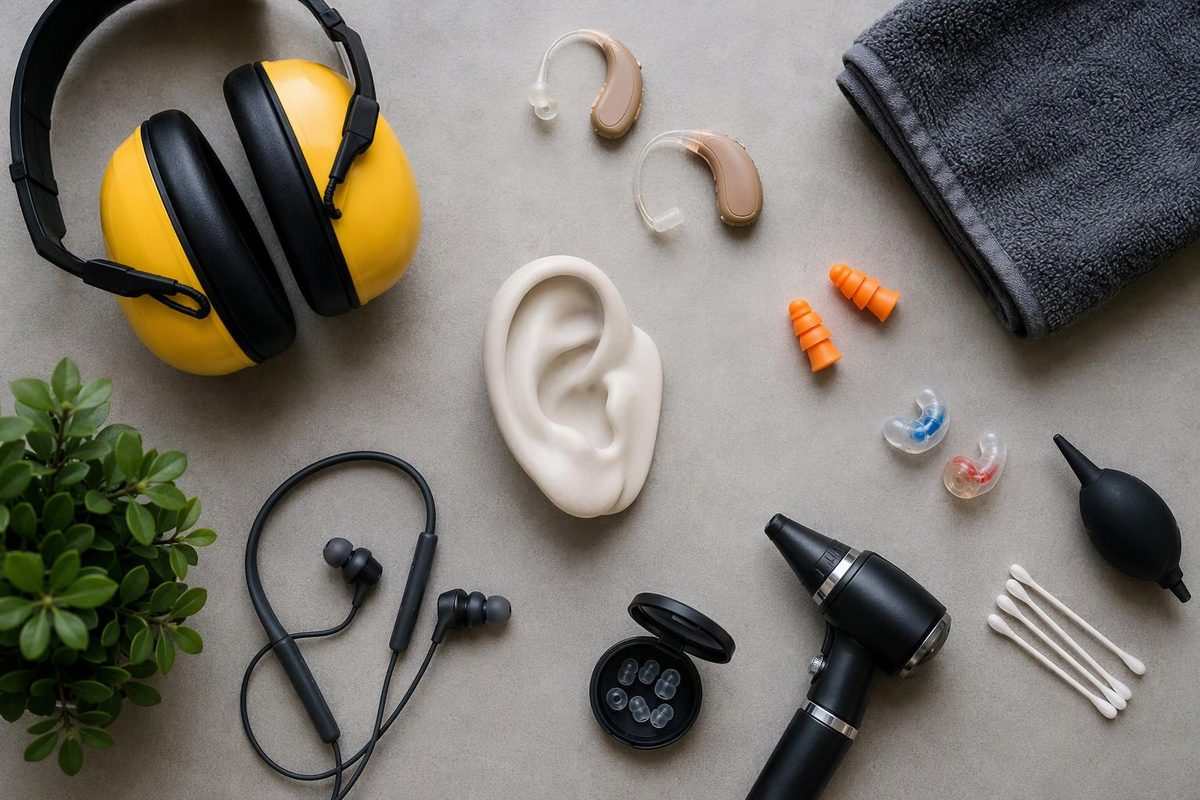
We can reduce the risk of hearing loss by limiting loud sound, wearing properly fitted hearing protection, reviewing medicines that may affect hearing, and getting ear problems treated. These steps matter even if you already have some hearing loss.
Not every cause is preventable. Scientists do not yet know how to prevent age-related hearing loss, but avoiding noise damage can help protect the hearing you have as you grow older. NIDCD explains this distinction.
Lower the volume, shorten exposure and move farther away
Noise risk depends on how loud a sound is, how long you hear it and how often you are exposed. A single explosion or gunshot can cause damage; repeated exposure from tools, concerts or loud headphones can also harm hearing gradually. Long or repeated exposure at or above 85 A-weighted decibels (dBA) can cause hearing loss—the louder the sound, the less time damage takes. NIDCD noise guidance
Make these changes part of your routine:
- Turn down personal audio. Enable headphone exposure alerts and volume limits when available. Use the lowest comfortable listening level rather than turning it up to overpower background noise.
- Shorten noisy activities. Take breaks in a quiet area, and avoid adding loud leisure activities after a noisy workday.
- Move farther away. Do not stand beside speakers or remain near running machinery when you can move away.
- Use a practical warning sign. If you must raise your voice to be heard by someone at arm’s length, treat the environment as too loud.
WHO’s safe-listening guidance illustrates how quickly exposure time shrinks: an average of 80 dB corresponds to up to 40 hours per week, while 90 dB corresponds to four hours per week. These are exposure guides, not targets to use up. Well-fitted, noise-cancelling headphones can help you avoid raising playback volume in noisy settings. WHO safe-listening guidance
For more detail on sound levels and exposure time, see our decibels and hearing loss chart.
Use hearing protection before the noise starts
Keep earplugs or protective earmuffs where you will need them—for example, with lawn equipment or workshop tools. Protection works best when it fits well and stays in place throughout the exposure.
For foam earplugs, roll the plug into a narrow shape, pull the ear up and back, then insert it comfortably and hold it while it expands. Follow the product’s fitting instructions. WHO earplug instructions
Ordinary noise-cancelling headphones are not a substitute for hearing protection. NIOSH says they should not be considered hearing protectors unless labeled with a Noise Reduction Rating (NRR). The rating on a package also does not tell you exactly how much protection an individual receives; fit matters.
At a noisy job, ask about reducing noise at its source, hearing-protector fit testing and the workplace hearing-conservation program. Earplugs should not be the employer’s only approach when effective noise controls are available. For workers exposed to impulse noise or levels of 100 dBA or greater, NIOSH recommends double protection: earmuffs worn over earplugs. NIOSH hearing-protection guidance
Ask about medicine-related hearing risks
Some medicines are ototoxic, meaning they can damage hearing or balance structures. These include certain treatments for severe infections and cancer; some prescription and over-the-counter medicines can also affect hearing. Risk and reversibility vary by drug. Ask your prescriber or pharmacist about the medicines you actually take rather than assuming every medicine in a broad category is unsafe. ASHA guidance on causes of hearing loss
If you are prescribed a potentially ototoxic treatment, ask:
- Do I need a baseline hearing test before treatment?
- How will my hearing be monitored during and afterward?
- What changes should I report promptly?
Monitoring can help the treating clinician consider adjustments if damage is detected, although it cannot always prevent or reverse hearing loss. American Academy of Audiology ototoxicity-monitoring guidance
Do not stop a prescribed medicine on your own. Discuss any change with the prescriber.
Protect the ear canal and address ear disease
Earwax normally protects and cleans the ear canal. Clean the outer ear with a soft cloth, but do not insert cotton swabs or other objects into the canal: they can push wax deeper or injure the eardrum. If wax repeatedly blocks your hearing, ask a clinician about safe removal and follow-up. ENT Health earwax guidance
Arrange medical assessment for persistent ear pain, drainage or recurrent infections rather than relying on repeated home cleaning. Keep recommended vaccinations current; immunization and identification and management of common ear conditions are among WHO’s hearing-loss prevention strategies. WHO prevention guidance
Use hearing checks to guide prevention—not replace it
If you regularly work in noise, WHO recommends yearly hearing checks. Ask an audiologist about an appropriate schedule for other risks, including medicines that may damage hearing. A test can identify changes, but it does not make continued unsafe exposure harmless. WHO hearing-check guidance
A sudden, unexplained hearing drop—especially in one ear or noticed on waking—needs immediate, same-day medical assessment. Do not assume it is wax or wait for a routine hearing appointment. Delayed treatment can reduce the chance of recovery. NIDCD sudden-deafness guidance