
Noise Machines for Tinnitus: How to Choose and Use One
Compare noise machines for tinnitus by sound, controls, and playback, then set one at a gentle level for sleep, work, or quiet-room relief safely.
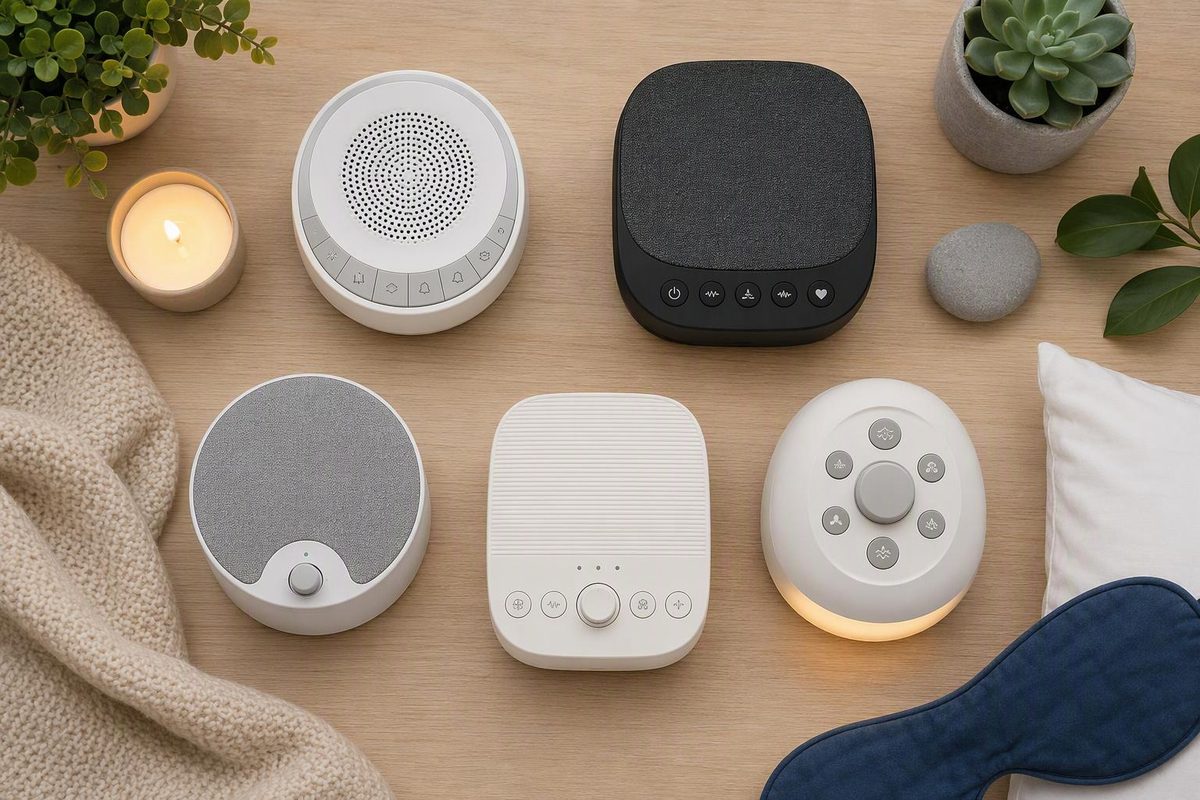
A noise machine can make tinnitus less noticeable in a quiet bedroom or workspace, but it cannot cure tinnitus or repair hearing. Choose one that plays a comfortable sound at a gentle volume without distracting loops, abrupt shutoffs, bright lights, or frustrating controls. You do not need a device marketed specifically for tinnitus.
Choose where you need relief and the sound you prefer; the tool suggests a practical starting setup.
Choose a Starting Setup
Change any selection to compare a device type and sound. This is a comfort-based starting point, not a treatment prescription.
Your Starting Point
Tabletop machine with pink noise
A tabletop machine provides dedicated bedroom controls and continuous playback. Pink noise is softer and less bright than white noise.
Volume: Begin barely audible and raise it only to the lowest level that provides relief. Complete masking is not required.
Sudden hearing loss, heartbeat-like pulsing, severe vertigo, facial weakness, drainage, or tinnitus after head or loud-noise trauma needs prompt medical assessment.
Source: 2024 VA/DoD Clinical Practice Guideline for Tinnitus and NIDCD tinnitus guidance.
No Noise Color Is Best for Everyone
Tinnitus varies, so a sound that calms one person may feel harsh or distracting to another. The 2024 VA/DoD tinnitus guideline gives a weak recommendation for therapeutic sound used as self-care, reflecting limitations in the evidence and differences in patient preferences. It finds insufficient evidence to recommend for or against altered or “notched” music specifically (VA/DoD tinnitus guideline).
Use sound labels as starting points rather than prescriptions:
| Sound | General Character | Consider It If… |
|---|---|---|
| White noise | Steady, bright hiss | You like a crisp, fan-like sound |
| Pink noise | Softer and less bright than white noise | White noise feels too sharp |
| Brown noise | Deeper, fuller rumble | Lower-pitched sound feels more relaxing |
| Nature sound | Rain, waves, a stream, or similar ambience | Tonal noise feels clinical or irritating |
| Fan or air purifier | Mechanical airflow | You also want air movement or filtration |
| Music or talk audio | Meaningful, changing sound | Distraction helps more than steady noise; speech may interfere with sleep |
The National Institute on Deafness and Other Communication Disorders lists tabletop generators, smartphone sounds, radios, and household fans as options, particularly for relaxation and sleep. It also discusses wearable generators and hearing aids as sound-therapy options (NIDCD).
Before buying a machine, audition several sounds through a phone or speaker for a few evenings. That trial will tell you more than a product’s list of 30 or 50 tracks. For a broader comparison, see Sound for Tinnitus Treatment: What Helps and How to Try It.
Do not force yourself to use a sound because its label or frequency supposedly matches your tinnitus. The useful sound is the one that reduces contrast with silence or redirects your attention without becoming another source of irritation.
Prioritize Volume Control and Smooth Playback
Fine volume control matters because the goal is usually quiet background sound rather than room-filling noise. Large jumps between volume settings can make it difficult to find a comfortable level, particularly in a quiet bedroom.
Playback should be continuous. Short, obvious loops can become more distracting than tinnitus. When testing nature tracks, listen for repeated bird calls, identical wave patterns, pauses, or abrupt transitions.
A practical machine should offer at least a small selection of steady and natural sounds. Several noise colors plus rain or waves provide enough variety for an initial trial; an enormous sound library is not necessary.
A timer should be optional. Some people need sound only while falling asleep, while others prefer it throughout the night. Avoid a model that forces an automatic shutoff if silence after the timer expires tends to wake you.
Bedroom controls should be easy to operate in the dark. Physical buttons or a simple dial may be more practical at 2 a.m. than an app or bright touchscreen. Check that indicator lights and displays can dim fully.
Plug-in operation is useful for continuous overnight playback. Battery power can help during travel or outages. A headphone or pillow-speaker output matters only if you expect to use one; a room speaker is generally simpler for sleep and avoids wearing earbuds for hours.
Be cautious with products claiming that a particular frequency, noise color, or proprietary track will eliminate tinnitus. Current guidance does not support a universal sound prescription.
Set the Machine at the Lowest Helpful Level
Start quietly and raise the level only until the sound softens the contrast with tinnitus or helps you relax. You do not have to cover the tinnitus completely.
In one clinician-directed approach described by the VA/DoD guideline, noise or music is set at “the lowest level that provides relief.” The guideline’s patient summary likewise presents music, white noise, and nature sounds as options for comfort and relaxation—not as a cure (VA/DoD patient summary).
Use this sequence for a home trial:
- Place the machine within reach rather than directly beside your ear.
- Choose the least irritating sound, not necessarily the sound closest to your tinnitus.
- Begin at a barely audible level in the quiet room.
- Increase it only enough to provide relief while leaving ordinary nearby sounds audible.
- Keep the setup consistent for several nights, then compare sleep onset, awakenings, and morning comfort.
Turn the machine down or stop using it if the sound is uncomfortable or makes your tinnitus more intrusive. Do not respond by steadily increasing the volume. More sound is not automatically more helpful, and sufficiently loud sound can damage hearing.
Match the Device to Where You Need Relief
A tabletop noise machine is usually the simplest bedroom choice. It has dedicated controls, does not depend on phone notifications, and can run continuously. Check the looping, minimum volume, timer behavior, and display brightness before committing to it.
A phone app or streaming speaker is useful for testing sounds before buying hardware. It may also offer a larger sound library. Disable notifications that could interrupt playback and confirm that the chosen track loops smoothly.
A fan or air purifier can be enough when you prefer mechanical airflow and do not need multiple sound choices. It is not necessary to replace a household sound source that already provides comfortable background noise.
A wearable sound generator may be worth discussing with an audiologist when tinnitus interferes throughout the day rather than only in quiet rooms or at bedtime.
If you also have hearing loss, ask about hearing aids instead of assuming that a masking machine is the complete answer. The VA/DoD guideline weakly recommends hearing aids for tinnitus management in adults with hearing loss. NIDCD explains that amplification can make external sounds and communication more accessible while making tinnitus less noticeable.
Certain Symptoms Need Assessment Before Self-Treatment
Seek immediate medical care for tinnitus accompanied by sudden hearing loss, recent loud-noise or head trauma, facial weakness, severe dizziness or vertigo, ear drainage, or pulsing that follows the heartbeat. The VA/DoD patient guidance identifies these as reasons for immediate assessment rather than self-management alone.
If tinnitus is accompanied by thoughts of suicide or self-harm, call or text 988 in the United States or use emergency services.
For tinnitus that developed gradually, arrange a hearing evaluation if it persists or affects hearing, sleep, concentration, or mood. For uncomplicated tinnitus that is most intrusive in silence, start inexpensively: test several sounds, keep the level gentle, and judge the setup by whether it improves sleep or daily function—not whether it makes tinnitus disappear.