
Sound for Tinnitus Treatment: What Helps and How to Try It
Learn which tinnitus sounds to try, how loud to play them, when hearing aids may help, and why no frequency or noise color works for everyone.
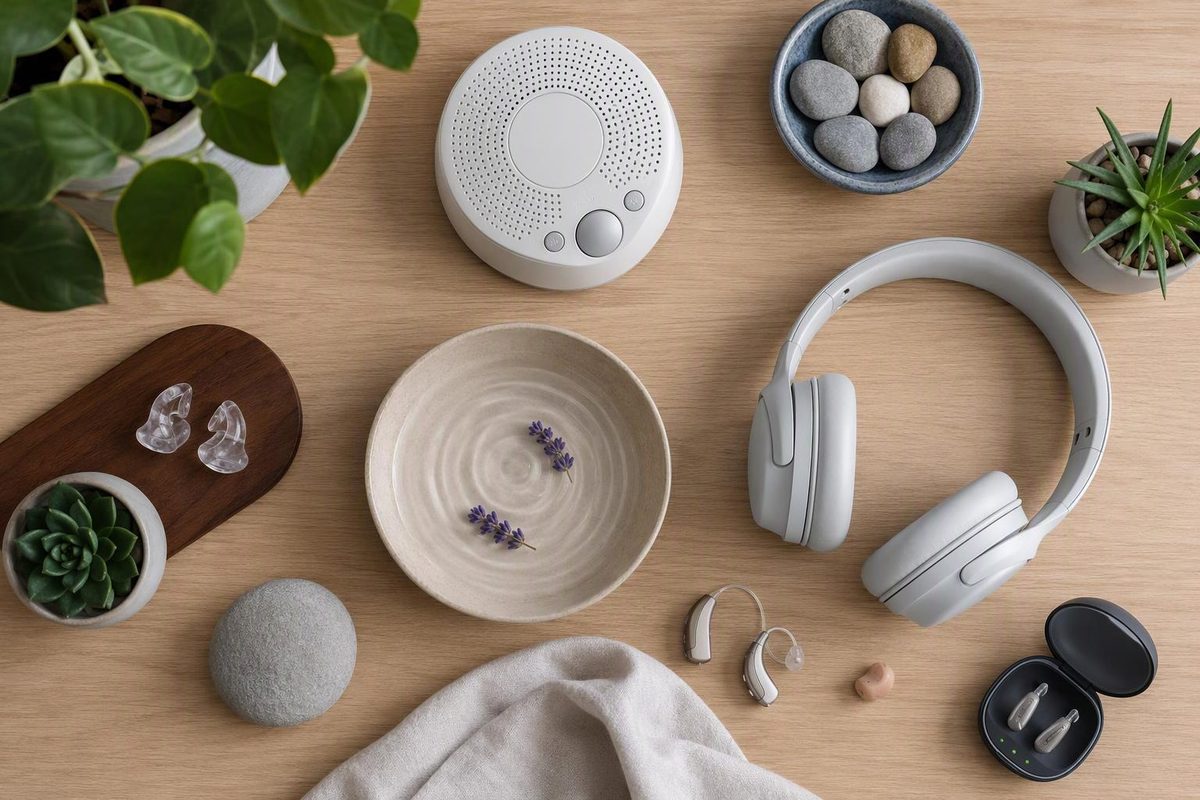
Sound can make tinnitus less noticeable, support sleep or concentration, and help some people react less strongly to it. It is a management tool, not a proven cure—and there is no single frequency, noise color, or app that works best for everyone.
The 2024 VA/DoD tinnitus guideline gives a weak recommendation in favor of therapeutic sound for self-care, reflecting potential benefit but low-confidence evidence. It also notes that sound is typically most effective when paired with professional guidance. A Cochrane review, based on searches through July 2018, found no evidence that hearing aids, sound generators, or combination devices were superior to no device or education, largely because the necessary comparison data were missing. Limited head-to-head evidence did not establish one device type as better than another. In practical terms, a low-cost sound trial is reasonable, but expensive or curative claims deserve caution (VA/DoD guideline; Cochrane review).
What sound therapy is meant to do
Sound can be used for several related purposes:
- Sound enrichment: reduces the contrast between tinnitus and a silent room.
- Partial masking: makes tinnitus less prominent without necessarily covering it completely.
- Distraction or relaxation: shifts attention toward a neutral or pleasant sound.
- Habituation support: helps a person become less aware of or troubled by tinnitus over time, usually as part of a structured program with counseling.
Success does not have to mean that tinnitus becomes quieter. Falling asleep more easily, concentrating longer, or feeling less distressed are meaningful outcomes even if the perceived tone remains.
Which sound should you try?
There is no clinically established “best sound.” Start with one that is neutral or pleasant and suits the situation.
| Option | When it may be useful | What to know |
|---|---|---|
| Fan, air purifier, or quiet radio | Bedtime or a quiet room | Cheap and easy; precise frequency matching is unnecessary for a basic trial. |
| Rain, waves, or other nature sounds | Relaxation and sleep routines | Choose a steady recording without abrupt changes that keep drawing your attention. |
| White, pink, or brown noise | Work, reading, or sleep | These noises distribute sound energy differently. Personal comfort matters more than claims that one color is universally therapeutic. |
| Soft instrumental music | Relaxation or low-demand activities | Ordinary music is reasonable if it helps. Evidence is insufficient to recommend for or against “notched” or spectrally altered music programs. |
| Phone or tabletop sound generator | Flexible home use | A free or inexpensive option can test the idea before you buy a dedicated device. |
| Hearing aids | Tinnitus with hearing loss | Amplifying everyday sound may improve communication and make tinnitus less noticeable. |
| Wearable sound generator | Sound support away from home | An audiologist can help set a comfortable level, particularly if you also have sound sensitivity. |
The National Institute on Deafness and Other Communication Disorders lists fans, radios, smartphone or tabletop generators, hearing aids, and wearable generators among the available options. It identifies hearing aids as a main treatment option when tinnitus occurs with hearing loss (NIDCD). The VA/DoD guideline likewise suggests hearing aids for adults who have both conditions. Available evidence has not consistently shown that adding a built-in noise generator works better than amplification alone.
That makes a hearing test more useful than buying a “tinnitus hearing aid” based only on advertising. If speech seems unclear, especially in background noise, an audiologist can assess whether hearing loss is part of the problem.
A gentle way to test sound at home
- Choose one goal. Decide whether you want help falling asleep, reading, working, or settling a spike in awareness. This makes it easier to judge whether the sound is useful.
- Begin with an external source. A bedside speaker, fan, or phone placed away from your head is often the simplest first trial. Earbuds are not required.
- Use a low, comfortable level. Try the lowest volume that provides relief. Full masking is unnecessary, and some structured approaches deliberately keep tinnitus faintly audible.
- Pick a tolerable sound, not a supposedly therapeutic one. If white noise feels sharp, try rain, pink noise, a fan, or soft music. A sound you dislike is unlikely to help.
- Compare function, not moment-to-moment loudness. Note whether sleep onset, concentration, or distress improves. Lower the volume or stop if the sound causes discomfort, leaves hearing muffled, or makes tinnitus persistently more intrusive.
There is no universal daily dose. Research protocols vary widely, so an app’s exact schedule should not be treated as established medical fact. If a gentle trial does not help, increasing the volume is not the answer.
Keep the volume genuinely gentle
Therapeutic sound should not become another hazardous noise exposure. The World Health Organization advises setting personal-listening devices at no more than 60% of maximum and staying below an 80 dB average when using sound-level monitoring; allowable listening time falls sharply as volume rises. These are upper safe-listening limits, not tinnitus-treatment targets. Background sound can normally be much softer (WHO safe-listening guidance).
Do not raise the volume to compete with machinery, traffic, or other loud surroundings. Noise-canceling headphones can reduce the temptation to turn sound up, while proper hearing protection remains important around hazardous noise. Earplugs protect hearing in loud settings but are not tinnitus therapy; in quiet places, they may make ringing stand out because they reduce external sound. See why earplugs can change tinnitus awareness.
When sound alone is not enough
For bothersome tinnitus, sound is only one option. The VA/DoD guideline also suggests cognitive behavioral therapy (CBT) delivered by a trained provider. CBT aims to reduce tinnitus-related distress and improve functioning rather than erase the sound. Structured programs may combine education, coping skills, and sound strategies.
Arrange a hearing evaluation if tinnitus persists or affects sleep, concentration, or communication. Seek urgent assessment, ideally within 24 hours, when tinnitus comes with sudden unexplained hearing loss, including a change first noticed on waking. NICE recommends assessment within 24 hours when tinnitus accompanies hearing loss that developed over three days or less in the previous 30 days (NICE tinnitus guidance).
Prompt medical assessment is also appropriate for tinnitus that beats with the pulse, sudden persistent tinnitus in one ear, severe or persistent dizziness, neurological symptoms, or ear pain or drainage (VA/DoD care options). If hearing suddenly feels blocked or dull, use this muffled-hearing checklist rather than trying to cover the change with louder sound.
For routine tinnitus without warning signs, a sensible starting point is modest: a pleasant low-level background sound, a clearly defined goal, and a hearing test if communication is difficult. You do not need a proprietary frequency or an expensive subscription to find out whether sound enrichment helps you.