
When Is a Popping Sound in Your Ear a Concern?
Persistent or frequently recurring popping, hearing changes, pain, dizziness, fever, bleeding or drainage are reasons to seek medical evaluation.
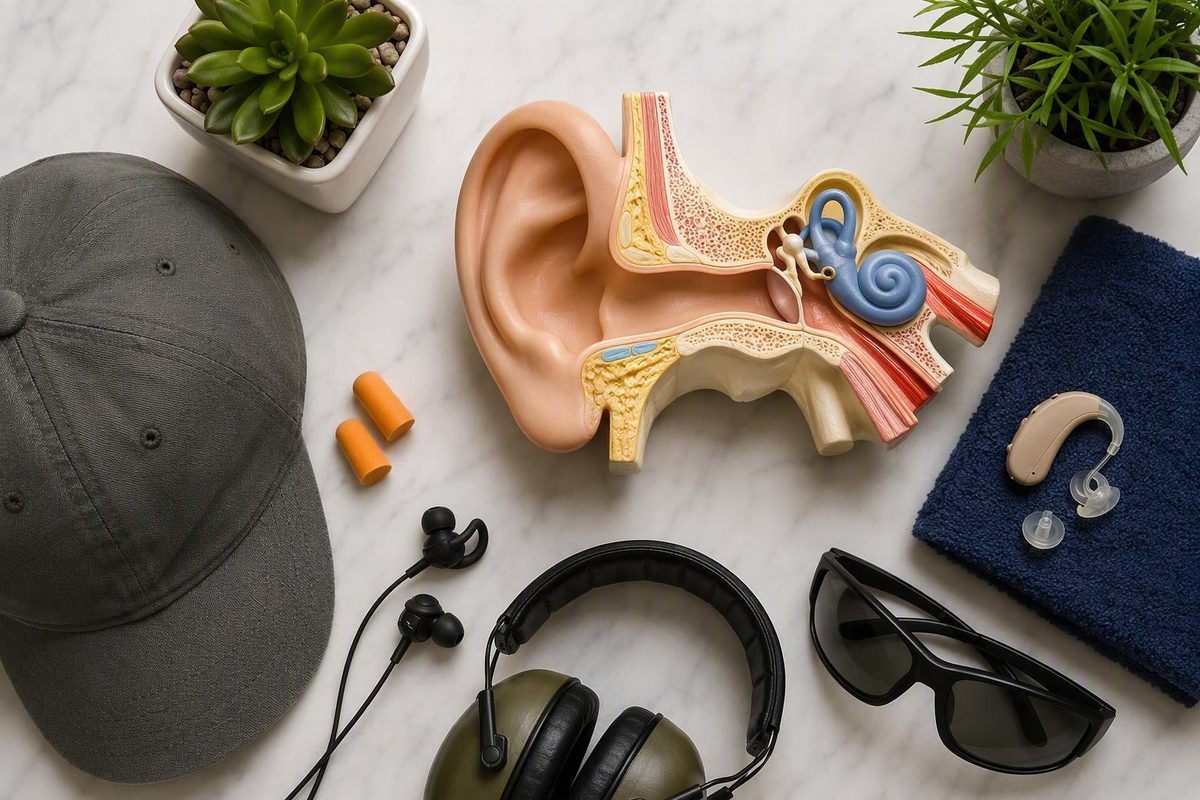
A brief, painless popping sound in the ear while swallowing, yawning, chewing, or changing altitude often reflects normal pressure equalization. Popping that persists, returns frequently, affects hearing, or occurs with pain, dizziness, fever, bleeding, or drainage deserves medical evaluation. Johns Hopkins Medicine explains how the Eustachian tube balances middle-ear pressure and drains fluid.
The sound itself is not a diagnosis. Possible explanations include Eustachian tube dysfunction, impacted earwax, middle-ear fluid or infection, jaw-joint problems, tinnitus, and less common middle-ear muscle activity. The timing, trigger, and accompanying symptoms are generally more informative than whether the noise sounds like a pop, click, crackle, bubble, or flutter.
What a popping sound in the ear usually represents
The Eustachian tube is a narrow passage connecting the middle ear with the nasal-sinus area behind the nose. It helps balance pressure across the eardrum, drain middle-ear fluid, and protect the ear from nasal drainage and internally generated sounds. The tube generally remains closed but opens briefly during actions such as swallowing and yawning. Air moving as it opens may create a slight click or pop.
That opening explains why an ear may pop after a yawn or swallow without anything being wrong. If pressure on one side of the eardrum differs from pressure on the other, opening the tube allows air to move and reduce the imbalance.
“Popping,” “clicking,” “crackling,” “bubbling,” and “fluttering” are descriptions rather than diagnoses. Two people with different underlying problems may use the same word, while one condition may sound different from day to day. The noise may reflect:
- Air moving as the Eustachian tube opens
- Pressure or fluid affecting the middle ear
- Wax shifting in the external ear canal
- Movement of the jaw joint beside the ear
- A sound perceived without an outside source
- Involuntary activity in small middle-ear muscles
The anatomy helps distinguish these possibilities:
- The ear canal is the passage leading inward from the visible ear. This is where earwax can become impacted.
- The middle ear is the air-filled space behind the eardrum. Pressure problems, fluid, and many ear infections involve this space.
- The temporomandibular joint, or TMJ, is outside the ear but sits immediately in front of it. A jaw click can therefore feel or sound as though it comes from inside the ear.
Tinnitus is different from an ordinary pressure pop. It means perceiving sound without an external source. Although often described as ringing or buzzing, tinnitus can also be perceived as clicking or crackling. Calling a noise tinnitus describes the perception; it does not explain the underlying cause. Bangor Audiology includes crackling among the sounds that may be perceived as tinnitus.
A jaw click is different again. If clicking occurs predictably when you open your mouth, bite, or chew—especially with jaw pain, stiffness, restricted movement, or headaches—the nearby TMJ or surrounding muscles may be involved.
These categories can overlap. A cold may produce both congestion and middle-ear fluid. Jaw movement can open a Eustachian tube while also moving an irritated TMJ. Hearing changes can accompany several ear conditions. The sound alone therefore cannot reliably identify its source.
When occasional ear popping can be a normal pressure response
Swallowing and yawning activate muscles that briefly open the Eustachian tube. Chewing gum encourages repeated swallowing, while gentle jaw movement may have a similar effect. When the tube opens, pressure in the middle ear can move toward the pressure in the surrounding environment.
This process becomes particularly noticeable when external pressure changes faster than the middle ear can adjust. Common settings include:
- Airplane takeoff and landing
- Diving or returning toward the surface
- Driving through mountains or hilly terrain
- Riding a fast elevator in a tall building
- Other rapid ascents or descents
A pressure difference across the eardrum may cause fullness, a plugged sensation, discomfort, or temporarily muffled hearing. Opening the Eustachian tube lets air move, potentially producing the familiar pop as pressure equalizes. Medical News Today describes the relationship between pressure differences, temporary hearing effects, and Eustachian tube opening.
For example, imagine that one ear feels full during an airplane’s descent. You swallow several times, hear a painless pop, and notice that the fullness and muffled sensation improve. That pattern is consistent with temporary pressure equalization. It is not proof of a diagnosis, but it differs from an ear that remains blocked or becomes increasingly painful after landing.
A short-lived pressure response is more reassuring when it:
- Has an obvious trigger, such as airplane descent
- Improves after swallowing or yawning
- Is painless
- Causes no more than a brief plugged or muffled sensation
- Resolves when the pressure change ends
Evaluation becomes more appropriate when the ear remains blocked, pain develops, hearing does not return to normal, or popping continues without an identifiable pressure change. Frequent symptoms during ordinary daily activities may also point away from a simple altitude response.
There is no universal rule saying that every popping ear should recover within a particular number of days. The appropriate next step depends on severity, onset, hearing effects, recurrence, and accompanying symptoms—not the calendar alone.
Common causes and the clues that may accompany them
The following table is a guide, not a diagnostic tool. The same clues can occur in more than one condition, and no symptom combination confirms the cause.
| Possible explanation | Common context | Accompanying clues | Appropriate next step |
|---|---|---|---|
| Normal pressure equalization | Swallowing, yawning, chewing, flying, diving, mountains, elevators | Brief fullness followed by a painless pop and improvement | Monitor if short-lived and uncomplicated; try gentle swallowing or yawning |
| Obstructive Eustachian tube dysfunction | Cold, allergies, sinus inflammation, nasal congestion, or rapid pressure change | Fullness, pressure, muffled hearing, discomfort, tinnitus, popping, or dizziness | Arrange assessment if symptoms persist, recur, become painful, or affect hearing |
| Impacted earwax | Blockage in the external ear canal; symptoms may change with jaw movement | Fullness, itching, discomfort, tinnitus, reduced hearing, or crackling | Do not probe the canal; seek advice about examination and safe removal |
| Middle-ear fluid or infection | After a cold or when middle-ear drainage is impaired | Pressure, pain, impaired hearing, fever, headache, or drainage | Obtain medical evaluation, particularly when pain, fever, hearing change, or drainage is present |
| TMJ or jaw-muscle problem | Popping while chewing, biting, yawning, or opening the mouth | Jaw pain, stiffness, restricted movement, facial discomfort, or headaches | Consider assessment by a clinician or dental professional familiar with jaw disorders |
| Middle-ear muscle activity | Recurrent rhythmic clicking, buzzing, fluttering, or popping | Repetitive or patterned sound, sometimes without a pressure trigger | Seek evaluation if recurrent, persistent, or bothersome |
| Patulous Eustachian tube dysfunction | Symptoms do not resemble a simply blocked ear | One’s own voice or breathing sounds unusually loud | Seek assessment because treatment differs from treatment for an obstructed tube |
Obstructive Eustachian tube dysfunction
A cold, allergies, sinus inflammation, or rapid pressure change may interfere with a Eustachian tube’s ability to open normally. Possible symptoms include pressure, fullness, discomfort, muffled hearing, tinnitus, popping, or dizziness. These clues make obstructive dysfunction one possibility, but they do not exclude fluid, infection, wax, or another cause. Healthline summarizes the overlapping causes and symptoms associated with ear crackling.
“Obstructive” is important: the problem involves inadequate opening or otherwise impaired tube function. That is not the same as every pop produced by normal opening, and it is not the same as a tube that remains abnormally open.
Impacted earwax
Earwax is located in the external ear canal, not in the Eustachian tube. When wax becomes impacted, it may accompany fullness, itching, discomfort, tinnitus, discharge, or reduced hearing.
Wax-related symptoms can resemble middle-ear pressure. Cotton swabs can worsen impaction by pushing wax farther inward. Impacted wax and TMJ problems can both produce sounds associated with jaw movement. PIH Health House Clinic outlines the earwax and jaw-related clues that may accompany a “clicky” ear.
Middle-ear fluid or infection
When normal middle-ear drainage is impaired, fluid can collect behind the eardrum. Fluid may affect pressure and hearing even when infection has not been confirmed.
If infection develops, possible clues include ear pain or pressure, headache, impaired hearing, fever, and drainage. These symptoms increase the need for an examination, but they do not prove an infection is present. WebMD describes how blocked drainage may lead to middle-ear fluid and lists possible infection symptoms.
Drainage should not be treated as a routine pressure symptom. It requires assessment because the sound and accompanying symptoms cannot establish where the fluid is coming from or what caused it.
TMJ and jaw-muscle problems
The TMJ connects the jaw to the skull immediately in front of the ear. Clicking or popping that occurs during chewing or yawning may originate there, particularly when accompanied by jaw pain, stiffness, restricted opening, facial soreness, or headaches.
A TMJ click can be heard near the ear without the middle ear being the source. Conversely, jaw movement can also help open a Eustachian tube, so movement-triggered popping alone cannot distinguish the two.
What the timing and sound pattern can reveal
The circumstances surrounding the sound are often more useful than its exact tone. Before an appointment, note:
- Whether the sound is in one ear or both
- What triggers it
- Whether it began after a cold, allergy flare, flight, or dive
- Whether the sound is isolated or rhythmic
- Whether hearing, balance, pain, or jaw movement changes at the same time
- Whether your own voice or breathing sounds unusually loud
After a cold or allergy flare
Popping accompanied by congestion, fullness, and muffled hearing after a cold may fit obstructive Eustachian tube dysfunction. Swelling can make it harder for the tube to open, and impaired drainage may allow fluid to remain behind the eardrum.
Eustachian tube dysfunction and middle-ear fluid can feel very similar. An examination may be needed to see whether the eardrum shows signs of pressure or fluid and whether hearing has changed. Fever, worsening pain, or drainage strengthens the need for medical assessment.
During travel or another pressure change
Popping limited to airplane descent, diving, mountain travel, elevator travel, or hilly drives is more consistent with pressure equalization—particularly if swallowing brings relief.
Symptoms that remain after the pressure event, become intensely painful, or occur with hearing loss, dizziness, bleeding, or unusual discomfort should not be managed by repeatedly forcing the ear to pop. Those symptoms after flying or diving warrant prompt medical assessment. ENT Memphis identifies intense pain, hearing loss, dizziness, bleeding, and persistent discomfort as reasons for evaluation after a pressure change.
During chewing or opening the mouth
A click that appears whenever you chew, bite, or open your mouth widely—especially with jaw stiffness, tenderness, restricted movement, or headaches—raises the possibility of TMJ or jaw-muscle involvement.
Consider whether the ear feels full before the click and clearer afterward, or whether the sound simply follows the jaw’s movement without changing ear pressure. That observation may help guide an examination, but it cannot confirm the source.
Recurrent rhythmic clicking or fluttering
A repetitive click, flutter, or buzz that follows a pattern differs from the isolated pop of pressure equalization. One less common explanation is involuntary activity of the stapedius or tensor tympani, two small middle-ear muscles. This pattern is sometimes called middle-ear myoclonus. Flatirons Audiology describes rhythmic clicking, buzzing, or crackling associated with middle-ear muscle activity.
Not every repeated sound is caused by muscle activity. A clinician may need to distinguish it from tinnitus, jaw-generated sounds, and other ear conditions. Recurrent or bothersome rhythmic clicking should be assessed.
Hearing your own voice or breathing unusually loudly
Autophony means that internally generated sounds—particularly your voice or breathing—seem abnormally loud in the affected ear. It may occur when a Eustachian tube remains abnormally open, a condition called patulous Eustachian tube dysfunction.
Patulous and obstructive dysfunction are different:
- Obstructive dysfunction: The tube does not open adequately, often producing pressure, fullness, and muffled hearing.
- Patulous dysfunction: The tube remains too open, allowing internal sounds to be transmitted unusually strongly.
The distinction matters because treatment depends on the type of dysfunction. Measures or medicines intended for a blocked tube may be unhelpful or unsuitable when the tube is already abnormally open; Johns Hopkins notes that some decongestants or antihistamines may worsen certain cases.
One-sided symptoms do not establish a diagnosis, but an examination can check for canal blockage, eardrum changes, pressure abnormalities, hearing differences, and jaw findings.
Low-risk steps for mild pressure-related popping
For mild symptoms with an obvious pressure trigger and no warning signs, begin with conservative actions:
- Swallow several times.
- Yawn naturally or imitate a gentle yawn.
- Chew gum to encourage swallowing.
- Move the jaw gently without stretching or forcing it.
These actions may encourage the Eustachian tube to open. They are options for uncomplicated pressure symptoms—not treatments for infection, impacted wax, TMJ disease, tinnitus, or unexplained persistent popping.
A painless pop followed by restored pressure and normal hearing is reassuring. If nothing happens, do not escalate to repeated or aggressive manipulation. An ear that stays blocked, becomes painful, or develops hearing or balance symptoms needs assessment instead.
If you try a Valsalva maneuver
The Valsalva maneuver is sometimes used to equalize pressure:
- Close your mouth.
- Pinch your nostrils closed.
- Blow very gently against the closed nose.
- Stop immediately if you feel pain, sharp pressure, or dizziness.
The goal is a subtle pressure change, not a hard blast. Forceful pressure may injure the eardrum. The maneuver may also be unsuitable for people with an active ear infection, a history of eardrum perforation, or certain cardiovascular or eye conditions. Medically reviewed Valsalva guidance lists relevant ear, eye, and cardiovascular precautions.
If any of those factors apply, seek individualized professional advice rather than experimenting with pressure. Do not use the maneuver as a substitute for evaluation when the ear remains blocked or other symptoms are developing.
The Toynbee maneuver
The Toynbee maneuver consists of pinching the nose, closing the mouth, and swallowing. It is another way of attempting pressure equalization.
It should not be presented as universally safer or more effective than other methods, and it should not be repeatedly forced in pursuit of a pop.
If the ear remains blocked after a flight or another pressure change, becomes painful, or develops hearing or balance symptoms, seek an examination rather than continuing pressure maneuvers.
What not to do—and why medicines and ear drops are cause-specific
Do not:
- Insert cotton swabs, bobby pins, keys, ear-cleaning tools, or other objects into the ear canal.
- Perform a forceful pressure maneuver.
- Assume every popping sound is caused by congestion.
- Irrigate an ear when the condition of the eardrum is uncertain.
- Self-start leftover or unprescribed antibiotics.
- Ignore worsening pain, hearing change, dizziness, fever, bleeding, or drainage.
Do not probe the ear canal
Cotton swabs and improvised objects may push wax deeper rather than remove it. They can also injure the ear canal or eardrum. If wax is suspected because of fullness, itching, reduced hearing, or canal discomfort, visual inspection is the safer way to confirm it.
Seek professional guidance before putting liquid into the ear when any of those factors may apply.
Do not treat every pop as nasal congestion
Decongestants, antihistamines, and nasal sprays may be discussed in selected cases involving congestion or allergy symptoms, but suitability depends on the person and the underlying type of Eustachian tube problem. A clinician or pharmacist can assess whether a specific product is appropriate.
Some decongestant nasal sprays may cause rebound congestion when overused. Decongestants or antihistamines may also worsen some forms of Eustachian tube dysfunction. These limitations reinforce why a persistent popping ear should not automatically be treated as a blocked tube.
This guide intentionally does not provide medication doses or schedules. Follow product directions and obtain advice from a clinician or pharmacist when suitability is uncertain.
Antibiotics are not a general ear-popping treatment
Antibiotics address specific infections. They do not treat normal pressure equalization, earwax, TMJ clicking, tinnitus, or most unexplained popping. Even when pain, fever, hearing difficulty, or drainage suggests that infection is possible, an examination is needed to determine the cause and whether an antibiotic is appropriate.
Ear drops likewise cannot be selected solely from the sound. Wax-softening products act in the external ear canal, while fluid behind an intact eardrum is in the middle ear. Treating them as the same problem may delay appropriate care.
When a popping ear should be medically evaluated
Arrange a professional evaluation when the popping:
- Persists after an obvious pressure event
- Recurs frequently without a clear explanation
- Becomes bothersome or disrupts daily activities
- Affects hearing or leaves the ear continuously blocked
- Is consistently one-sided
- Is rhythmic, fluttering, or otherwise unusual
- Occurs with ongoing jaw pain or restricted jaw movement
Accompanying symptoms that strengthen the need for assessment include:
- Significant or worsening ear pain
- New or noticeable hearing change
- Dizziness, vertigo, unsteadiness, or balance difficulty
- Fever
- Fluid or pus-like drainage
- Bleeding from the ear
- Headache with ear pain or pressure
- Persistent tinnitus or another unexplained sound
Pain or pressure, impaired hearing, headache, fever, and drainage can occur with a middle-ear infection, but they do not prove that infection is present. Inspection of the ear canal and eardrum is needed to distinguish possible infection from fluid without infection, wax, pressure injury, or another condition.
After flying or diving, intense pain, hearing loss, dizziness, bleeding, persistent discomfort, or another unusual symptom warrants prompt in-person assessment. Do not continue Valsalva or other pressure maneuvers in an attempt to overcome severe symptoms.
There is no single duration that separates a harmless problem from one needing care. Mild symptoms after a cold may improve as congestion settles, while severe or rapidly worsening symptoms require attention sooner. Severity, onset, hearing and balance changes, and the circumstances surrounding the symptom are more useful than an arbitrary day count.
However, a hearing change occurring alongside popping may indicate an underlying problem that needs evaluation.
When symptoms are severe or rapidly worsening, involve marked hearing or balance changes, or follow a major flying or diving pressure event, seek timely in-person care rather than continuing home maneuvers.
How a clinician investigates persistent ear popping
An evaluation usually begins with the history. A clinician may ask:
- Is the sound in one ear or both?
- Did it begin after a cold, allergy flare, flight, or dive?
- Does swallowing, yawning, or chewing trigger it?
- Is it an isolated pop or a rhythmic sound?
- Are hearing, balance, pain, fever, or drainage involved?
- Does your voice or breathing sound unusually loud?
- Is there jaw pain, stiffness, or limited movement?
The physical examination may include looking through the ear canal for wax, inflammation, foreign material, or drainage. The eardrum can then be checked for changes in position, shape, appearance, or movement, as well as signs suggesting pressure, fluid, infection, or injury.
A hearing test can identify and characterize an accompanying hearing change. It may show whether hearing differs between the ears, but it does not independently diagnose every cause of popping.
Tympanometry is another possible test. It changes pressure in the ear canal while measuring how the eardrum moves. The findings can help assess middle-ear pressure, possible fluid, or stiffness. KM Hearing Solutions explains how tympanometry measures eardrum movement to evaluate middle-ear conditions.
When Eustachian tube dysfunction is suspected, a clinician may combine the history with eardrum findings and pressure measurements. Autophony may prompt consideration of patulous dysfunction, while fullness and muffled hearing after a cold may point toward obstruction or fluid. These patterns guide the evaluation but do not replace it.
If the sound is tied to chewing or mouth opening, the jaw may be assessed for tenderness, clicking, stiffness, range of motion, and muscle tension. Depending on the findings, care may involve a primary-care clinician, an ear, nose, and throat specialist, an audiologist, or a dental professional familiar with TMJ disorders.
Treatment follows the identified cause. It may involve professional wax removal, management of an underlying nasal or ear condition, monitoring or treatment of middle-ear fluid, cause-specific infection care, TMJ management, or specialist assessment for unusual rhythmic clicking.
Consistent with Hear Review’s general-information terms, this guide can help organize symptoms and identify safer next steps, but it cannot diagnose an individual reader.
Why does my ear pop every time I swallow or yawn?
Swallowing and yawning briefly open the Eustachian tube, allowing pressure to equalize across the eardrum. Air movement during that process can create a pop or click. If it is painless, brief, and unaccompanied by hearing loss or other symptoms, it may reflect normal tube function.
If every swallow produces persistent crackling together with fullness, pain, congestion, or muffled hearing, the tube may not be functioning normally—or another condition may be producing a similar sound. Arrange an examination if the pattern persists or becomes bothersome.
Can earwax cause popping or crackling sounds?
Yes. Impacted wax in the external ear canal may cause crackling or popping, sometimes as the jaw moves. Fullness, itching, discomfort, tinnitus, or reduced hearing may occur as well.
The wax is in the ear canal; it does not block the Eustachian tube. Do not use cotton swabs or improvised tools to investigate. Because similar symptoms may come from middle-ear pressure or fluid, visual confirmation is preferable before choosing wax drops or irrigation.
Can tinnitus sound like popping or crackling?
It can. Tinnitus describes sound perceived without an external source, and some people describe it as crackling or clicking rather than ringing.
That does not mean every ear pop is tinnitus. A pop during swallowing may be a physical pressure-equalization sound, while clicking during chewing may come from the jaw. Repetitive or unexplained perceived sounds—particularly when accompanied by hearing changes—should be evaluated.
Is it safe to force my ear to pop with the Valsalva maneuver?
No. You should not force an ear to pop. If a Valsalva maneuver is appropriate, close your mouth, pinch your nose, and blow only very gently. Stop immediately if it causes pain, sharp pressure, or dizziness.
Obtain professional guidance before trying it if you may have an active ear infection, have a history of eardrum perforation, or have a relevant cardiovascular or eye condition. An ear that will not clear should be assessed rather than subjected to stronger or repeated pressure.
What symptoms with ear popping should prompt a medical evaluation?
Seek evaluation when popping persists, recurs frequently, affects hearing, remains one-sided, becomes bothersome, or cannot be explained by a brief pressure event.
Significant or worsening pain, hearing change, dizziness or balance difficulty, fever, bleeding, or fluid drainage are particularly important accompanying symptoms. Intense pain, hearing loss, dizziness, bleeding, or persistent discomfort after flying or diving also warrants prompt assessment.
An occasional painless pop during swallowing, yawning, or altitude change often reflects normal Eustachian tube function. For mild pressure symptoms, use only gentle measures such as swallowing or yawning, and never put objects into the ear. When popping persists or occurs with other symptoms, effective care depends on identifying the underlying cause rather than treating the sound alone.