
Veterans Hearing Loss and Tinnitus Study Findings
In a selected VA cohort, 85.7% met a broad hearing-loss criterion and 47.6% reported tinnitus, but the study cannot prove national prevalence or causation.
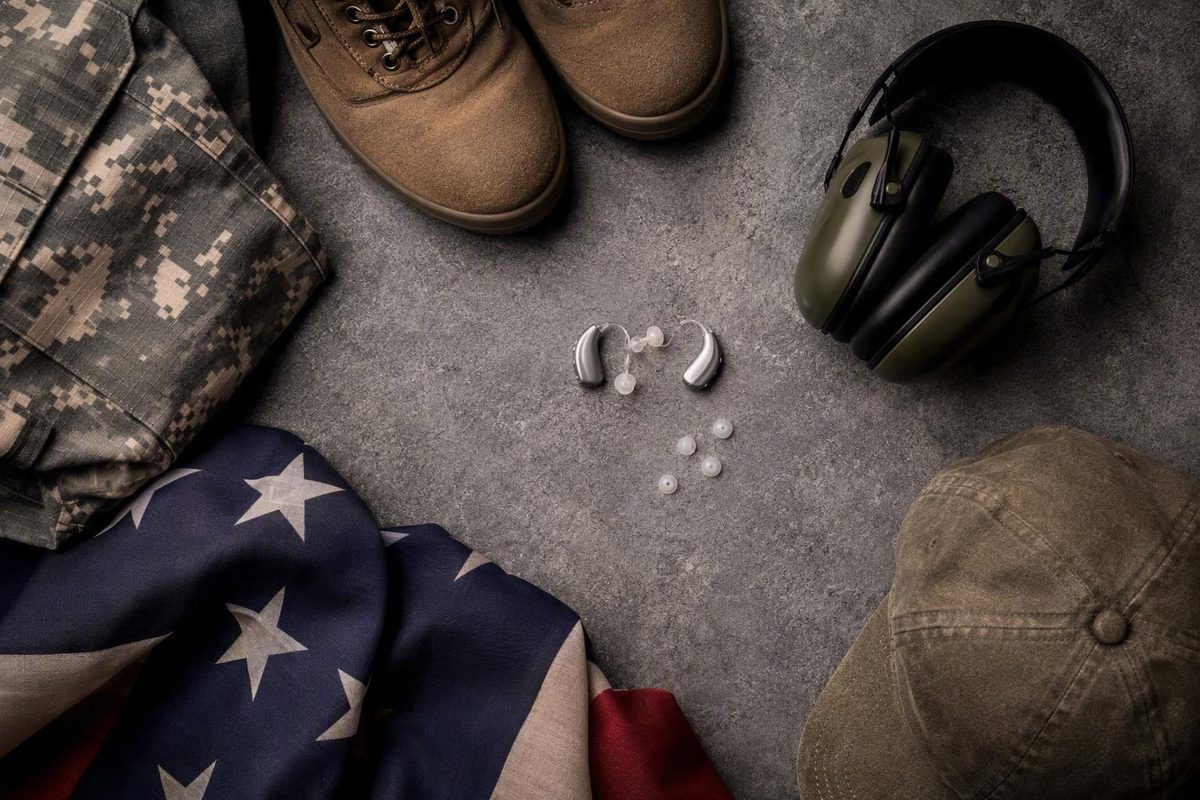
Large Million Veteran Program studies document substantial overlap between tinnitus and hearing loss in selected VA cohorts. Among 267,395 participants with complete clinical audiometry, 85.7% met a broad hearing-loss criterion and 47.6% reported tinnitus. In a separate analysis of 758,005 participants, 37.5% had self-reported tinnitus, a clinical diagnosis, or both.
Neither percentage estimates prevalence among all U.S. veterans. The studies describe different selected populations using different definitions, and neither proves that military exposure caused an individual veteran’s condition. The 2026 Million Veteran Program study is best understood as a large clinical snapshot—not a national prevalence survey or an individual causation test.
The short answer: what the major veteran hearing studies found
Three major studies provide different views of veterans’ hearing health. Their findings complement one another, but the percentages should not be averaged or treated as interchangeable.
| Study and sample | How conditions were identified | Principal result | Most important limitation |
|---|---|---|---|
| 267,395 Million Veteran Program participants with complete VA clinical audiometry | Hearing loss: at least one threshold above 20 dB HL at any standard frequency in either ear. Tinnitus: binary self-report | 85.7% met the hearing-loss criterion; 47.6% reported tinnitus | Older, 94%-male, audiometry-selected VA cohort—not all veterans |
| 758,005 Million Veteran Program participants | Tinnitus: self-report or ICD diagnosis. Hearing loss: audiograms, diagnoses, self-reported difficulty, or hearing-aid use | 37.5% had self-reported or diagnosed tinnitus, or both; tinnitus strongly overlapped with hearing loss (study) | Retrospective data using multiple measures rather than one uniform test |
| NOISE baseline sample: 690 participants, including 403 veterans and 287 service members | Direct testing, military histories, exposure questionnaires, and repeated follow-up | Tinnitus was present in 53% of the combined baseline sample (study description) | Recruited research sample; baseline findings are not national prevalence |
The 37.5% estimate does not conflict with the 47.6% estimate. The broader study combined self-reports and diagnosis records across a larger cohort, while the 267,395-person study required complete clinical hearing tests and used a binary tinnitus question.
NOISE addresses a different question. It was designed to follow hearing, tinnitus, and relevant exposures over time rather than relying only on retrospective records or one cross-sectional assessment. That makes it particularly useful for studying within-person change, although its baseline percentages still describe selected participants.
How the 267,395-veteran study was conducted
The 2026 study was a retrospective analysis of Million Veteran Program participants with complete VA clinical audiometry recorded from 1999 through 2021. Eligible records included bilateral air-conduction thresholds from 0.25 through 8 kHz and a word-recognition score.
Researchers used a broad descriptive definition of hearing loss: at least one threshold greater than 20 dB HL at any standard frequency in either ear. A participant could therefore meet the criterion because of one elevated threshold even if the remaining tested frequencies were within the study’s normal range.
The sample itself also helps explain the high result. Participants were VA healthcare users enrolled in a research program who had received complete clinical audiometry.
The cohort was 94% male and predominantly older. Mean age was 67.1 years for men and 55.5 years for women. Its composition limits how directly the findings apply to younger veterans and women. These methods, measurements, and sample characteristics are detailed in the full journal report.
Tinnitus was captured through a binary self-report item. That established whether a participant reported tinnitus, but it did not consistently document:
- Which ear was affected
- Whether the tinnitus was intermittent or constant
- When it began or how long it had lasted
- Its perceived loudness
- Its effects on sleep, mood, concentration, communication, or daily activity
The study also retained only each participant’s most recent complete audiogram. Audiometer and transducer documentation varied across VA sites and years, and individual quantitative military-noise exposure was unavailable as a covariate. Earlier or temporary changes may not appear in the retained test.
These limitations do not erase the findings. They define what those findings mean: the study offers a very large clinical snapshot of selected Million Veteran Program participants, but it cannot establish when each condition developed or what caused it.
What the civilian comparison shows—and what it cannot show
Researchers compared the veteran audiograms by sex with published results from 40,912 adults evaluated at Massachusetts Eye and Ear between 1993 and 2017. The veteran cohort had poorer thresholds than this civilian clinical benchmark, with a particularly notable difference around 4 kHz.
At approximately age 60, mean 4-kHz thresholds were about 12 dB higher among male veterans and 7 dB higher among female veterans. This supports a cohort-level finding that the studied veterans had poorer high-frequency hearing than the comparison group. It does not establish that every veteran develops earlier or more severe hearing loss than every civilian.
The comparison group came from one clinical institution, not a representative sample of the entire civilian population.
The 4-kHz region often receives attention because noise-induced hearing loss can produce poorer thresholds or a notch between roughly 3 and 6 kHz. But age, post-service occupational noise, recreational exposure, disease, medications, head injury, and other factors can affect an audiogram. A deficit near 4 kHz is compatible with noise injury; it is not a fingerprint proving military causation.
A U.S. Medicine report on the study suggested that hazardous noise during training, combat, and military occupational duties may help explain the pattern. That is secondary clinical commentary, not a causal result established by the veteran-civilian comparison.
How tinnitus overlaps with hearing loss, TBI, and mental health
In the separate 758,005-person Million Veteran Program analysis, participants with evidence of hearing loss were 4.15 times as likely to have tinnitus as those without hearing loss, with a reported 95% confidence interval of 4.12 to 4.15.
The adjusted observational analysis also reported associations between tinnitus and traumatic brain injury, or TBI, with a relative risk of 1.73 (95% CI, 1.71–1.73), and daily combat-noise exposure, with a relative risk of 1.17 (95% CI, 1.14–1.17). These results show that the conditions or exposures occurred together more often in the analyzed data. They do not prove that TBI or combat noise caused tinnitus in any individual.
Hearing loss and tinnitus overlapped strongly but were not interchangeable. In the study, 30.5% had evidence of both, 7.0% had tinnitus without the study’s evidence of hearing loss, and 20.8% had hearing difficulty without tinnitus. Hearing loss was identified using several possible indicators, including audiograms, diagnoses, self-reported difficulty, and hearing-aid use.
The timing analysis suggested that tinnitus may appear before—or mark increased risk of—later documented hearing loss, particularly among participants older than 40. Because this was retrospective research and event timing depended partly on records and participant recall, it does not show that tinnitus causes hearing loss or that tinnitus independently predicts it after every relevant baseline factor (primary analysis).
The 267,395-person audiometry study found a related pattern: participants reporting tinnitus reached comparable modeled levels of hearing impairment at younger ages. The authors interpreted this as possible evidence of greater underlying auditory dysfunction, not proof of a particular biological mechanism.
That study also reported associations between tinnitus and TBI or concussion, anxiety, depression, sleep disturbance, and alcohol use. These comorbidity comparisons were unadjusted observational analyses relying substantially on self-report, so they should not be treated as equivalent to the adjusted relative-risk estimates from the broader study. The relationships may also run in several directions: tinnitus may aggravate sleep or mood, distress may increase its perceived burden, and shared exposures may contribute to both.
Most importantly, tinnitus presence is not tinnitus burden. A yes-or-no item cannot show whether tinnitus is mildly noticeable or severely disrupts sleep, concentration, communication, emotional health, or work.
Why veteran prevalence estimates vary so widely
A percentage is meaningful only after asking who was counted and how the condition was defined.
| Measurement type | What it captures | Why the estimate may be higher or lower |
|---|---|---|
| Binary self-report | Anyone answering yes to a tinnitus question | Captures symptoms outside medical records but may include brief or minimally bothersome tinnitus |
| ICD diagnosis | Tinnitus or hearing loss coded in a clinical record | Misses people who do not seek care or never receive the relevant code |
| Direct audiometry | Thresholds measured at specified frequencies | Depends on the frequencies tested and the definition of hearing loss |
| Recruited research sample | Volunteers assessed under a study protocol | Recruitment and eligibility may select people with particular concerns or exposures |
| VA clinical cohort | Veterans receiving VA care or hearing tests | Likely contains more hearing problems than an unselected veteran population |
| Disability-compensation count | Conditions recognized as service connected under VA rules | Does not count everyone with symptoms or measure tinnitus distress |
Self-report can identify people who have never discussed tinnitus with a clinician. Audiometry measures hearing thresholds but does not itself determine whether tinnitus is present or bothersome.
Selection can matter as much as measurement. Compensation totals answer another question entirely: they count recognized service-connected conditions, not everyone with symptoms and not the severity of tinnitus-related distress.
The 53% NOISE baseline finding is useful evidence about a directly assessed research sample. It is not a national estimate. Participants volunteered for detailed hearing research, and the combined baseline group contained both service members and veterans.
For that reason, percentages from diagnosis records, self-reports, audiometry cohorts, recruited studies, and compensation records should not be averaged or ranked as if they measured the same outcome. A diagnosis-based estimate near 4% and a selected-sample estimate above 50% can both be accurate within their respective definitions and populations.
Association is not causation: the questions these studies cannot settle
Retrospective and cross-sectional studies can identify group differences and statistical associations. They cannot establish the cause of an individual veteran’s hearing loss or tinnitus.
A current audiogram may reflect several influences:
- Aging
- Military noise or blast exposure
- Post-service occupational noise
- Recreational noise, including shooting or power tools
- Head injury
- Ear or systemic disease
- Potentially ototoxic medications or chemicals
- Missing or incomplete historical audiograms
Historical evidence is often incomplete. The National Academies found that military hearing-conservation programs were inadequate and that entrance, surveillance, and separation testing frequently left insufficient records for evaluating hearing changes related to service. Its consensus report considered a prolonged delay in the onset of noise-induced hearing loss unlikely while also recognizing that the available longitudinal evidence was limited (National Academies report).
That distinction requires careful wording. Delayed biological onset would mean hearing remained unaffected for a substantial period after exposure and later deteriorated because of that earlier exposure. Delayed recognition or documentation means damage or symptoms existed earlier but were not noticed, tested, reported, or coded until later. Existing evidence does not conclusively settle every delayed-onset question for modern veteran cohorts.
NOISE was created to improve this evidence base. Participants receive comprehensive in-person assessments at enrollment and at scheduled follow-ups, complete annual questionnaires, and provide detailed military histories. Its exposure measures cover military, civilian occupational, and non-occupational noise, as well as blast, TBI, solvents, exposure duration, frequency, and use of protective equipment.
Important questions remain:
- Does tinnitus independently predict new hearing loss after accounting for baseline thresholds, age, and lifetime exposure?
- How would the 267,395-person results change under more conventional hearing-loss definitions?
- Do women and younger veterans show the same trajectories as this older, predominantly male cohort?
- How much of the veteran-civilian difference would remain if both groups were recruited and analyzed using closely comparable methods?
- Which blast- or TBI-related auditory difficulties are missed by routine pure-tone testing?
What a veteran can do with this information
A veteran who notices tinnitus, reduced hearing, difficulty understanding speech, or an auditory change after blast exposure or TBI should consider a hearing evaluation. This remains useful when a basic hearing test appears normal because conventional pure-tone thresholds do not capture every functional communication problem.
A practical assessment may include:
- A detailed symptom history, including onset and changes over time
- Conventional pure-tone audiometry
- Word-recognition or other speech testing
- Relevant blast, concussion, or TBI history
- Military, occupational, and recreational noise exposure
- Medication and medical history
- A standardized tinnitus-distress measure when appropriate
The Tinnitus Handicap Inventory is one example of a standardized tool for measuring how tinnitus affects daily life. Its use was recommended in secondary clinical commentary on the 2026 study; it was not tested as an outcome in that study.
There is currently no established cure for tinnitus. Management instead focuses on reducing distress and functional disruption. Depending on the person’s needs, options may include education, planned use of sound, hearing aids when hearing loss is present, counseling, or Progressive Tinnitus Management. These approaches may help a person cope with tinnitus, but they should not be presented as guaranteed ways to eliminate it (VA tinnitus guidance).
Veterans enrolled and eligible for VA healthcare can generally contact VA audiology directly without a primary-care referral. Eligibility, hearing-aid coverage, and local scheduling procedures should still be confirmed through the official VHA audiology service.
Keep the clinical and benefits questions separate:
- Audiologic care asks: What condition or functional problem is present, and what may help?
- A VA disability determination asks: Does the available evidence satisfy the applicable requirements for service connection and a rating?
A diagnosis, treatment need, research association, or 4-kHz pattern does not by itself decide service connection. This article provides general medical and veterans-benefits information, not an individual diagnosis or legal advice. An audiologist can address personal hearing needs, while an accredited Veterans Service Organization can provide individualized claims assistance.
Frequently asked questions
Can a veteran have tinnitus even if a hearing test appears normal?
Yes. Tinnitus and measurable hearing loss overlap strongly, but one does not require the other. In the 267,395-person study, some participants who reported tinnitus did not meet the study’s broad hearing-loss criterion.
A conventional audiogram also tests only particular aspects of hearing. It may not capture every difficulty understanding speech in noisy or otherwise complex environments. An audiologist can review the tinnitus history, assess hearing and speech understanding, and determine whether additional evaluation is appropriate.
Does a 4-kHz hearing-loss pattern prove military noise caused the damage?
No. A poorer threshold or notch around 4 kHz is compatible with noise-related hearing loss, but it is not specific to military exposure and cannot establish an individual cause.
Interpretation requires the complete history, including military duties and exposures, post-service occupational and recreational noise, earlier audiograms when available, symptom timing, age, medical conditions, medications, and head injuries.
Does this study establish eligibility for VA disability compensation?
No. A cohort study describes patterns across groups. It does not determine whether a particular veteran satisfies VA requirements for service connection or compensation.
A clinical diagnosis or need for treatment likewise does not automatically establish a claim. Veterans seeking individualized assistance can consult an accredited VSO or another properly accredited representative and retain copies of relevant service records, hearing tests, diagnoses, and statements describing symptom onset and continuity.
The signal behind the headlines is clear: large studies document a substantial burden of hearing loss and tinnitus in selected veteran cohorts, along with strong overlap between the conditions. They do not establish universal prevalence among veterans or prove military causation in an individual case. For veterans experiencing tinnitus, hearing difficulty, or post-blast auditory symptoms, an audiologic evaluation is a practical next step—even though healthcare and a VA service-connection decision answer different questions.