
What Is Sensorineural Hearing Loss?
Understand sensorineural hearing loss, common symptoms and causes, how hearing tests identify it, and which treatment options may help.
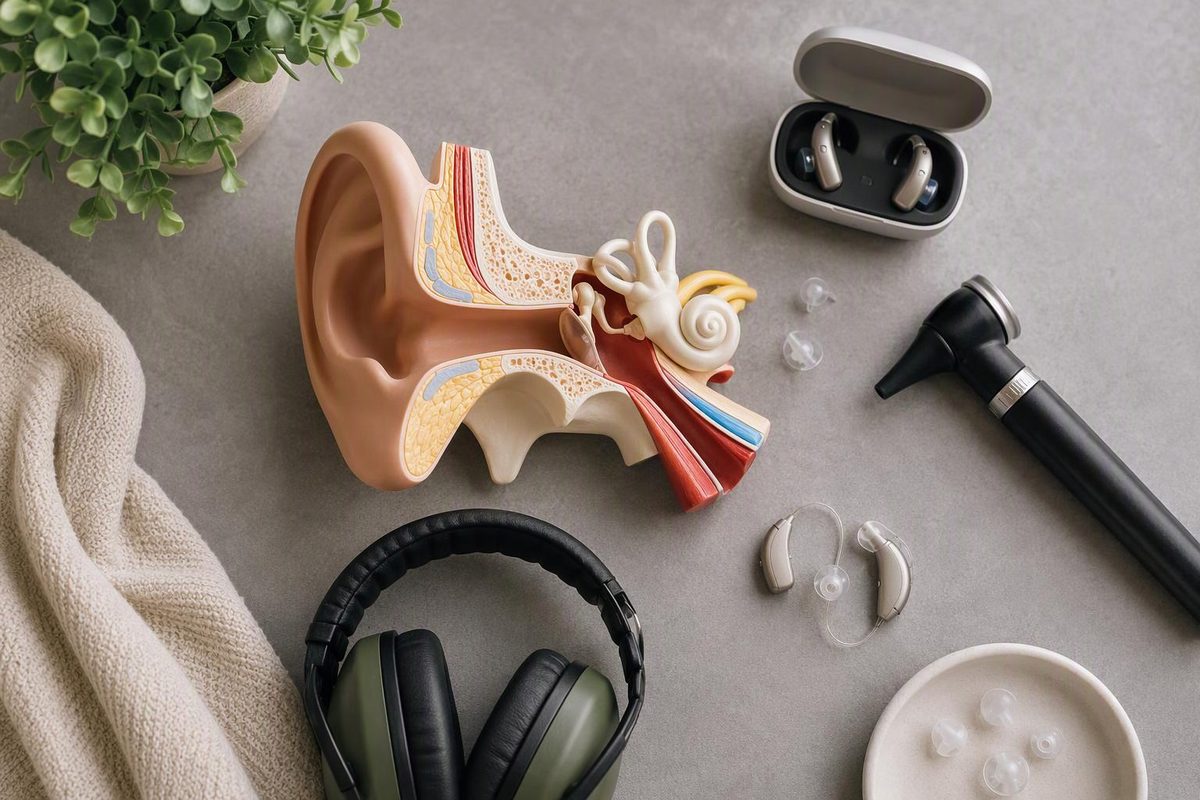
Sensorineural hearing loss (SNHL) is hearing loss caused by damage to the inner ear or the nerve pathways carrying sound signals to the brain. It is the most common type of permanent hearing loss. The term describes where the problem occurs—not how severe it is or what caused it. ASHA explains the types of hearing loss.
The inner ear contains tiny sensory cells called hair cells, which help convert sound vibrations into electrical signals. When these cells or the hearing nerve are damaged, sounds may become harder to hear and speech harder to understand. Although sometimes called “nerve deafness,” SNHL does not necessarily mean the hearing nerve itself is damaged. MedlinePlus describes this mechanism.
If your hearing drops suddenly—over hours or a few days—seek medical care immediately, today. This includes a change noticed on waking, especially in one ear, even if it feels like blockage or comes with ringing, fullness, or dizziness. Do not assume it is wax or congestion: sudden sensorineural hearing loss is a medical emergency, and delaying assessment and treatment can reduce treatment effectiveness. NIDCD’s sudden-deafness guidance explains why. See our guide to sudden sensorineural hearing loss for more about urgent assessment.
What does it sound or feel like?
SNHL can affect speech clarity, not just volume. You might notice:
- People seem to mumble, even when you can hear their voices.
- Conversations are harder to follow in restaurants or when several people talk.
- Similar high-pitched speech sounds, such as “s” and “th,” are difficult to distinguish.
- Some sounds seem unusually loud despite difficulty hearing others.
- Ringing or buzzing in the ears, called tinnitus, accompanies the hearing difficulty.
These are recognized symptoms, but they do not diagnose the type of loss. MedlinePlus lists common SNHL symptoms.
What causes it?
Causes include aging, loud-noise exposure, inherited conditions, certain illnesses, head injury, and medicines that are toxic to hearing. Some people are born with SNHL; others develop it later. Sometimes the cause remains unknown. ASHA’s overview and MedlinePlus describe these causes.
Age-related hearing loss usually develops gradually in both ears. Noise exposure can also contribute, so an older person’s hearing loss may reflect more than aging alone. NIDCD explains age-related hearing changes.
SNHL differs from conductive hearing loss, where sound cannot travel properly through the outer or middle ear—for example, because of blocking earwax or middle-ear fluid. Mixed hearing loss means both types occur together. ASHA describes these distinctions; our sensorineural versus conductive hearing loss guide explains how they affect care.
How do hearing tests identify it?
An audiologist uses several results together:
- Pure-tone testing measures the softest sounds you can hear at different pitches. Results appear on an audiogram, a graph of your hearing thresholds.
- Bone-conduction testing sends vibrations directly to the inner ear, bypassing the outer and middle ear. Comparing it with sounds delivered through earphones helps distinguish sensorineural, conductive, and mixed loss.
- Speech testing checks how well you hear and understand words or sentences.
- Tympanometry, when appropriate, checks how the eardrum and middle ear function.
ASHA explains these hearing tests. The results help establish the type and degree of loss; identifying its cause may also require medical evaluation.
Can treatment help?
Established SNHL usually cannot be corrected with medicine or surgery, according to ASHA. Some sudden cases can respond to medical treatment, however, which is why the urgent assessment described above matters. NIDCD outlines treatment for sudden loss.
Permanent does not mean nothing can help. Hearing aids can improve hearing and speech understanding by amplifying sound for the remaining functioning sensory cells, though they do not restore normal hearing. The appropriate device depends on the type and severity of loss, not simply the SNHL label. NIDCD explains hearing-aid benefits and limits.
For certain people with severe hearing loss, a cochlear implant may be recommended. Assistive listening devices, visual alerts, and communication strategies can also help. MedlinePlus outlines these options.
For a gradual hearing change, arrange an audiology evaluation. Ask: “What type and degree of loss do I have in each ear, how well do I understand speech, and do I need an ear, nose and throat specialist’s assessment?” If hearing aids are recommended, our guide to choosing hearing aids for sensorineural hearing loss covers the next decision.