
Hearing Aid for Sensorineural Hearing Loss: How to Choose
Compare OTC and prescription hearing aids for sensorineural hearing loss, learn which fitting checks matter, and recognize when medical care comes first.
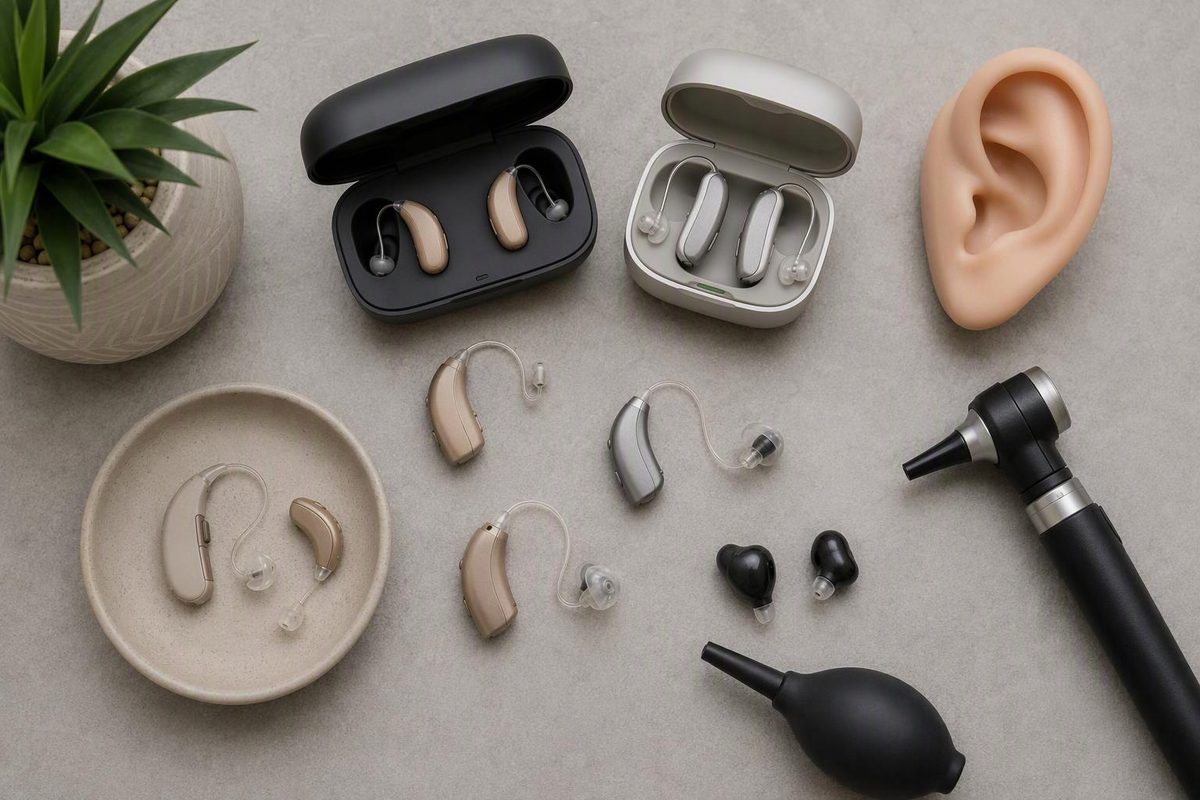
A hearing aid can help many people with sensorineural hearing loss, but it cannot repair inner-ear damage or restore normal hearing. It makes sounds more audible and may improve speech understanding. Choose a device based on your hearing test, speech understanding, physical fit and everyday listening needs—not the diagnosis or brand alone. NIDCD explains hearing-aid benefits and limits.
If your hearing dropped suddenly, seek medical care immediately rather than shopping for an aid. A change over hours or a few days, especially in one ear, can be sudden sensorineural hearing loss. It may feel like a blocked ear and occur with ringing or dizziness. Delaying assessment and treatment can reduce treatment effectiveness. NIDCD considers sudden deafness a medical emergency.
Select your age group, hearing difficulty and symptoms to check whether OTC shopping or professional care is the next step.
Check Your Next Care Step
Other warning signs: fluctuating hearing, worse hearing or ringing in one ear, ear pain, drainage, significant wax or vertigo. If a sudden drop also applies, select that option.
More Information Needed
Select your age group and symptom status. If you are unsure how much hearing you have lost, a professional assessment can help determine the appropriate care route.
U.S. OTC eligibility guidance only. This tool does not diagnose hearing loss or determine which device will work.
Care Routes and Limits
Sudden drop: Seek medical care immediately. Do not delay for hearing-aid shopping.
Other warning signs: See a doctor before buying OTC hearing aids on your own.
Under 18: Children need prescription care, not OTC hearing aids.
Difficulty hearing in quiet or hearing loud sounds: Seek professional assessment. OTC aids are not intended for severe or profound loss.
Age 18 or older, perceived mild-to-moderate loss, no listed warning signs: OTC hearing aids may be an option. An audiologist can still help assess suitability, fit and benefit.
Unknown degree of loss: This tool cannot establish OTC suitability; seek professional assessment.
Sources: FDA, OTC Hearing Aids: What You Should Know (U.S.); NIDCD, Sudden Deafness. No device recommendation or diagnostic score is calculated.
Amplification Helps Audibility, Not Every Aspect of Clarity
Sensorineural hearing loss often involves damage to the inner ear’s sensory cells, called hair cells. Hearing aids amplify incoming sound so surviving cells can detect it more readily. Digital aids can provide different amounts of amplification at different pitches rather than turning everything up equally.
There are limits: extensive inner-ear damage can prevent useful hearing even with strong amplification. Hearing speech and understanding its words are related but different outcomes. Some people still struggle with conversation despite adequate audibility, particularly in background noise. A higher volume setting or more expensive aid does not automatically solve that problem.
That is why the assessment and fitting need to address both the sound reaching your ear and the communication benefit you receive.
Start With Hearing and Speech Testing
A comprehensive assessment includes your history, an examination of the ear canal and hearing testing, including speech testing. Ask the audiologist to explain what each result means for choosing and setting up an aid.
| Assessment | What It Helps Establish |
|---|---|
| Type and degree of loss | Whether the loss is sensorineural and how much each ear needs help |
| Hearing thresholds by pitch | Where amplification is needed |
| Speech testing | How well you recognize words |
| Loudness comfort | How output should account for uncomfortable sounds |
Your audiogram—the chart of hearing thresholds—helps guide amplification settings. Speech results in quiet can differ substantially from results in noise. If restaurants or group conversations are your main difficulty, ask about speech-in-noise testing. ASHA’s adult hearing-aid guidance describes assessment and measurement of benefit.
Bring two or three specific listening goals: following your partner at dinner, understanding meetings, or hearing television without raising the volume for everyone else. Those situations give you and the clinician something practical to check during the trial, beyond whether the aid sounds louder in the office.
OTC Is an Option for Some Adults, Not Every Sensorineural Loss
In the U.S., over-the-counter hearing aids are intended for adults 18 and older with perceived mild-to-moderate hearing loss. You can buy them without a prescription or required professional examination. Sensorineural hearing loss does not, by itself, rule out OTC use; the degree and complexity of the loss matter. FDA explains OTC eligibility.
Choose professional assessment rather than buying OTC aids on your own if you struggle to hear speech even in a quiet room or cannot hear loud sounds well. OTC aids are not intended for severe or profound loss. Children need prescription care.
FDA also advises seeing a doctor for fluctuating hearing, worse hearing or ringing in one ear, ear pain, drainage, significant wax or vertigo. These symptoms call for assessment, not a product recommendation. FDA’s buying guidance lists the warning signs.
OTC does not have to mean doing everything alone. An audiologist can help assess suitability, fit and benefit. Prescription care may be needed for more significant or complicated hearing loss; neither route should be chosen from the diagnosis alone.
Adequate Power and a Verified Fit Matter More Than Size
There is no single hearing-aid style that is best for every sensorineural loss. Behind-the-ear aids span a broad range of hearing needs; very small canal devices can have power and handling limitations. If both ears have hearing loss, two aids are generally recommended, though your assessment should guide the decision. NIDCD compares styles and one-versus-two-ear use.
The device needs enough amplification for your hearing pattern while keeping louder sounds comfortable. Physical fit matters too: persistent whistling, discomfort or difficulty inserting the aid should be addressed during fitting and follow-up.
Ask whether the fitting includes real-ear measurement. A tiny microphone tube measures what the aid actually delivers in your ear canal. The clinician can then adjust it toward evidence-based targets for soft, average and loud speech.
ASHA calls real-ear measurement the gold standard for fitting verification. Manufacturer programming alone is not the same measurement. ASHA describes fitting verification; our guide explains what a hearing aid fitting should include.
Use the Trial to Check Benefit and Total Cost
Before paying, get the return deadline, nonrefundable fees, adjustment arrangements, repair coverage and total cost in writing. NIDCD lists questions to ask before buying. There is no model-specific price comparison in the evidence supplied here, so it does not establish a cheapest or best-value device.
Test the aids against your listening goals while you can still return them. Report separately whether speech is audible, whether words are understandable and whether the fit is comfortable. Those are different problems and may require different adjustments.
Persistent Speech Difficulty Calls for Reassessment
If speech stays unclear after the fit and settings have been checked, ask for an aided speech assessment and a review of other options rather than repeatedly increasing volume.
With severe loss and limited useful benefit, a cochlear-implant evaluation may be appropriate. Unlike hearing aids, implants bypass damaged portions of the ear and directly stimulate the auditory nerve. They require specialist assessment, surgery and rehabilitation. NIDCD explains cochlear implants.
At follow-up, ask: “Are these aids delivering the sound I need, and is that translating into better speech understanding?” Judge the device by those outcomes—not its price tier or feature list.