
Best OTC Hearing Aids in 2026: Three Practical Picks
Compare Jabra Enhance Select M3, ELEHEAR Beyond Pro and AirPods Pro 3 by price, support and return terms, plus October 2026 app shutdown warnings.
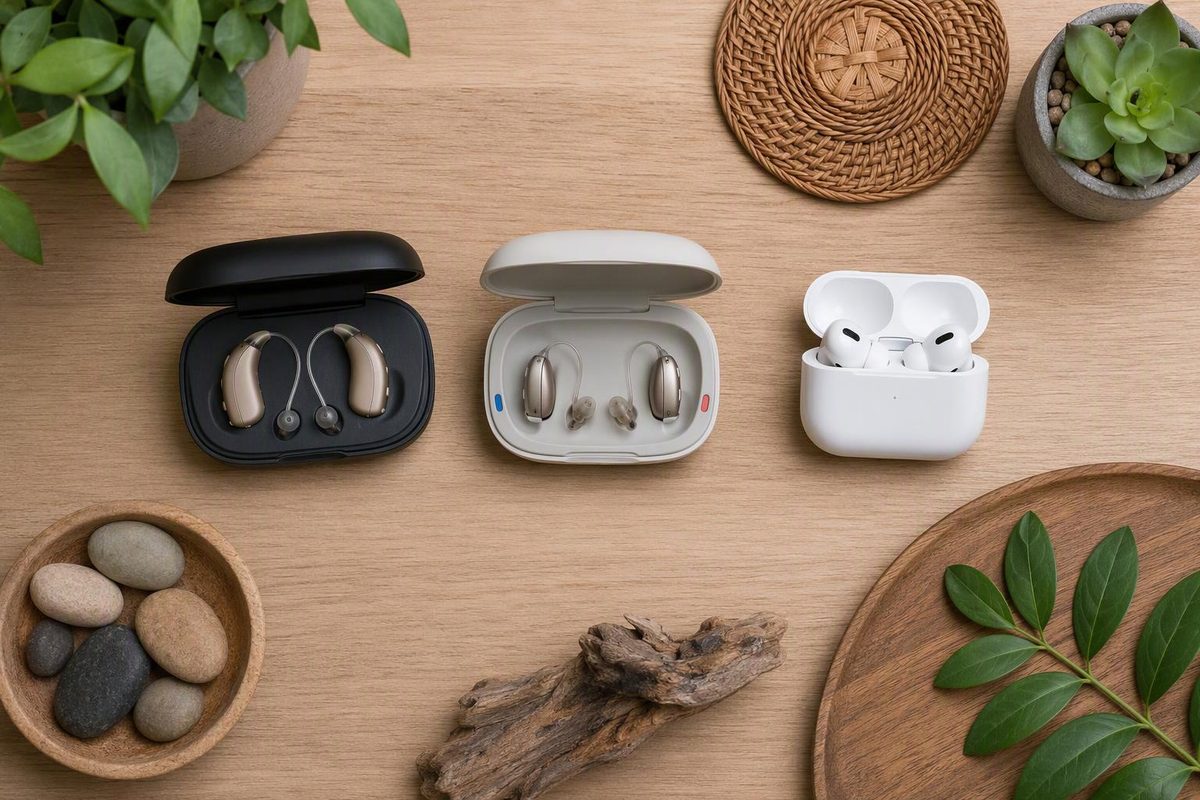
Jabra Enhance Select M3 is our pick for buyers who want ongoing professional support; ELEHEAR Beyond Pro is a lower-cost option with useful independent lab evidence; and AirPods Pro 3 is a budget starting point for compatible Apple users. None is a universal sound-quality winner. The right choice depends on your hearing needs, physical comfort and how much help you want after purchase.
This is a buying comparison, not a hands-on test or an exhaustive market ranking. Prices and support terms below are for U.S. purchases as of October 6, 2026. Battery figures are manufacturer specifications, not measured endurance in your daily routine.
First, make sure OTC is the right route
OTC hearing aids are intended for adults 18 or older with perceived mild-to-moderate hearing loss. You can buy them without a prescription, medical examination or required professional fitting. Difficulty following groups, hearing speech in noise or hearing the TV at other people’s preferred volume can fit that category. Difficulty hearing speech even in quiet, or hearing loud sounds, warrants professional help rather than a stronger OTC device. See the FDA’s eligibility guidance.
A sudden, unexplained hearing change needs immediate medical assessment—not a hearing-aid order. NIDCD treats sudden deafness symptoms as a medical emergency. Ear pain, drainage, marked dizziness, fluctuating hearing, worse hearing in one ear or ringing only on one side are also reasons to see a doctor before self-fitting, according to the FDA guidance above.
The shortlist
Prices are for a pair, before tax. Return terms apply to purchases directly from the named manufacturer; retailers may offer different terms.
| Pick | Best reason to consider it | Current device price | Main trade-off |
|---|---|---|---|
| Jabra Enhance Select M3 | Three years of virtual audiology and a 100-day trial | $1,995 | Higher upfront cost; requires comfort with app-based care |
| ELEHEAR Beyond Pro | Lower-cost rechargeable hearing aids with phone streaming | $599 without the optional dry-box bundle | Own-voice comfort was a weakness in independent lab testing |
| Apple AirPods Pro 3 | Low entry price if you already have a compatible iPhone or iPad | $249 | Shorter uninterrupted runtime and a shorter standard return window |
Jabra Enhance Select M3: best for ongoing remote support
The strongest reason to choose M3 is the care package, not a promise that it will outperform every competitor in a restaurant. Direct purchases include three years of audiology services, a three-year warranty and a 100-day return period with free return shipping and no restocking fee. Jabra’s licensed team can adjust settings remotely through its app. Its FAQ confirms these terms and that the current M-series devices are self-fitting OTC hearing aids.
M3 has a behind-the-ear body connected by a thin wire to a speaker in the ear canal. Jabra lists Bluetooth LE Audio, streaming from compatible Apple and Android devices, and 24-hour power after a three-hour charge.
Choose it if: you want help with setup, comfort and repeated adjustments without office visits.
Before paying: verify your exact phone’s compatibility and compare the lower-priced M1 and M2. Jabra lists those at $1,195 and $1,695 per pair with the same core direct-purchase support package. You may not need M3’s additional features to get that support. Check the lineup and support details.
ELEHEAR Beyond Pro: best lower-cost dedicated option on this shortlist
Beyond Pro costs $599 per pair, or $631 for the displayed dry-box bundle. ELEHEAR lists Bluetooth streaming, app controls, up to 20 hours per charge and a one-year warranty on its product page.
Independent testing gives a useful reason to consider it—and a reason to use the trial carefully. In HearAdvisor’s lab evaluation, Beyond Pro scored 3.3/5 for speech in quiet, 2.5/5 for speech in noise and 3.8/5 for music streaming. Own-voice comfort scored only 1.2/5. That test used closed ear tips in Restaurant mode; it does not predict how your particular ears and settings will perform. HearAdvisor also discloses that it may earn commissions through purchase links.
Choose it if: you want dedicated rechargeable hearing aids and streaming at substantially less than the Jabra package price.
Before paying: distinguish free remote advice from live professional care. ELEHEAR’s ElePro Plus service costs $99 for one 45-minute live session and is available in 24 states. Check that your state is covered before purchasing the service.
Its direct-purchase return policy allows qualifying undamaged products to be refunded within 45 days of purchase, with packaging and included items returned. It also requires shipment within seven days after the return application is received. The hearing-aid money-back guarantee excludes ElePro Plus services, which have separate cancellation and refund terms.
AirPods Pro 3: best budget starting point for Apple users
AirPods Pro 3 can use Apple’s Hearing Aid feature for eligible adults with perceived mild-to-moderate loss. Setup requires a compatible iPhone or iPad and current software and firmware. You can use an AirPods hearing-test result or an audiogram from a hearing professional, following Apple’s setup instructions.
After setup, the settings stay on the earbuds, so environmental amplification keeps working without the phone nearby. Hearing Aid amplification operates in Transparency mode, not ordinary noise-cancellation mode. Apple lists up to 10 hours per charge while using Hearing Aid in Transparency.
Choose it if: you already use compatible Apple hardware and want a relatively inexpensive way to try personalized amplification.
Before paying: decide whether an earbud-sized device and charging breaks suit your day. Apple’s standard direct-purchase return window is 14 calendar days from receipt—much less time than the dedicated options above. Existing AirPods Pro 2 owners can also use the Hearing Aid feature, so buying Pro 3 is not automatically necessary.
Why Lexie and Eargo are missing
Lexie and Eargo are not sensible new-purchase recommendations here. Their parent company is winding down U.S. operations. The Lexie notice schedules app-store removal and cloud deactivation for October 8, 2026; the Eargo notice gives October 22. Both say new warranty or repair requests stopped being accepted after September 15 and customer support ends after October 22.
Current owners should follow their brand’s instructions to install version 9 and synchronize settings before the applicable deadline. The notices say local operation is expected to continue, but future phone compatibility is not guaranteed. Download and save relevant manuals while they remain available.
Make the return period work for you
Before ordering, save the written return terms and ask what happens if the required app becomes unavailable. The FDA cautions that “FDA Registered” or “FDA Certified” wording can be misleading; it is not a comparative quality award.
During the trial, check more than loudness:
- Can you follow a familiar speaker with fewer repetitions?
- Is your own voice comfortable rather than boomy or plugged-up?
- Can you insert, remove, charge and clean the devices reliably?
- Does the battery last through your actual day, including streaming?
- Can support resolve problems before the return deadline?
If benefit remains poor after adjustments, seek audiology rather than repeatedly increasing volume. Our guide to what a hearing-aid fitting should include explains the checks to discuss.
For veterans: check VA audiology before spending out of pocket. VA says enrolled, eligible veterans can schedule audiology directly, and clinically recommended devices, repairs and accessories are provided at no cost while eligibility is maintained. See VHA Audiology’s access guidance.