
Prescriptive Hearing Aids: What the Term Means
Searching for prescriptive hearing aids? Learn the prescription–OTC difference, who needs professional care, and what to check before buying.
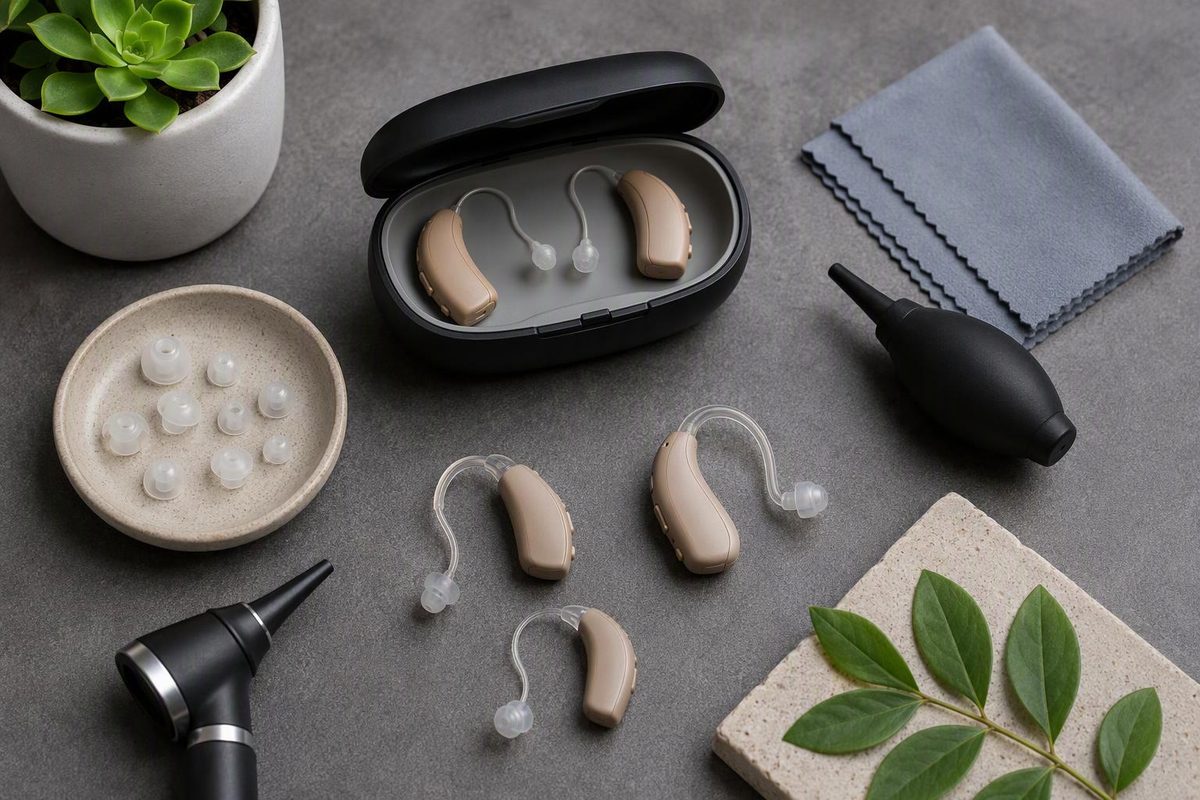
If you’re searching for “prescriptive hearing aids,” the U.S. device category you probably mean is prescription hearing aids: devices obtained through a licensed hearing health care professional and programmed for your hearing needs. They are not limited to severe hearing loss. Depending on the model’s intended use, they can serve people of all ages and hearing-loss levels. FDA guidance distinguishes them from over-the-counter (OTC) hearing aids.
“Prescriptive” also has a technical meaning in fitting. A prescriptive fitting formula translates hearing-test results into amplification targets—how much sound the aid should provide at different pitches and input levels. That is a programming approach, not a separate retail device category. ASHA’s adult hearing-aid guidance describes commonly used formulas, including NAL-NL2 and DSL.
Prescription vs. OTC hearing aids
The main distinction is who the device is intended for and how it is supplied, not simply whether it has Bluetooth, rechargeable batteries, or an app.
| Question | Prescription hearing aids | OTC hearing aids |
|---|---|---|
| Who can use them? | All ages and hearing-loss levels, depending on the device’s intended use | Adults 18 or older with perceived mild-to-moderate hearing loss |
| Is a hearing professional involved? | Yes; supplied through a licensed professional | Not required, though professional help is available |
| How are settings chosen? | A professional programs the device for the individual | The user adjusts settings or uses self-fitting tools, depending on the model |
| Can they address severe hearing loss? | Appropriate models may be suitable | Not intended for severe or profound hearing loss |
These are the FDA’s category distinctions. An OTC device does not become a prescription hearing aid merely because an audiologist helps you use it. ASHA notes that audiologists can program, troubleshoot, and support OTC devices too.
When professional assessment is the better next step
Start with a hearing evaluation rather than a product comparison if you cannot hear speech even in a quiet room, or struggle to hear loud sounds. The FDA identifies these as reasons to seek professional help because OTC aids may not provide enough benefit. Children and teenagers under 18 need prescription devices and specialized care. FDA guidance
An adult with gradual, perceived mild-to-moderate difficulty may consider OTC aids. But you can still choose professional testing and fitting if you want help understanding the loss, managing the device, or checking its benefit. Prescription care is an option for mild loss—not a category reserved for people who have already tried and failed OTC.
Don’t treat a sudden hearing change as a shopping problem. Seek immediate medical assessment for hearing that drops suddenly or over a few days, especially in one ear. NIDCD considers sudden deafness symptoms a medical emergency because delaying treatment can reduce its effectiveness. Separately, ear pain, drainage, vertigo, fluctuating hearing, worse hearing on one side, or ringing only in one ear warrant medical evaluation before self-selecting an aid. NIDCD; FDA warning signs
“Prescription” does not necessarily mean every adult must first visit an ENT. Provider roles and medical-examination requirements vary by state. Ask the clinic what is required where you live. ASHA
What you should expect from the fitting
A useful prescription hearing-aid appointment should address more than a brand and technology tier:
- Your hearing and priorities: What type and degree of loss do you have? Which conversations or settings are hardest? If background noise is the main problem, ask whether speech-in-noise testing would help.
- Physical fit: Can you insert and remove the aid? Is it comfortable and secure? Can you manage its controls, charging, or batteries?
- Verified output: Ask, “Will you use real-ear measurement to check the sound reaching my ear?”
- Follow-up: Agree on listening goals and when to return for adjustments and a benefit check.
ASHA calls real-ear measurement the gold standard for fitting verification. A small microphone tube in the ear canal measures the aid’s output while sounds play through a speaker. The clinician then adjusts the settings against evidence-based targets. Manufacturer software settings alone are not that measurement. ASHA fitting guidance
Our guide to what a hearing aid fitting should include explains the questions to ask. Even a verified fitting may not resolve every speech-in-noise difficulty; judge the purchase against your actual listening goals, not a promise of normal hearing.
Compare the full price—and check benefits first
Request a written quote stating whether the price is for one aid or a pair, and what it includes. Ask about fitting verification, follow-up visits, repairs, supplies, warranty, and the exact return deadline and nonrefundable charges. Prescription return rules may depend on state law; do not assume every seller offers the same trial terms. ASHA
As of October 1, 2026:
- Original Medicare does not cover hearing aids or exams for fitting them. Some Medicare Advantage plans offer hearing benefits; confirm your plan’s terms before buying. Medicare and our Medicare hearing-aid coverage guide explain the distinction.
- Veterans enrolled and eligible for VA care can access VA audiology directly without a primary-care referral. If devices are clinically recommended, VA provides them, repairs, and accessories including batteries at no cost while eligibility is maintained. This is a hearing-care pathway, not a requirement to first obtain a tinnitus or hearing-loss disability rating. VA audiology services
Before committing, ask the provider to explain why the proposed device fits your hearing results—and how its benefit will be checked before your return window closes.