
Can a Sinus Infection Cause Ringing in Your Ears?
Yes, sometimes: inflammation may interfere with Eustachian-tube drainage and change middle-ear pressure. See symptoms and when to seek care.
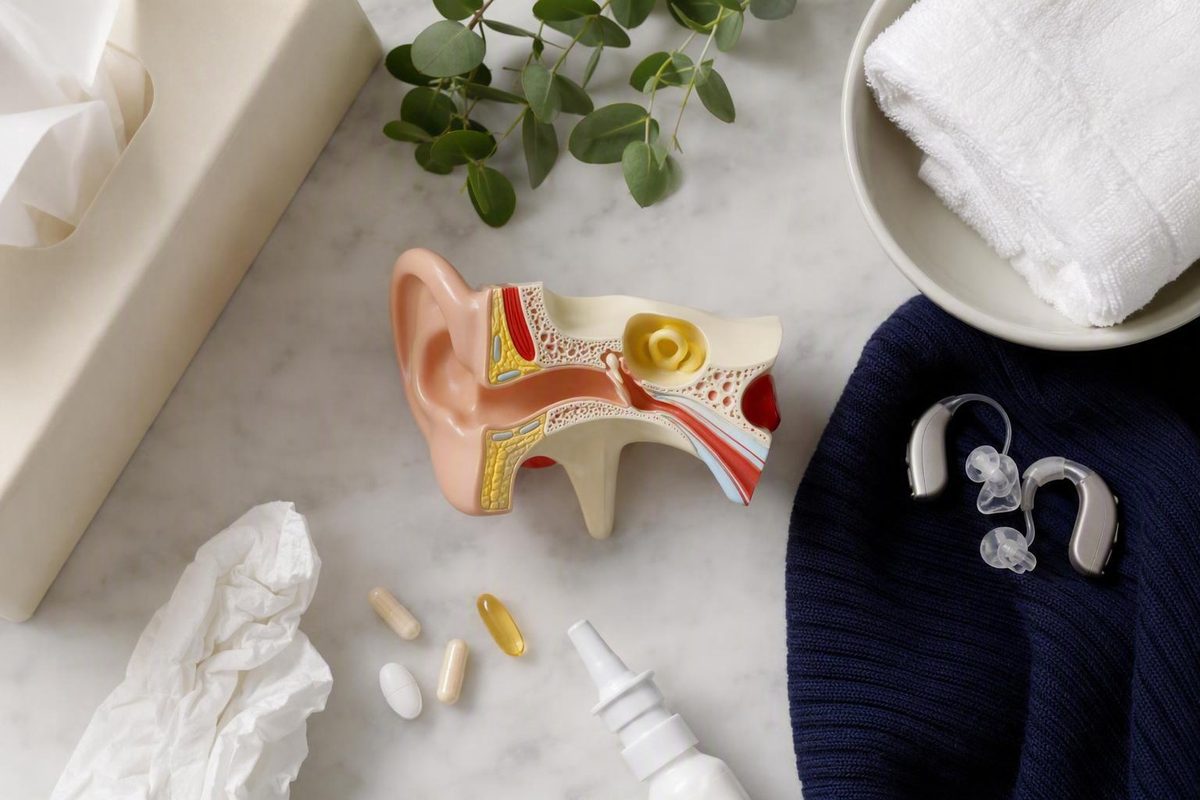
Yes—a sinus infection can sometimes coincide with ringing, buzzing, or humming in the ears. Inflammation may irritate or obstruct the Eustachian tube, interfering with drainage and changing pressure in the middle ear. However, tinnitus does not occur with every sinus infection, and ringing that begins during congestion does not prove that sinusitis caused it. This article provides general information, not a diagnosis or individualized medical advice.
Seek emergency assessment if tinnitus starts after a head injury or comes with sudden hearing loss, facial weakness or spinning vertigo. Tinnitus that pulses with the heartbeat needs an urgent medical appointment. Do not wait for congestion or jaw symptoms to settle first. See NHS tinnitus guidance; use local emergency services where appropriate.
The short answer: sinus trouble can sometimes affect the ears
The ears, nose, and throat are connected by pressure and drainage pathways. When sinus inflammation affects those pathways, ear symptoms may occur alongside nasal congestion. Ringing may be one of those symptoms, particularly when it appears with ear pressure, fullness, discomfort, or muffled hearing.
Timing can suggest a possible association, but it cannot identify the cause. Congestion does not by itself confirm a sinus infection, and tinnitus may have causes unrelated to the sinuses. The most accurate conclusion is that sinus inflammation and ear ringing can occur together—not that one symptom proves the other caused it.
How sinus inflammation may change pressure in the middle ear
The Eustachian tube is a small passage connecting the middle ear to the back of the throat. According to AFC Urgent Care Denver University Hills, sinus inflammation may block or irritate this tube, reduce effective fluid drainage, and increase pressure in the middle ear. The clinic associates that process with ear pain, fullness, muffled or temporarily reduced hearing, dizziness, balance problems, and tinnitus described as ringing, buzzing, or humming.
The proposed sequence is:
- Sinus tissues become inflamed.
- The inflammation irritates or obstructs the Eustachian tube.
- Fluid drainage becomes less effective.
- Pressure changes develop in the middle ear.
- Ear symptoms such as fullness, discomfort, altered hearing, or tinnitus may appear.
This mechanism explains how inflammation centered around the sinuses may be accompanied by ear symptoms. It does not establish what is causing the ringing in an individual case.
A practical symptom check: what fits a pressure-related pattern
Several ear symptoms occurring during sinus congestion may be consistent with Eustachian-tube irritation or altered middle-ear pressure. None can confirm the underlying cause on its own.
| Symptom | How it may fit the pressure explanation | What it cannot establish on its own |
|---|---|---|
| Ear pressure or fullness | May accompany increased middle-ear pressure | Whether a sinus infection is present |
| Ear pain or discomfort | May occur when sinus inflammation affects the ear pathway | The precise source of the pain |
| Muffled hearing | May appear alongside impaired drainage and pressure changes | Whether fluid is trapped behind the eardrum |
| Temporary hearing reduction | Is among the ear symptoms associated with this proposed mechanism | How long the hearing change will last |
| Dizziness or balance problems | May occur with other congestion-related ear symptoms | Whether sinus inflammation is responsible |
| Ringing, buzzing, or humming | May coincide with pressure changes or other ear symptoms | The cause of the tinnitus |
A symptom checklist cannot diagnose sinusitis, Eustachian-tube dysfunction, trapped fluid, or the cause of tinnitus.
Pay attention to whether the ringing affects one or both ears, whether it is constant or intermittent, and whether it changes as the congestion improves. These observations do not provide a diagnosis, but they can help you describe the problem if you arrange an evaluation.
What you can try while monitoring the symptoms
AFC Urgent Care mentions hydration, saline nasal spray, warm compresses, and over-the-counter decongestants or antihistamines as temporary measures for sinus symptoms. It also advises medical evaluation for persistent ringing, severe ear pain, fever, ear drainage, worsening symptoms, or symptoms lasting longer than 10 days. The same clinic article says most sinus infections are viral and resolve within 7 to 10 days.1
Hydration, saline nasal spray, and warm compresses should be treated as general comfort measures for congestion.
Ask a clinician or pharmacist whether a product is suitable for your symptoms, medical history, and other medications.
Do not assume that an infection-specific treatment is necessary merely because congestion and ringing occur together. Symptoms alone cannot establish whether an infection is present or determine what treatment, if any, is appropriate.
How long to wait—and when to arrange medical care
There is no reliable timeline in the available guidance for how long congestion-associated ringing should last. The 7-to-10-day period noted above refers to the sinus illness described by the clinic, not to tinnitus recovery. It should not be interpreted as a promise that ringing will disappear within that period.
Arrange a medical evaluation for:
- Persistent ringing
- Worsening symptoms
- Severe ear pain
- Fever
- Drainage from the ear
- Symptoms lasting longer than 10 days
If congestion clears but the ringing remains, seek an evaluation rather than continuing to assume the sinuses are responsible.
The emergency warning signs above override this monitoring timeline. A sudden hearing change should not be assumed to be temporary congestion.
Sinus inflammation can sometimes coincide with tinnitus by interfering with Eustachian-tube drainage and changing middle-ear pressure. Ear fullness, discomfort, or muffled hearing may occur at the same time, but the pattern remains suggestive rather than diagnostic. Conservative measures may make congestion more comfortable, while persistent ringing, worsening illness, severe pain, fever, drainage, or prolonged symptoms warrant medical assessment.