
Can TMJ Cause Tinnitus? Possible, but Not Proven
TMD may contribute to tinnitus in some people. Learn which jaw-related clues matter, what to try safely and when ringing needs prompt medical care.
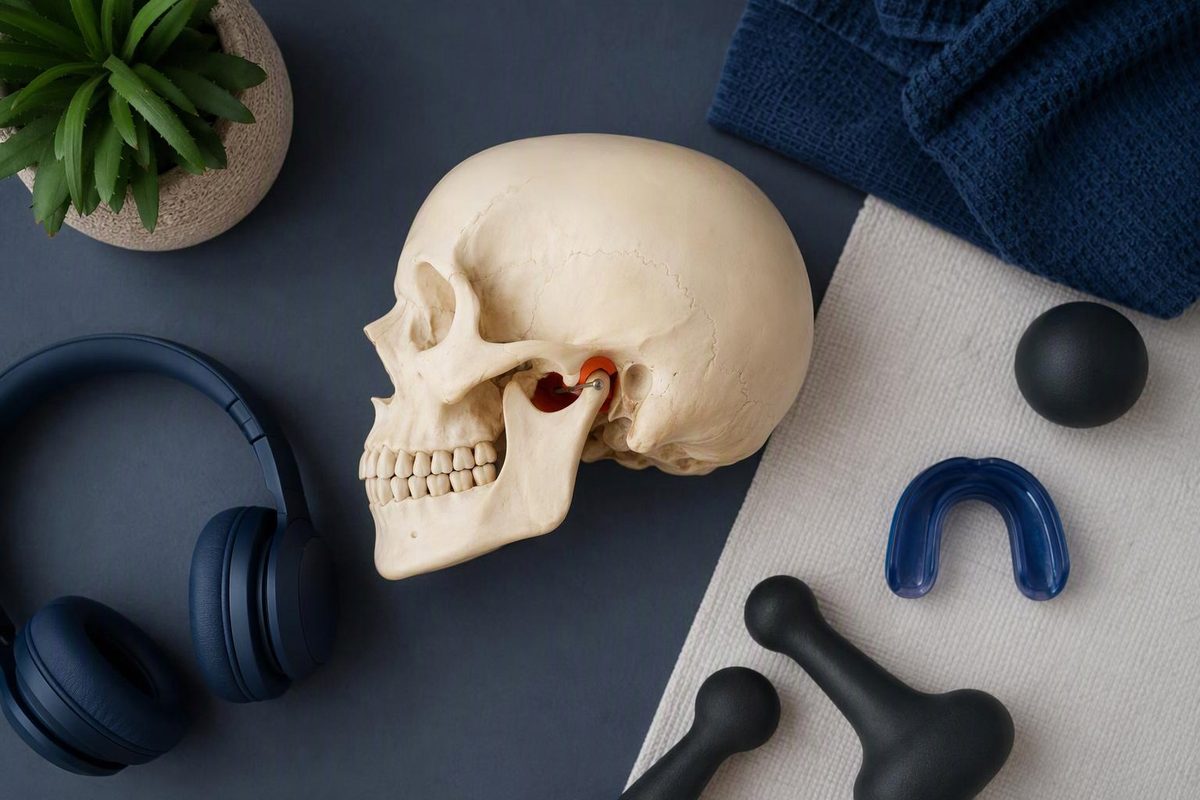
A temporomandibular disorder (TMD) may cause or worsen tinnitus in some people, but ringing alongside jaw symptoms does not prove that the jaw is responsible. Hearing loss, noise exposure, earwax, infection, medicines and other conditions can also be relevant.
“TMJ” is the jaw joint itself; TMD is the broader term for disorders affecting that joint or the muscles used for chewing. The National Institute of Dental and Craniofacial Research lists ringing in the ears among possible TMD symptoms, along with jaw pain, stiffness, locking and painful clicking (NIDCR).
Clues that the jaw may be contributing
Jaw involvement becomes more plausible when tinnitus occurs with several of these features:
- Pain in the jaw joint or chewing muscles
- Pain around the ear, temple, cheek or neck
- Painful clicking, grinding, stiffness or limited mouth opening
- Tooth grinding or frequent jaw clenching
- Symptoms that worsen after chewing, clenching or prolonged talking
- A repeatable change in the tinnitus when opening the mouth, moving the jaw or tightening facial muscles
- Tinnitus and jaw symptoms that began or flare at about the same time
Changes caused by jaw movement are sometimes described as somatic modulation: sensory input from the jaw, face or neck temporarily changes the tinnitus. This can be a useful clue, but it is not a home diagnostic test and does not rule out a hearing problem.
Painless jaw clicking by itself is common and generally does not need treatment, according to NIDCR. TMD also has no single standard diagnostic test; a clinician considers the history and examination while ruling out other explanations.
Jaw-related symptoms often overlap. See the focused guides to ear pain that may be referred from the jaw, dizziness occurring with TMD and ear crackling when moving the jaw.
Why the connection is uncertain
The jaw and auditory systems have interacting sensory pathways, providing a plausible way for jaw or muscle input to affect tinnitus. Studies also report that TMD and tinnitus occur together. However, an association does not show that TMD caused the ringing in a particular person.
A recent systematic review found substantial differences in study designs, diagnostic criteria and outcome measures. Many included studies had small samples, lacked control groups or relied on self-reported measures, limiting firm conclusions about causation and treatment (systematic review).
What to do next
Start with an ear and hearing assessment rather than assuming all ringing is dental. A primary-care clinician can look for treatable problems such as earwax or infection and review medicines. An audiologist can measure hearing. A dentist, doctor or orofacial-pain clinician experienced in TMD can assess jaw movement, muscle tenderness and clenching habits.
For mild jaw discomfort, conservative steps are the safest starting point:
- Temporarily choose softer foods and avoid gum.
- Notice and reduce daytime clenching or nail biting.
- Use gentle exercises, heat or cold recommended for your particular symptoms.
- Ask a clinician or pharmacist which pain medicine, if any, is safe with your health conditions and other medicines.
NIDCR recommends starting with simple, reversible care because many TMD symptoms improve without treatment and evidence for many interventions is limited. Avoid procedures that permanently change the teeth or bite solely to treat presumed TMD-related tinnitus. Evidence does not support a strong link between a “bad bite” and TMD, and irreversible bite treatments can make symptoms worse. If an oral splint is suggested, it should not be designed to permanently alter the bite; stop using it and consult the prescriber if it causes pain (NIDCR).
Treating confirmed TMD may reduce tinnitus for some carefully selected patients, but improvement is not guaranteed. In a randomized study of 80 adults recruited from a tinnitus clinic, a nine-week conservative orofacial program was compared with delayed treatment. The treatment group improved more on one tinnitus scale, while the difference on another primary measure was neither statistically significant nor clinically meaningful. The study lacked a sham treatment, and 52% of treated participants also received a splint, so its findings do not support treating every case of tinnitus as a jaw problem (randomized trial).
When tinnitus needs prompt care
Seek emergency medical care if tinnitus begins after a head injury or occurs with sudden hearing loss, facial weakness or a spinning sensation. Tinnitus that beats in time with the pulse also needs urgent medical assessment (NHS).
Otherwise, arrange an evaluation if the sound is persistent, worsening, limited to one ear or disrupting sleep, concentration or emotional wellbeing. The practical approach is to check both hearing and the jaw when the symptoms point in both directions, rather than deciding from jaw movement alone that TMD is the cause.