
Conductive Hearing Loss and Hearing Aids: Which Options Help?
Hearing aids can help conductive hearing loss, but the cause comes first. Compare conventional and bone-conduction options and the tests that guide fitting.
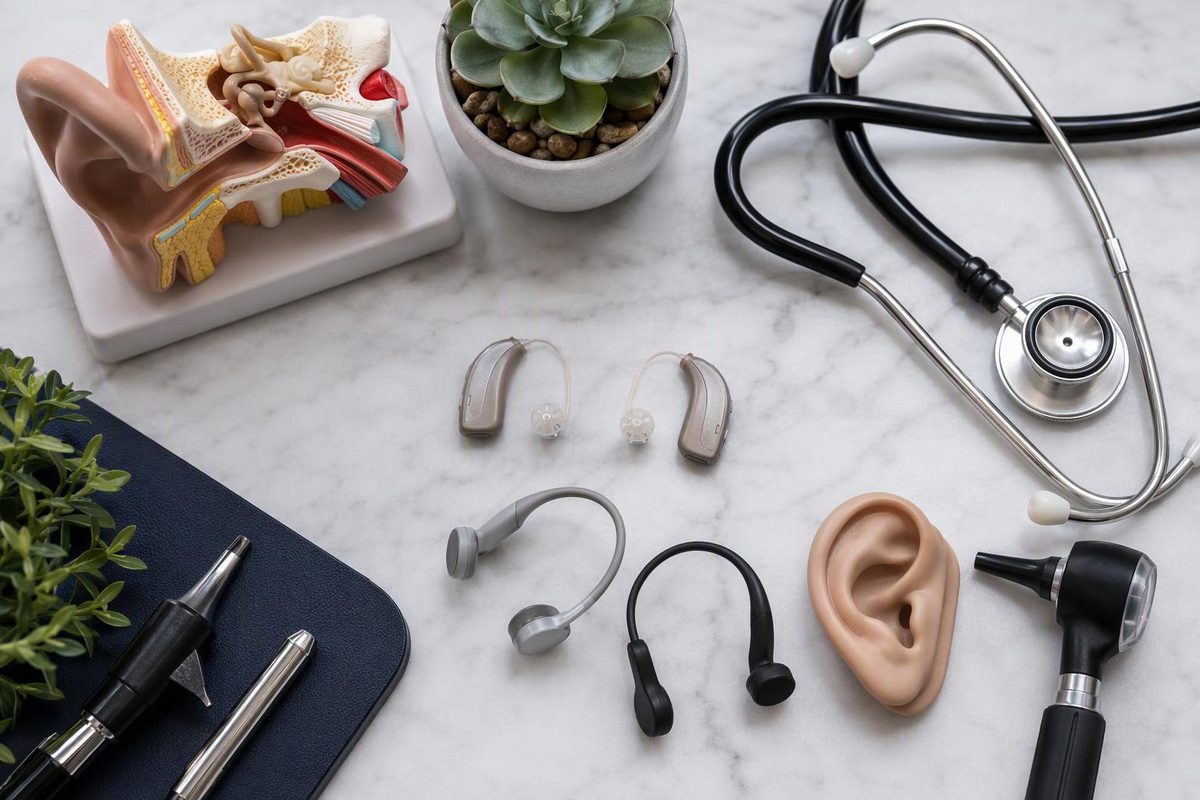
Hearing aids can help conductive hearing loss, but they do not fix its underlying cause. The right next step may be medical treatment, surgery, a conventional hearing aid, or a bone-conduction device. An ear examination and a diagnostic hearing test should guide that choice—not a brand recommendation. ENT Health’s treatment guidance includes both conventional and implantable hearing devices among the options.
Conductive hearing loss means a problem in the outer or middle ear reduces the sound reaching the cochlea, the hearing part of the inner ear. Causes include blocked earwax, middle-ear fluid, a hole in the eardrum, and problems with the three small middle-ear bones. It can be temporary or permanent. Cleveland Clinic explains the condition and its causes.
Before shopping: find out what needs treatment
A hearing aid makes sound more accessible; it does not remove impacted wax, treat an infection, or repair damaged ear structures. Depending on the cause, treatment may involve medication, surgery, or monitoring with repeat hearing tests. Some people still need amplification afterward; others may no longer need it once their hearing improves. Cleveland Clinic explains these cause-dependent treatment options.
Hearing aids and medical care are not necessarily competing choices. Ask your ear, nose, and throat specialist—an ENT—whether amplification is appropriate now, whether treatment could change your hearing, and when to retest before committing to a long-term fitting.
If hearing drops suddenly, seek medical care immediately—do not wait for a hearing-aid appointment. Do not assume a blocked feeling means wax or fluid: sudden inner-ear hearing loss can also cause fullness and needs urgent assessment. NIDCD considers sudden deafness symptoms a medical emergency.
Ear pain, drainage, significant dizziness, fluctuating hearing, or hearing that is worse in one ear also warrant medical evaluation before a hearing-aid purchase. These appear among the FDA’s warnings for OTC hearing-aid buyers.
Which hearing tests guide the choice?
A diagnostic assessment does more than establish how loud sounds must be for you to hear them. It helps distinguish conductive loss from sensorineural loss, which involves the inner ear or hearing nerve, and mixed loss, which combines both types.
The assessment may include:
- An ear examination: checks for wax, drainage, and visible ear-canal or eardrum problems.
- Air-conduction testing: presents tones through earphones, using the usual route through the outer and middle ear.
- Bone-conduction testing: uses a vibrating device on the skull to stimulate the cochlea while bypassing outer- and middle-ear problems.
- Tympanometry: measures middle-ear function, including how the eardrum moves as air pressure changes.
- Speech testing: assesses speech detection or understanding; testing in background noise can help clarify everyday difficulties.
The audiologist interprets these results together with your history, rather than diagnosing from one test alone. ASHA describes this diagnostic test battery. For the broader distinction, see our guide to sensorineural versus conductive hearing loss.
Conventional hearing aids versus bone-conduction devices
Conventional air-conduction hearing aids
These devices deliver amplified sound into the ear canal. Sound still travels through the eardrum and middle-ear bones before reaching the inner ear. That route can remain useful despite a conductive problem; conductive hearing loss does not automatically mean you need an implant. ENT Health lists conventional hearing aids among treatment options.
The ENT and audiologist can assess whether a conventional aid is suitable given your ear condition and hearing results. The fitting should account for both the amount of amplification needed and whether an earmold or earpiece can be worn comfortably.
Bone-conduction hearing devices
These systems transmit vibrations through the skull to stimulate a functioning cochlea, bypassing the outer and middle ear without placing an earpiece in the ear canal. They may be considered for problems such as a malformed ear canal, chronic draining ears, or middle-ear disease. Candidacy depends on your medical history and hearing results—not the diagnosis label alone. Johns Hopkins explains how these devices work and who may qualify.
Bone conduction does not always require surgery. Nonsurgical systems may use a headband or adhesive attachment; implanted systems have an internal component and an external processor. Ask whether you can try a processor on a headband during the evaluation to get a sense of the sound before deciding, as Johns Hopkins describes in its evaluation process. Our bone-conduction hearing-aid guide explains the options in more detail.
Is an OTC hearing aid a reasonable starting point?
In the United States, OTC hearing aids are air-conduction devices for adults 18 and older with perceived mild-to-moderate hearing loss. They can be purchased without a medical exam or prescription, but that access does not establish whether a conductive problem needs treatment. Prescription devices are available through licensed hearing professionals and can serve a broader range of hearing needs. FDA guidance explains the distinction.
For suspected or confirmed conductive loss, start with the cause and test results. If an OTC aid remains an option after evaluation, ask whether its output and physical fit are appropriate for your hearing needs.
What to ask at the fitting
For a conventional hearing aid, ask the audiologist to verify the fitting with real-ear measurements: a small microphone tube measures the sound the aid actually delivers in your ear. ASHA calls this the gold standard for checking amplification against evidence-based fitting targets. Comfort, feedback, and ease of insertion also matter. ASHA’s fitting guidance covers these checks.
Before paying, ask:
- Why is this device suitable for my ear condition and hearing results?
- How will we check whether it improves my main listening difficulties?
- What happens to the programming if treatment changes my hearing?
- What are the return terms, follow-up costs, and retesting plan?