
Costco Hearing Test vs Audiologist: Purpose and Scope
Costco frames its test around whether hearing aids may help. Local procedures, fitting verification and follow-up shape which option fits your needs.
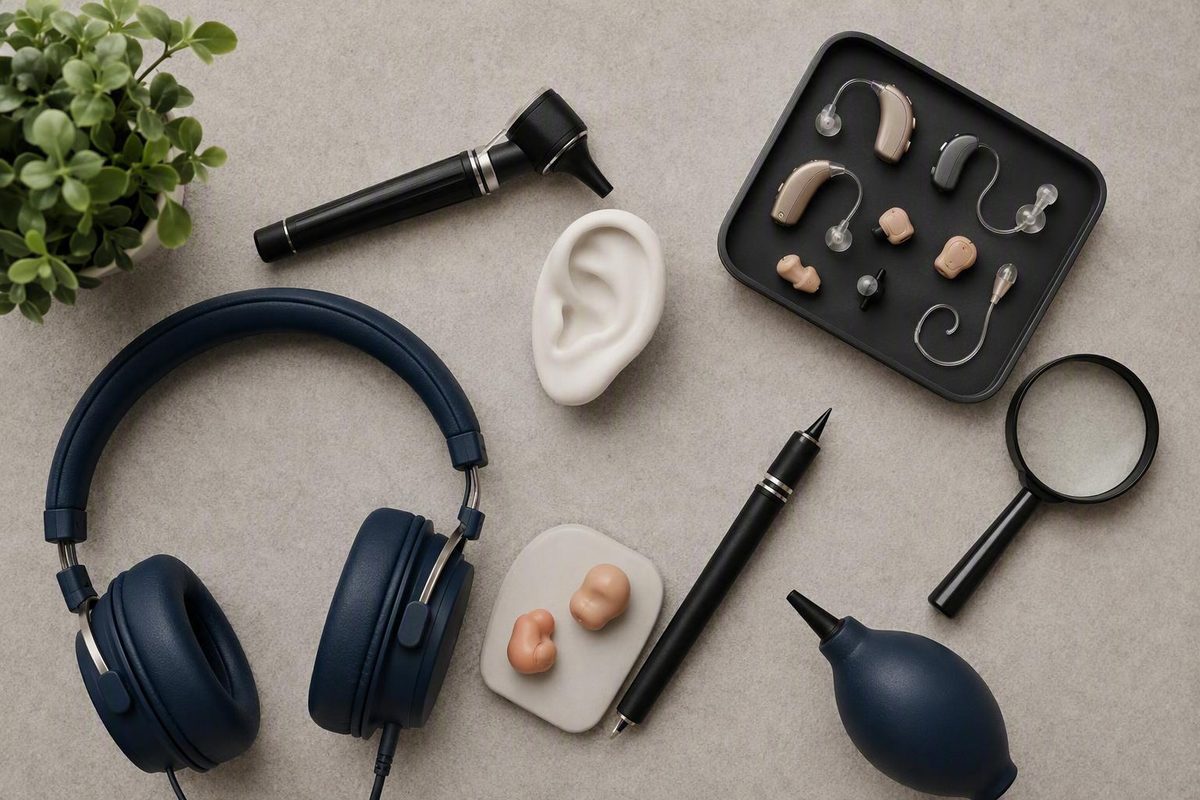
The short answer: choose by purpose, not by storefront
Costco’s hearing test may be enough when your main question is straightforward: “Could hearing aids help me?” The supplied evidence cannot establish that it is equivalent to a comprehensive diagnostic audiology evaluation intended to investigate the nature of a hearing problem or determine whether broader care may be appropriate.
Costco itself describes the service narrowly: a hearing test for eligible adult members to determine whether they may be helped by hearing aids. Its national page does not identify the complete test battery, the local practitioner’s credentials, or the evaluation’s diagnostic scope.
An audiologist may be worth investigating when your needs extend beyond hearing-aid candidacy—for example, when you have a complicated hearing history, tinnitus or balance concerns, difficulty understanding speech that seems disproportionate to a basic hearing test, or previous fittings that did not work well. Private audiology practices describe their care as potentially including broader testing, referral planning, counseling, and tinnitus or balance services. Those descriptions show what some clinics offer, not what every audiologist provides.
Neither setting is universally better. Costco locations can differ in staffing and procedures, while private practices differ in testing, verification, pricing, and follow-up. A credential establishes training and permitted responsibilities, but it does not prove that a particular appointment will be thorough or that a fitting will be successful.
Hardware is not the central dividing line. Costco sells modern hearing aids in several form factors, and the supplied evidence does not show that its devices are categorically inferior. The more useful comparison is what happens before and after the purchase: assessment, device selection, programming, verification, counseling, troubleshooting, and follow-up. One competing clinic’s comparison similarly identifies real-ear verification, provider training, follow-up, product selection, and insurance as the practical issues to examine—not simply the brand on the device. Fort Bend Hearing describes these comparison points while acknowledging Costco’s lower-cost, current-generation hardware.
When comparing a Costco hearing test with an audiologist’s evaluation, focus on:
- The purpose of the appointment
- Whether your needs appear straightforward or complex
- Who will perform and interpret the test
- Which procedures will be used
- Whether hearing aids will be verified with real-ear measurement
- How real-world outcomes will be assessed
- What follow-up and repair access are included
- How insurance affects your cost
- The complete out-of-pocket price over the period you expect to use the devices
What Costco officially promises—and what remains unspecified
Costco advertises a free hearing test for members age 18 or older, specifically to determine whether they can be helped by hearing aids. It also advertises service appointments for hearing aids purchased through a Costco Hearing Aid Center.
On the product page reviewed for this article in August 2026, selected rechargeable pairs started at $1,599.99 or $1,699.99, depending on the model. The listed packages included two hearing aids and a charger. Costco said prices varied by state, custom earmolds cost extra when needed, and hearing aids and related services were FSA/HSA eligible. Prices and product terms can change, so verify the current online listing and warehouse quote before purchasing. Costco’s official Hearing Aid Center page states the eligibility, purpose, advertised prices, package contents, service offer, and FSA/HSA eligibility.
Those are nationally advertised terms. Costco’s public page does not specify:
- The complete test battery used at each location
- Whether bone-conduction testing or masking is used when indicated
- Whether speech recognition or speech-in-noise testing is included
- Whether middle-ear testing is available
- Who will conduct and interpret the evaluation
- How long the appointment will take
- Which findings trigger a referral
- Whether tinnitus or balance services are available
- Whether real-ear measurement is routinely used during fittings
- How many service appointments are included or how long support continues
The absence of those details does not prove that a warehouse omits a procedure. It means the national offer cannot answer the question, so you must ask the individual center.
Competing clinic sources report that Costco centers commonly use licensed hearing instrument specialists and that some locations employ audiologists. Because staffing can vary—and because these reports come from providers selling competing services—call the warehouse and ask for the practitioner’s name and credential. One such clinic contrasts reported Costco staffing with its own evaluation process, which it says can include a case history, examination of the ears, middle-ear and inner-ear measures, cognitive screening, and audiometry. Hearing Doctors provides this attributed comparison of staffing and its own services.
Before booking, confirm locally:
- Who will test you
- What procedures are scheduled
- Whether additional testing is available when indicated
- How results and referral needs will be explained
- What fitting-verification method is used
- What service appointments cover
- Current prices, return terms, warranty, repairs, and loss protection
How an audiologist’s evaluation may go beyond hearing-aid candidacy
The potential difference is one of purpose and scope, not demonstrated comparative accuracy.
An evaluation centered on hearing-aid selection seeks enough information to decide whether amplification may help and to support device selection and initial programming. Some private audiology practices describe a broader model that also considers the person’s history, speech understanding, possible referral needs, and whether tinnitus, balance, or other services should be considered.
The supplied evidence does not include an independent professional standard defining one mandatory “comprehensive” battery. It therefore cannot support the claim that every audiologist performs the same procedures or that every Costco location omits them. The number of tests is not, by itself, a measure of quality; the procedures should be appropriate to the person’s history and the question being investigated.
Clinic sources describe possible components such as:
- A detailed hearing, health, noise-exposure, medication, and communication history
- Examination of the ear canal
- Pure-tone air- and bone-conduction testing
- Speech testing in quiet or noise
- Tympanometry
- Otoacoustic-emissions testing
- Acoustic-reflex testing
- Tinnitus assessment
- Cognitive screening
- Balance-related services or referral planning
These procedures address different parts of an evaluation:
-
Ear examination or otoscopy looks for visible conditions that could affect the appointment or require separate attention.
-
Tympanometry is described by the clinic sources as a middle-ear measure.
-
Acoustic-reflex testing is another procedure some clinics list as part of a broader battery.
- Tinnitus, cognitive, and balance services address concerns that may require questions or procedures beyond a basic hearing-aid evaluation.
Not every person needs every procedure. Availability also varies. Stanford Hearing, for example, says its own clinic evaluation includes a case history, otoscopy, speech testing in quiet and noise, and consideration of medical referral needs. That is evidence of what the named clinic says it offers, not a representative description of all audiology practices. Stanford Hearing’s comparison outlines its evaluation and fitting model.
The clinic sources describe audiologists as clinicians with doctoral-level entry training that includes diagnostic hearing care and work involving hearing, tinnitus, and balance disorders. However, practicing clinicians may hold different credentials based on when and where they trained, and available services depend on the individual practice. The relevant question is therefore not simply, “Is this person an audiologist?” but, “What will this clinician do for my particular needs?”
Side-by-side comparison: test purpose, provider, fitting, and follow-up
The table distinguishes Costco’s nationally advertised terms from local details that must be confirmed. The audiology column uses qualified language because practices vary.
| Comparison point | Costco Hearing Aid Center | Audiology practice |
|---|---|---|
| Stated purpose | Determine whether an eligible adult member may be helped by hearing aids | May provide broader diagnostic investigation as well as hearing-aid candidacy assessment |
| Eligibility | Free test advertised for members age 18 or older | Determined by the practice; no retail membership is generally part of the clinic model described in the supplied sources |
| Possible provider | Competing sources report hearing instrument specialists and, at some locations, audiologists; confirm locally | Usually centered on an audiologist, although other team members may participate |
| Publicly documented test scope | National page does not list the complete battery | A practice may publish its procedures, but confirm which ones are appropriate and scheduled for you |
| Broader services | Middle-ear, inner-ear, tinnitus, cognitive, and balance services are not established nationally | Some practices say they offer additional measures, tinnitus or balance care, and referral planning |
| Hearing-aid selection | Modern rechargeable devices in several styles from a defined retail lineup | May offer different brands or technology levels; selection varies |
| Real-ear verification | National protocol is not stated; ask whether it is performed and documented | May be routine, selective, or unavailable; do not assume |
| Follow-up | Service appointments are advertised for Costco-purchased devices; number, duration, and scope are unspecified nationally | May bundle adjustments, counseling, maintenance, and outcome reviews; terms vary |
| Medical coordination | Referral criteria and coordination procedures must be confirmed locally | Some practices describe physician communication and referral planning as part of their model |
| Insurance | Ask Costco and the insurer about reimbursement | The clinic may be in network, out of network, or able to submit benefits; verify with the insurer |
| Price | Positioned as a lower-upfront-cost option, with nationally advertised starting prices | Fees may include services beyond the devices; request an itemized quote |
Audiology clinics may offer broader testing, additional brands, counseling, tinnitus or balance services, referral planning, and continuity with the same team. None of those features should be presumed without asking the specific practice. Likewise, a procedure’s absence from Costco’s national page does not establish that every warehouse omits it.
Evidence note: Most detailed comparisons in the supplied evidence were published by private audiology practices that compete with Costco. They are useful for identifying questions and describing the publishers’ own services, but they are not neutral or representative comparisons. Costco’s page is the strongest source for its advertised offer and prices, yet it leaves local clinical protocols unspecified.
The fair comparison is therefore not “retailer versus clinician” in the abstract. It is one specific provider, protocol, price, and support arrangement versus another.
Audiologist or hearing instrument specialist: credentials are only part of the answer
The supplied clinic reports say Costco centers may be staffed by hearing instrument specialists or audiologists. Do not infer the practitioner’s credential from the Costco name; ask who will perform and interpret your test.
One private-practice article describes hearing instrument specialists as providers licensed to evaluate hearing for hearing-aid fitting and management. It describes audiologists as clinicians with broader education in diagnostic interpretation, complex hearing concerns, tinnitus, balance disorders, and care coordination. These are useful general distinctions, but licensing rules, professional titles, and permitted activities can vary by jurisdiction. Timpanogos Hearing presents this credential comparison while emphasizing the clinical protocol rather than the title alone.
Credentials do not document what happened during an appointment. In either setting, ask whether the clinician:
- Took a careful history
- Asked about your principal communication difficulties
- Selected procedures appropriate to your concerns
- Explained what the results could and could not establish
- Had a process for referral when broader care might be needed
- Provided written copies of the results
- Verified the hearing-aid fitting
- Checked whether the devices helped in everyday situations
- Offered accessible troubleshooting and follow-up
A one-location secret-shopper report illustrates why individual performance matters. The shopper reportedly saw a hearing instrument specialist, received real-ear measurement during the fitting, and found that an initial follow-up adjustment improved concerns about background noise and the sound of her own voice. The audiologist who arranged and published the visit also considered parts of the history, testing, device selection, verification, validation, and later programming incomplete. The secret-shopper account documents both useful care and the author’s criticisms at that single location.
That report cannot characterize Costco nationally. It covered one shopper, practitioner, and warehouse, and its author owned a competing hearing-aid practice. It is best treated as an example of variation—not evidence of Costco’s typical quality or of superior private-practice outcomes.
Practical quality indicators matter more than assumptions about either storefront:
- A thoughtful case history
- A clear explanation of the evaluation’s purpose and limitations
- Appropriate escalation or referral when the issue exceeds routine hearing-aid care
- Copies of the audiogram and other results
- Objective fitting verification
- A documented plan for follow-up
- Willingness to address real-world listening problems
Why real-ear measurement and follow-up matter after the test
The hearing test and the hearing-aid fitting are separate stages. Test results can guide initial programming, but they do not show exactly what a device delivers inside an individual ear canal.
Real-ear measurement is intended to address that gap. A small probe microphone measures hearing-aid output in the ear canal while the device is worn, allowing the clinician to compare the measured output with selected fitting targets and make adjustments. The supplied clinic sources consistently identify this as an important fitting-verification step.
Ask whether real-ear measurement is performed and documented for every fitting, including yours. Do not assume the answer based on the retailer or professional title. The evidence does not establish that Costco always performs it, that Costco always omits it, or that every audiologist uses it.
Verification also does not answer every practical question. A technically measured fitting still needs to be evaluated in everyday use. Ask how the provider will assess:
- Speech understanding in your priority situations
- Comfort with louder sounds
- The sound of your own voice
- Performance in background noise
- Physical comfort throughout the day
- Use of controls, charging, and smartphone features
- Progress toward the communication goals discussed before fitting
Follow-up matters because initial settings may require refinement. The secret-shopper example described above reported a useful adjustment at the first follow-up, but that isolated experience should not be generalized.
Costco advertises service appointments for hearing aids purchased through its centers. Before buying, ask what those visits include, how soon they can be scheduled, whether any limits apply, how long support continues, and what happens if you move.
Use this fitting checklist:
- Is real-ear measurement included?
- Will the clinician explain the fitting targets and results?
- How will my everyday communication goals be evaluated?
- When is the first follow-up appointment?
- How many visits are included, and for what period?
- Who handles programming and troubleshooting?
- Where are repairs performed?
- Are loaner devices available?
- How will comfort and speech understanding be reassessed?
- Can I receive copies of my audiogram and available fitting records?
- Can another location or provider service or program the devices later?
Cost and value: compare the entire care package
As of August 2026, Costco’s supplied national page listed selected rechargeable pairs starting at $1,599.99 to $1,699.99, including two hearing aids and a charger. It said prices varied by state and that custom earmolds cost extra when required. Membership applied to the free adult testing and Costco purchasing model. Recheck all prices and terms immediately before booking or buying. Costco provides the advertised package and starting-price details on its Hearing Aid Center page.
Do not use older forum purchases or competitor-generated estimates as current national prices. Community discussions show that consumers often perceive a substantial upfront difference between Costco and private clinics, but the reported products, dates, insurance benefits, policies, and locations vary too much to support a reliable nationwide comparison. One Hearing Tracker discussion is useful mainly for showing how consumers weigh price, fitter quality, insurance, travel, device choice, and continuity. The discussion contains personal experiences rather than controlled comparative evidence.
Compare the same elements on both written quotes:
- Evaluation fees
- Two hearing aids
- Charger and accessories
- Custom earmolds
- Fitting and programming
- Real-ear measurement
- Counseling or rehabilitation
- Follow-up adjustments
- Cleaning and routine maintenance
- Repair charges
- Warranty coverage
- Loss-and-damage protection
- Return terms and possible restocking charges
- Remote-support options
- Travel time and appointment availability
- Fees for future visits
Costco advertises FSA/HSA eligibility and service appointments for devices purchased through its Hearing Aid Centers. The supplied first-party page does not establish current warranty duration, return conditions, repair procedures, or loss-protection terms. Obtain those details in writing.
Insurance can change the comparison. Do not assume that Costco is always excluded or covered. Ask the insurer:
- Whether each provider is in network
- Whether reimbursement is available for an out-of-network or retail purchase
- Whether there is a device allowance
- Which evaluation and fitting services are covered
- What documentation is required
- What your final out-of-pocket cost would be at each provider
A higher clinic quote may include testing, verification, counseling, and longer-term support that are not itemized separately. A lower initial price may still represent better value if the local Costco provides accessible, competent care. The only reliable comparison is an itemized quote using the same devices, service period, and assumptions.
Continuity has financial value as well. Ask how quickly adjustments are available, whether another location can access or service the devices, what happens after a move, and whether future appointments carry fees. Convenient local access can strengthen Costco’s value; long travel, delays, or paid outside support can reduce it.
Which option fits your situation? A decision guide and call-ahead checklist
Costco is reasonable to investigate if you are an adult with stable, straightforward hearing difficulty, primarily want affordable hearing aids with in-person service, and are satisfied with the local center’s testing, verification, and follow-up arrangements.
An audiologist is reasonable to investigate when you want broader diagnostic interpretation or need access to services involving complex hearing concerns, tinnitus, balance problems, unsuccessful previous fittings, or clinical coordination. This is not proof that an audiologist will produce a better result. It is a reason to ask whether the practice offers the broader services relevant to you.
Either an audiologist or a hearing instrument specialist may be an appropriate provider for straightforward hearing-aid care when the practitioner uses suitable procedures, explains the limits of the evaluation, verifies the fitting, and refers beyond their role when necessary.
The supplied evidence does not support a more detailed symptom-by-symptom triage rule.
If you are uncertain, consider a two-stage approach:
- Obtain a broader diagnostic evaluation and copies of the results.
- Once you understand the findings and any referral needs, compare where to purchase and service hearing aids.
This separates the clinical question from the buying decision.
Before booking either appointment, ask:
Testing questions
- Who will perform and interpret my test?
- What credential does that clinician hold?
- What is the purpose and scope of the scheduled evaluation?
- Which procedures are included?
- Are air- and bone-conduction testing available?
- Is masking used when indicated?
- Are speech recognition and speech-in-noise tests available?
- Are middle-ear measures available when indicated?
- What findings would prompt referral to another professional?
- Will I receive an explanation and a copy of my audiogram?
Fitting and outcome questions
- Do you perform real-ear measurement?
- Is it performed and documented for every fitting?
- How will you assess improvement in my priority listening situations?
- What happens if background noise, loud sounds, or my own voice remain uncomfortable?
- When is the first adjustment appointment?
- Who provides ongoing programming and troubleshooting?
Purchase and service questions
- What is the complete price for two devices?
- Is the charger included?
- Are custom earmolds extra?
- Which fitting, verification, counseling, and follow-up services are included?
- How does my insurance apply?
- What are the current return terms?
- What warranty and loss-protection provisions apply?
- Who handles repairs?
- Are loaner devices available?
- Will future appointments cost extra?
- Can another provider or location service and program the devices if I move?
Request copies of your audiogram and any other results before making a purchase or seeking a second opinion.
The simplest rule is to choose the provider who can explain the purpose and limits of the evaluation, address your needs, document the fitting, and provide accessible follow-up. The lowest quote is not automatically the best value, and the most advanced credential is not automatically proof of the best care.
Frequently asked questions
Is the Costco hearing test really free?
Yes, for eligible adult Costco members. The offer is intended to determine whether hearing aids may help; membership and local appointment availability still apply.
“Free” describes the test itself, not necessarily every form of broader evaluation or care you might need. Ask the warehouse what is included before attending.
Is Costco’s hearing test a full diagnostic audiology exam?
Costco does not describe it that way on its national page. It calls the service a hearing test intended to determine whether hearing aids may help, but it does not publish the complete battery or claim equivalence to a comprehensive diagnostic audiology evaluation.
A local center may do more than the national page specifies. Ask exactly which procedures are included and how the center handles findings that require broader evaluation.
Will an audiologist perform my Costco hearing test?
Possibly, but do not assume so. Competing clinic reports say Costco locations may use hearing instrument specialists and that some employ audiologists. Staffing must be confirmed with the specific warehouse.
The title should be only one part of your decision. Ask about the clinician’s procedures, explanation of results, referral process, fitting verification, and follow-up.
Does Costco use real-ear measurement when fitting hearing aids?
It may be available at some locations, but the evidence does not establish a universal Costco protocol. The one-location secret-shopper account documented its use, while clinic comparisons report that practices can vary.
Ask whether your location performs real-ear measurement for every fitting, whether the results are documented, and whether the clinician will explain the comparison with the selected targets.
Are Costco hearing aids lower quality than hearing aids from an audiologist?
The supplied evidence does not show that Costco’s hardware is categorically inferior. Costco sells modern rechargeable devices in multiple styles, although models and availability can change.
Compare the complete care package rather than the device alone: assessment, suitability, programming, real-ear verification, counseling, adjustments, repairs, and access to follow-up. A device’s practical value depends partly on how well it is selected, fitted, and supported.