
Size 10 Hearing Aid Batteries Need a Model Check
Approximately 3-7 days is a useful planning range, not a guaranteed lifespan. Track several batteries to establish your own runtime baseline.
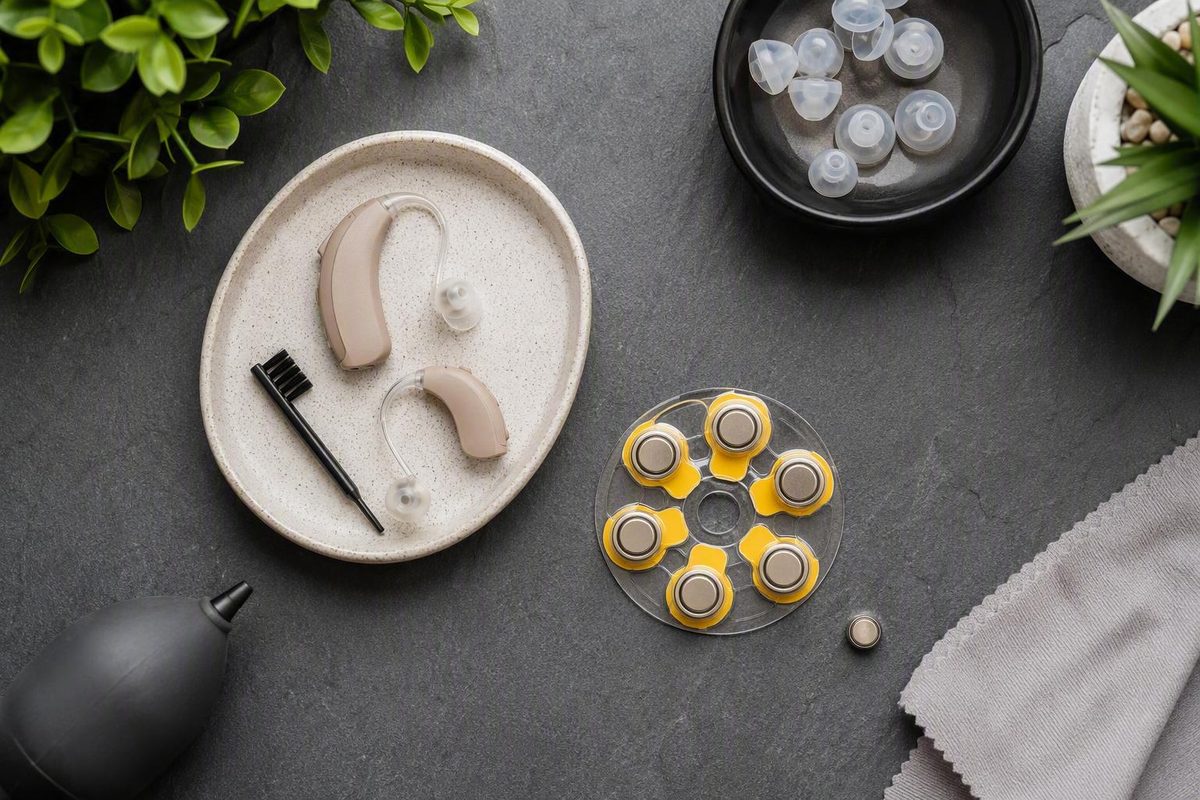
Size 10 is one of the four common disposable hearing-aid battery sizes. It uses the standardized yellow color code, usually displayed on the protective tab and packaging. Before buying, confirm that your exact hearing-aid model accepts disposable size 10 batteries; the manufacturer’s name or the hearing-aid style alone is not enough.
For value, compare the delivered cost per cell, remaining shelf life, packaging usability, seller reliability, and return terms. The largest pack—or the one advertised as “long-lasting”—is not necessarily the best purchase for your device.
Size 10 battery essentials at a glance
Disposable hearing aid batteries size 10 are small, commonly zinc-air cells made for hearing aids with user-replaceable batteries. Yellow is the fastest visual identifier, but the printed size remains important because a tab can be removed and packaging can become separated from the cells.
Size 10 quick specifications
- Size: 10
- Color code: Yellow tab or yellow packaging
- Common disposable chemistry: Zinc-air
- Diameter: Approximately 5.8–5.9 mm
- Height: Approximately 3.6 mm
- Commonly listed voltage: Approximately 1.4–1.45 volts
- Format: Usually single-use when sold as a conventional zinc-air hearing-aid battery
Retailer specifications list size 10 at approximately 5.8 mm in diameter and 3.6 mm high, while another product listing gives 5.9 mm by 3.6 mm. The difference appears consistent with rounding rather than two separate size 10 formats. See the size and color specifications.
Size 10 products may also appear under cross-reference labels such as:
- PR70
- PR536
- ZA10
- A10
- P10
- 10A
- DA10H
These labels help with identification, but they do not establish interchangeability by themselves. Confirm the chemistry, voltage, disposable or rechargeable format, and hearing aid’s instructions before ordering. This is especially important with “P10,” which appears in catalogs containing both disposable and rechargeable products. Marketplace listings also use alternatives including PR70, PR536, ZA10, 10A, and DA10H. Check the listed size 10 equivalents.
The four familiar disposable hearing-aid battery color codes are:
| Battery size | Standard color code |
|---|---|
| 10 | Yellow |
| 312 | Brown |
| 13 | Orange |
| 675 | Blue |
Color coding reduces confusion, but it does not make ordinary button cells interchangeable. Physical resemblance is not a valid reason to substitute one for the hearing-aid battery specified by the manufacturer.
Confirm that your hearing aid actually takes size 10
Hearing aids are designed around a particular battery size and power system. Compatibility therefore must be confirmed for the exact model, not inferred from the brand name.
Use this sequence before purchasing:
- Check the user manual. Look for the required battery size, replacement procedure, and any warning against user replacement.
- Inspect the battery door or compartment. The size number or color indicator may appear on the door, inside the compartment, or near the polarity marking.
- Check the current battery. Compare the printed number and, if available, the yellow tab or packaging from the existing supply.
- Use dimensions only as a secondary check. Measuring such a small cell accurately is difficult, and a similar diameter does not prove electrical compatibility.
- Ask the hearing-care provider. If the marking is missing, the manual is unavailable, or the current battery cannot be identified confidently, give the complete model name to an audiologist or hearing-care office.
Size 10 batteries are often associated with compact completely-in-canal and invisible-in-canal hearing aids. Audibel, for example, associates size 10 with CIC and IIC products but does not present that association as a model-by-model compatibility list. Review the battery size and hearing-aid style table.
Be skeptical of claims that a size 10 battery fits an entire hearing-aid brand. The useful question is not “Does this fit Brand X?” but “Does my exact model specify a disposable size 10 zinc-air battery?”
Also distinguish a user-replaceable battery compartment from a sealed rechargeable hearing aid. If the device is intended to sit in a charging case and its battery compartment is not meant to be opened, do not try to insert a disposable cell. Some built-in rechargeable batteries are not intended for user replacement.
When installing a confirmed size 10 battery, the door should close gently. If it resists, stop and recheck the size, polarity, and seating.
How long size 10 batteries usually last
A reasonable published planning estimate is approximately three to seven days per disposable size 10 battery. This is a range, not a guarantee. The National Council on Aging uses the three-to-seven-day estimate and notes that hearing-aid style and usage affect the result. See the size 10 lifespan guidance.
Narrower estimates also appear. Audibel gives approximately three to four days, while Amplifon gives approximately three to five days for size 10. Review Amplifon’s size-specific estimate.
Several variables can move an individual user above or below a general estimate:
- Hours worn each day
- Amplification requirements
- Hearing-aid model and age
- Volume and program settings
- Phone, music, or television streaming
- Bluetooth and other wireless connections
- Noise reduction and other processing features
- Temperature and humidity
- Battery age and remaining shelf life
- Storage conditions before installation
Size 10 cells are smaller than sizes 312, 13, and 675, so they generally have shorter operating life than the larger disposable sizes. That is part of the tradeoff behind compact hearing-aid designs: less room for the cell can mean more frequent replacement.
It is also important to separate three different concepts:
- Operating life is how long an activated cell powers the hearing aid.
- Unopened shelf life is the period during which a properly stored, unopened battery is expected to retain usable power.
- Activation begins when the protective tab is removed and air reaches the zinc-air cell.
A four-year storage statement does not mean one activated battery can run a hearing aid for four years. It concerns storage before use, subject to the manufacturer’s conditions and the expiration information on the actual package.
The most useful estimate is your own. Record the installation date for several consecutive batteries and note unusually heavy streaming, long wear days, or difficult environmental conditions. After several changes, you will have a baseline for your hearing aid and routine. A sudden fall from five days to one or two days is generally more informative than whether another person reports getting four or seven days.
For planning, suppose one battery lasts five days:
- One hearing aid: 30 ÷ 5 = about six batteries per month
- One hearing aid: 365 ÷ 5 = about 73 batteries per year
- Two independently powered hearing aids: about 12 batteries per month or 146 per year
These figures are arithmetic based on a five-day example, not a prediction of actual use. Recalculate them using your observed runtime.
Compare brands and packs by value, not marketing
The available evidence does not support naming one brand as definitively best or longest-lasting. Manufacturer and seller pages commonly describe batteries as reliable, fresh, or long-lasting, but they do not provide an independent controlled comparison using identical hearing aids, settings, streaming loads, storage histories, and test conditions.
The table below is an offer snapshot checked August 22, 2026, not a durable ranking. Prices, inventory, shipping thresholds, ratings, and return terms can change. Verify the current pack count, stock status, checkout total, shipping charge, and return conditions before ordering.
| Brand or listing | Seller and citation | Format | Seller-stated chemistry or voltage | Pack count | Displayed price | Calculated price per cell | Packaging and shelf-life notes | Important caveats |
|---|---|---|---|---|---|---|---|---|
| Duracell Activeair | HearingTracker Shop | Disposable | Zinc-air, 1.45 V | 80 | $21.99 | About $0.27 | Cards; seller states at least two years of shelf life printed on cards | Description inconsistently says “pack of 8” while also stating 80 total |
| HearClear Premium Plus | Microbattery | Disposable | Not stated in the cited category excerpt | 60 | $15.49 | About $0.26 | Packaging details and shelf-life duration not stated in the cited excerpt | Price and availability can change |
| Rayovac Extra | HearingTracker Shop | Disposable | Zinc-air | 60 | $18.99 | About $0.32 | Retail cards; seller states at least two years of shelf life printed on cards | Brand-level compatibility statements are not model-specific |
| AudioNova | AudioNova | Disposable | 1.45 V; seller describes product as mercury-free | 60 | $32.00 | About $0.53 | Child-resistant package opened with scissors; seller claims freshness but gives no duration | Shipping is calculated at checkout, and availability indicators conflict |
| Duracell marketplace listing | Third-party marketplace seller | Disposable | Zinc-air, 1.4 V | 32 if the title is correct | $26.99 | About $0.84 if 32 cells | Packaging and shelf-life details are not clearly established | Quantity, unit-price, and manufacturer fields conflict |
The marketplace example is intentionally cautionary. Its title identifies 32 batteries, which would make $26.99 approximately $0.84 per cell, but other fields say “1 Count,” show an inconsistent unit price, and identify a manufacturer differently from the brand. Those discrepancies should be resolved with the seller instead of being treated as verified specifications. Inspect the marketplace offer details.
Use this formula for a more meaningful comparison:
Delivered cost per cell = final checkout total ÷ verified number of batteries
The checkout total should include shipping, tax, and required fees, minus any discount that actually applies. Also account for minimum-order requirements and free-shipping thresholds. A listing at $0.26 per cell may cost more overall than one at $0.32 if the first order carries a substantial delivery charge.
Price per cell also cannot tell you which product offers the lowest cost per day unless you know how long each battery lasts in the same hearing aid under comparable conditions. If you test different products, use:
Observed cost per day = delivered cost per cell ÷ your observed days per battery
Keep the hearing aid, settings, and routine as consistent as practical during that comparison. A single short-lived cell is not enough to establish a reliable difference between brands.
Other factors can outweigh a small unit-price difference:
- Clearly printed expiration information
- Enough remaining shelf life for the quantity ordered
- Tabs and packaging that arrive intact
- A verified and internally consistent pack count
- Seller contact information and credible fulfillment
- Return or replacement terms for damaged or incorrect goods
- Packaging the intended user can open and handle
- A quantity likely to be consumed before it ages
Storage claims require attribution. Rayovac states that its size 10 batteries hold power for four years in storage; this is a manufacturer claim, not proof that the batteries run longer than competing products after activation. Review Rayovac’s storage statement.
Duracell likewise states a four-year storage guarantee and lists size 10 packages containing 8 or 16 batteries. That claim concerns unopened storage, not in-device runtime. See Duracell’s package and storage information.
The comparison above separates standardized information, seller-stated specifications, manufacturer claims, and calculated values. It does not treat promotional language as independent performance evidence.
Decide whether a bulk pack makes sense
A 60- or 80-cell pack can reduce the advertised cost per battery, but it is not automatically the better purchase. The decision depends on how quickly the batteries will be used, their remaining shelf life, storage conditions, package accessibility, and final delivered price.
Estimate monthly need with:
Number of hearing aids × 30 days ÷ observed days per battery
Using a five-day runtime:
| Usage scenario | Approximate monthly use | How long a 60-pack represents |
|---|---|---|
| One hearing aid | 6 cells | About 10 months |
| Two hearing aids | 12 cells | About 5 months |
These are calculated examples. If your observed runtime is three days, the pack will be consumed much faster. If it is seven days and only one hearing aid uses a disposable cell, the same pack will last considerably longer.
Compare the estimated usage period with the expiration information printed on the cards or package. A general manufacturer storage statement is useful context, but the date and condition of the particular package matter more when evaluating an order. Newly delivered batteries do not necessarily have their maximum theoretical storage period remaining.
Bulk buying is more likely to make sense when:
- The correct size and disposable format are already confirmed
- Runtime is reasonably predictable
- The package will be used comfortably before expiration
- Storage conditions are dry and stable
- The delivered unit price is meaningfully lower
- The package is manageable for the person opening it
A smaller first order can be wiser when you are confirming compatibility, evaluating a package design, trying a new seller, or establishing normal runtime. Paying slightly more per cell may be preferable to owning dozens of incompatible batteries or a package the intended user cannot open safely.
When keeping multiple packs, use older unexpired stock first. Leave every protective tab attached until the cell is needed. The goal is not to stockpile indiscriminately or reject bulk purchases categorically, but to match the quantity to actual consumption.
Activate, install, and store zinc-air batteries correctly
Disposable zinc-air batteries are sealed from air by protective tabs. Removing the tab exposes the cell to air and begins activation, so remove it only when you are ready to use the battery.
Published wait-time recommendations vary. Audibel recommends approximately two minutes, while other hearing-care sources suggest about five minutes or five to seven minutes. The available guidance does not establish one exact interval as universally optimal or prove that a specific wait guarantees additional hours or days of use. A practical recommendation is to wait a few minutes before installation.
Unless the hearing aid’s instructions say otherwise:
- Wash and dry your hands.
- Turn the hearing aid off if its instructions require it.
- Open the battery door gently.
- Remove the depleted cell.
- Take one new battery from its package.
- Remove the yellow protective tab.
- Leave the battery exposed to air for a few minutes.
- Check the polarity marking in the compartment.
- Insert the cell in the specified orientation without force.
- Close the door gently and turn the hearing aid on.
Once air has reached the cell and the zinc-air process has started, re-covering the air holes is not a dependable way to return the battery to unused storage.
Store unopened batteries in their original packaging in a dry place at normal room temperature. Avoid refrigerators, bathrooms, hot cars, sunny windowsills, and places exposed to condensation, extreme temperatures, or high humidity. Starkey also advises room-temperature storage, removing the seal only when the battery is needed, and keeping spare cells away from coins, keys, and other metal objects.
When the hearing aid is not being worn, turn it off or open its battery door according to the device instructions. Opening the door may also help moisture escape. During extended nonuse, remove the battery entirely.
Keep loose cells separated from coins, keys, other batteries, and metal objects. Handle batteries with clean, dry hands to reduce the transfer of grease, dirt, and moisture to the cell or battery compartment.
Account for packaging, handling, and household safety
Size 10 cells are extremely small. For someone with limited vision, tremor, arthritis, or reduced fingertip sensation, package design and handling tabs can matter as much as a small difference in price.
Rayovac describes long tabs intended to make its cells easier to handle. Its package instructions use a two-step method: cut at the marked scissor slots, then bend the top dial upward to release a battery. Rayovac also reports child-resistance and senior-opening test results under specified conditions. These are manufacturer-reported test claims, not guarantees that every child will be unable to gain access or that every older adult will find the package easy to open. See Rayovac’s package instructions and test disclosures.
Other listings use rotating dials, cards, jars, scissor-free dispensers, or plastic packaging that must be cut. These differences make accessibility a legitimate buying criterion. Before purchasing a large quantity, consider whether the intended user can:
- Read the instructions
- Grip and rotate a dial
- Use scissors safely if required
- Release one battery without spilling several
- Hold the tab and orient the cell
- Securely store the remaining package
Follow the instructions printed on the specific package rather than assuming all cards and dispensers open the same way. If scissors are required, open the package over a table or another hard, uncluttered surface to reduce the chance of dropping a cell; AudioNova gives this instruction for its scissor-opened packaging. Review the package-opening guidance.
Keep all new and used batteries securely away from children and pets. Child-resistant packaging can reduce access, but it does not eliminate the hazard. Recover a dropped cell immediately and check the floor, furniture, bedding, purse, and clothing for any other loose batteries.
Disposal requirements vary by location. Check with the municipal waste authority, battery-recycling program, or household hazardous-waste service instead of assuming every used zinc-air battery belongs in household trash or that every recycling location accepts it. Until disposal, keep depleted cells secured and separated from new ones.
Troubleshoot short runtime and low-battery symptoms
A weak battery can cause more than complete silence. Possible signs include:
- A warning beep or voice alert
- Weak, reduced, or distorted sound
- Intermittent output
- The need for an unusually high volume setting
- Loss of Bluetooth or other wireless functions
Because these symptoms can have other causes, use a structured check instead of immediately blaming the battery brand:
- Confirm the size and format. Verify that the cell is a disposable size 10 battery if that is what the model requires.
- Check polarity. Make sure the positive and negative sides follow the compartment marking.
- Inspect the door. It should close fully and gently without pressure.
- Try a fresh cell. Use an unexpired battery from intact packaging and allow a few minutes for activation.
- Look for moisture or dirty contacts. Inspect without scraping, bending contacts, or applying unapproved tools or liquids.
- Review recent use. Consider longer wear days, increased streaming, higher volume, or demanding listening environments.
- Compare the result with your baseline. Determine whether this is one short-lived cell or a repeated change in normal runtime.
High amplification, frequent wireless streaming, heavy daily use, advanced processing, temperature, humidity, hearing-aid age, and older battery stock can shorten runtime without proving that a battery is defective. Amplifon identifies high volume, streaming, heat, humidity, environmental noise, device age, and battery age as relevant factors.
Remove a depleted battery promptly. A fully discharged cell may swell and become difficult to remove.
Contact an audiologist or hearing-care provider when:
- Multiple fresh batteries fail unusually quickly
- The compartment or contacts appear corroded
- The door will not close with the correct battery
- A cell is stuck or swollen
- Distortion, intermittent sound, or wireless problems continue after replacement
- Runtime suddenly falls far below the established baseline without an obvious change in use
Before ordering, use this final purchase checklist:
- The exact hearing-aid model specifies size 10
- The device uses user-replaceable disposable batteries
- The listing identifies yellow size 10 zinc-air cells
- Chemistry, voltage, and rechargeability are appropriate
- The pack count is clear and internally consistent
- Remaining shelf life is acceptable
- Packaging is usable for the intended person
- The seller appears credible
- Delivered cost per cell is reasonable
- Shipping and return terms are suitable
Frequently asked questions
Are size 10 hearing-aid batteries always yellow?
Yellow is the standardized color code for conventional disposable size 10 hearing-aid batteries. It may appear on the tab, packaging, or both. Still, confirm the printed size because a used cell may no longer have its tab, and unfamiliar or rechargeable products may carry additional labeling. See the standard size and color comparison.
Do not identify a battery from color alone when its chemistry, voltage, or disposable status is unclear.
How long should a size 10 hearing-aid battery last?
Approximately three to seven days is a useful planning range, not a guaranteed lifespan. Actual runtime depends on the hearing aid, daily wear, amplification, settings, streaming, wireless features, environmental conditions, storage history, and battery age. Review the published size 10 range.
Track several consecutive batteries in your own hearing aid. Your personal baseline will be more useful than a generic average.
Are PR70, PR536, ZA10, A10, and P10 the same as size 10?
They are commonly used as cross-reference labels for products in the size 10 category, along with names such as 10A and DA10H. However, the label alone does not guarantee compatibility. Retail catalogs include both disposable size 10 products and rechargeable P10 products. Review the size 10 catalog and cross-references.
Confirm the physical size, chemistry, voltage, disposable or rechargeable format, and hearing-aid instructions before ordering.
How long should I wait after removing the yellow tab?
Wait a few minutes before inserting a disposable zinc-air battery. Published recommendations range from approximately one or two minutes to five or seven minutes, and the available guidance does not establish one exact interval as universally optimal. One hearing-care source recommends five minutes but does not provide independent testing that proves a precise benefit.
The important points are to leave the tab attached until the battery is needed, give the activated cell brief exposure to air, and install it with the correct polarity.
Can a rechargeable P10 battery replace a disposable size 10 battery?
Not automatically. Some rechargeable hearing-aid batteries are not intended for user replacement, so a hearing aid designed for disposable zinc-air cells should not be assumed to accept a rechargeable battery with a similar size designation.
Use a rechargeable P10 only when the hearing-aid manufacturer or hearing-care provider confirms that the exact battery and charger are supported.
The decision rule is straightforward: first verify that the hearing aid takes disposable yellow size 10 batteries. Then compare the verified pack count, delivered cost per cell, remaining shelf life, packaging accessibility, and seller terms. Treat three to seven days as a planning range rather than a promise, leave protective tabs attached until use, and establish a personal runtime baseline. Persistent rapid drain with fresh, correctly installed batteries is a reason to have the hearing aid checked by an audiologist or hearing-care provider.