
Hearing Aid for Profound Hearing Loss: Is It Giving Enough Benefit?
Learn which aids suit profound loss, how to check aided speech understanding, and when to request a cochlear implant evaluation.
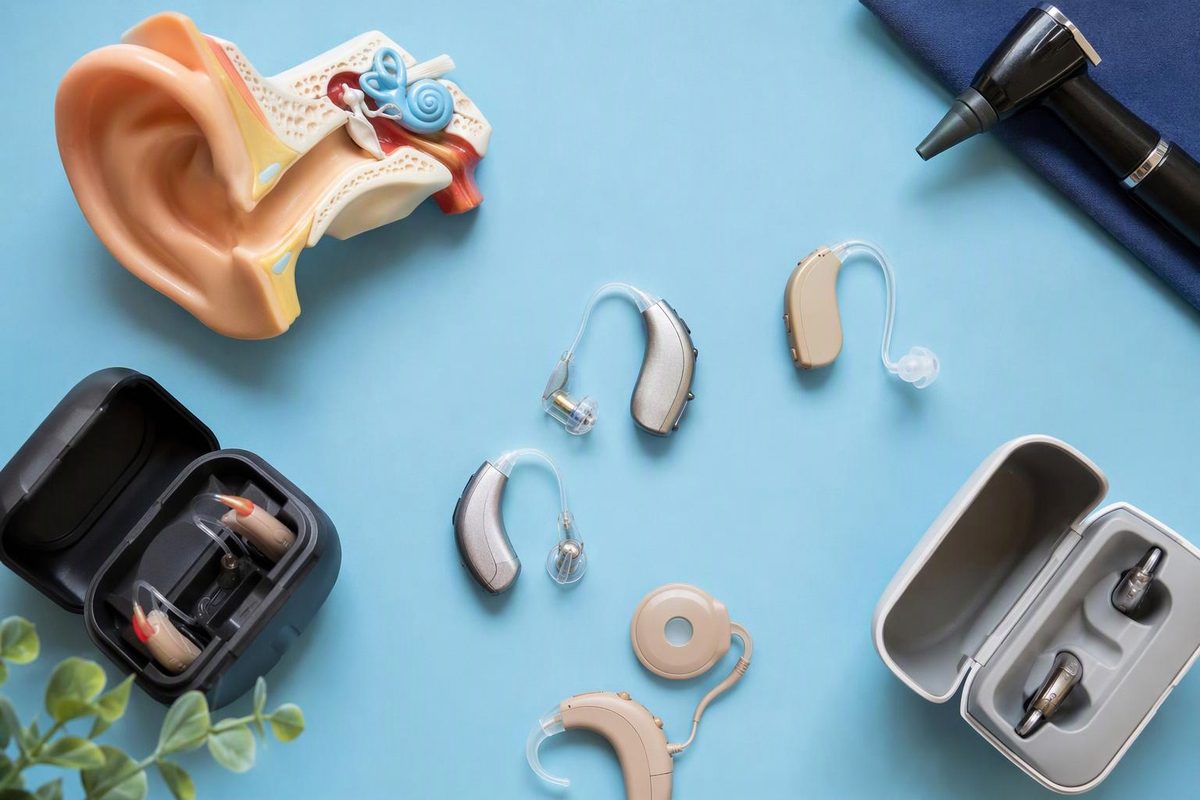
For an adult with established profound hearing loss, a prescription power hearing aid—often a behind-the-ear model with a custom earmold—is an option to assess with an audiologist. But the most important question is not which aid gets loudest. It is whether a properly fitted aid gives you useful speech understanding, and whether a cochlear implant evaluation should happen alongside hearing-aid care.
Hearing aids amplify sound; they cannot overcome every degree of inner-ear damage. The National Institute on Deafness and Other Communication Disorders (NIDCD) explains that amplification has practical limits and may be ineffective when too little usable inner-ear function remains.
If the loss developed suddenly or suddenly worsened, seek medical care immediately rather than shopping for a stronger aid. Sudden inner-ear hearing loss, often affecting one ear, is a medical emergency.
Which type of hearing aid should you consider?
OTC hearing aids are intended for adults with perceived mild-to-moderate loss, not profound loss. Prescription devices allow a hearing professional to program amplification for your measured hearing needs. NIDCD identifies conventional behind-the-ear aids as an option for mild through profound loss; tiny canal aids generally lack the power needed for severe-to-profound loss. NIDCD hearing-aid guidance
Ask an audiologist experienced in profound loss to assess power, super-power or ultra-power devices against your full audiogram, the chart showing hearing thresholds at different pitches. Those product labels alone do not establish suitability. For specific models and feature differences, see our severe hearing-loss device comparison.
If only one ear has profound loss, the other ear’s hearing and each ear’s speech recognition also affect the choice. A conventional aid in the poorer ear is not automatically the best approach; specialist guidance includes sound-routing devices among the options to assess.
Verify the fitting before judging its benefit
Simply increasing volume is not a sufficient fitting strategy. Best-practice guidance for severe and profound loss recommends assessing loudness tolerance, using custom earmolds, measuring the fitting and controlling maximum output.
Request these checks:
- A custom earmold with appropriate venting. The guidance recommends earmolds rather than domes to support high amplification and minimize whistling feedback. Persistent feedback needs a fit and device check, not just a reduction in volume.
- Real-ear measurement. A small probe microphone measures amplified sound in your ear canal. The audiologist compares it with a validated prescription target and rechecks after adjustments. If on-ear measurements are not possible, ask about an appropriate test-box alternative rather than relying solely on software’s initial settings.
- Maximum-output verification. The loudest sound the aid can deliver must be controlled for comfort and safety. More output is not automatically better.
For more detail, see what a hearing-aid fitting should include.
Then ask for speech testing with optimized aids on, not only a check of which tones you can detect. Formal cochlear implant assessment uses verified aids and ear-specific speech testing, including words and sentences. Testing the ears separately helps show what each ear contributes. The clinic can assess your own aids or appropriately programmed clinic aids, so ask whether another purchase is necessary before evaluation. American Cochlear Implant Alliance recommendations
When should you ask about a cochlear implant?
Do not wait until you hear nothing. The American Cochlear Implant Alliance recommends considering referral when appropriately fitted hearing aids provide limited benefit, regardless of performance on a particular screening test.
For adults who lost hearing after developing spoken language, its “revised 60/60” referral guide is:
- An unaided hearing-threshold average of 60 dB HL or worse, measured at 500, 1,000 and 2,000 Hz; and
- An unaided single-word recognition score of 60% or less in that same ear.
“Unaided” means tested without hearing aids; dB HL is the hearing-level scale used on an audiogram. Either ear can trigger referral when both conditions are present in that ear. This is a screening guide, not a rule guaranteeing implant candidacy or insurance coverage. People outside it may still merit evaluation when their current hearing technology provides inadequate benefit. Alliance referral guidance
Unlike a hearing aid, a cochlear implant bypasses damaged portions of the inner ear and directly stimulates the auditory nerve. It involves surgery and rehabilitation, does not restore normal hearing, and has variable outcomes. An evaluation lets you discuss those trade-offs without committing to surgery. NIDCD cochlear implant information
Leave with a communication plan
Ask to trial a compatible remote microphone for conversation in noise or at a distance. These systems can improve performance beyond the hearing aid alone; compatibility and ease of use matter. Severe-to-profound rehabilitation guidance
Bring your current aids, previous hearing tests and two or three situations you most want to improve. Ask the clinic to document the verified fitting, aided speech results and next step. If an implant evaluation finds you are not currently a candidate, ask when to reassess: the Alliance recommends monitoring and re-referral with worsening performance or ongoing hearing difficulties.