
Best Hearing Aid for Severe Hearing Loss: Three Options to Compare
Compare Phonak Naída L-UP, ReSound Enzo IA and Oticon Xceed, plus the fitting checks and cochlear implant referral questions that matter.
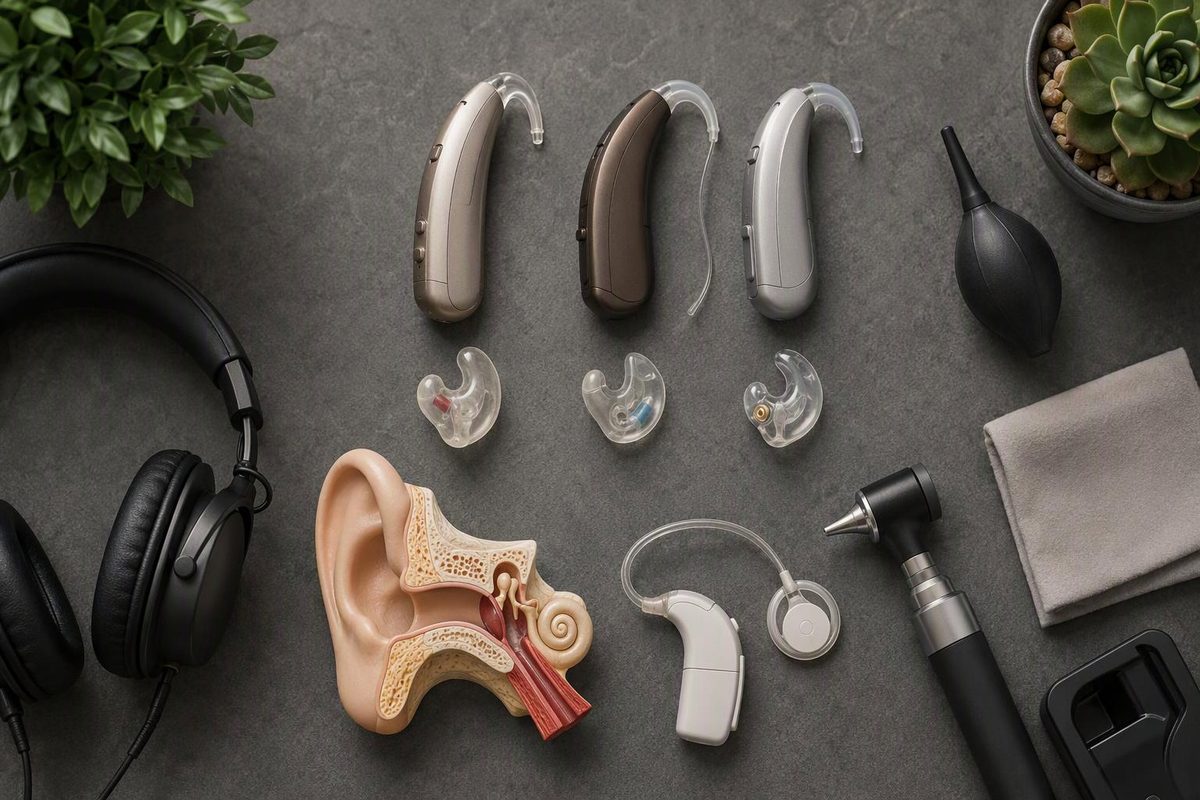
For adults with confirmed severe hearing loss, start with professional prescription care—not OTC devices. Phonak Naída L-UP, ReSound Enzo IA and Oticon Xceed Ultra Power are useful power-hearing-aid options to discuss with an audiologist. The best choice is the one that provides usable speech information at comfortable, verified sound levels and works reliably in your daily life.
The FDA explicitly says OTC hearing aids are not intended to treat severe or profound hearing loss; their maximum output may be inadequate. Turning an OTC device up is not a substitute for a suitable prescription fitting. FDA guidance
If your hearing dropped suddenly, seek medical care immediately rather than shopping for an aid. Sudden inner-ear hearing loss can be a medical emergency, and delaying treatment can reduce its effectiveness. NIDCD guidance
Three prescription options worth comparing
These are feature-based options, not a hands-on ranking or proof that one brand delivers better speech understanding. Product details below reflect manufacturers’ U.S. pages as of October 25, 2026. All three sit behind the ear; the exact model and earmold must be matched to your hearing test.
Phonak Naída L-UP: consider it for Bluetooth and Roger microphones
Phonak lists the Naída L-UP for severe-to-profound hearing loss, with Bluetooth connectivity and a telecoil. A telecoil receives sound from compatible hearing-loop systems. The Naída family also works with Phonak’s Roger wireless microphones. Phonak specifications
That makes L-UP a useful candidate if phone connections and a dedicated microphone for meetings or conversations are priorities. Ask for a demonstration using your own phone and the proposed Roger setup, including a written accessory cost.
Check the suffix, not just the Naída name. Phonak lists L-SP for mild-to-severe loss and rechargeable L-PR for mild-to-moderately-severe loss. They should not be treated as interchangeable with L-UP simply because they share a product family. Phonak model ranges
ReSound Enzo IA: consider it if rechargeability matters
ReSound Enzo IA is a rechargeable super-power hearing aid intended for severe-to-profound loss. It supports Bluetooth Low Energy Audio and Auracast broadcast audio, which lets compatible equipment send audio to hearing devices. ReSound also lists Multi-Mic+ and TV-Streamer+ accessories. ReSound specifications
The manufacturer quotes up to 28 hours per charge, or 20 hours when streaming half the time. Those are manufacturer estimates, not a guaranteed personal runtime. ReSound battery estimates
Consider Enzo IA if changing disposable batteries is difficult or inconvenient. Before buying, test charger handling, confirm compatibility with your exact phone, and ask about battery service and a backup plan during repairs. Rechargeability is useful only if the aid also meets your prescribed amplification needs.
Oticon Xceed Ultra Power: consider it for disposable batteries and physical controls
Oticon Xceed BTE Ultra Power is intended for severe-to-profound hearing loss. It uses a disposable battery and has separate volume and program controls, an LED status indicator, a built-in telecoil and Bluetooth wireless technology. Oticon specifications
This is a candidate if you prefer replacing batteries to charging, or want clearly separated physical controls. Oticon lists ConnectClip for hands-free calls, streaming and remote-microphone use, so ask which functions require an accessory with your phone.
Do not choose it on a “most powerful” slogan alone. The relevant question is whether its output and programming suit your ears—not whether it has the largest advertised maximum.
What makes a power hearing aid the right fit?
A hearing test must establish more than the word “severe.” Hearing thresholds at different pitches, speech recognition, loudness tolerance and whether one or both ears are affected influence the fitting. If you have a conductive component—sound transmission problems in the outer or middle ear—the cause and treatment options also matter. Our guide to conductive hearing loss and hearing aids explains that distinction.
For severe-to-profound loss, specialist guidance recommends custom earmolds with appropriate venting rather than domes, real-ear verification and carefully controlled maximum output. These checks help preserve speech audibility while limiting feedback—the unwanted whistling sound—and excessive sound levels. Audiological management guidelines
Before agreeing to a purchase, ask the clinic to include:
- Real-ear measurements: a small probe microphone measures amplified sound in your ear, rather than relying only on the programming software’s estimate.
- Comfort and output checks: enough amplification for speech without making louder sounds intolerable.
- Speech testing with the aids on: assess understanding, including in noise where appropriate, not just whether sounds are audible.
- A custom-earmold and feedback check: confirm that the intended amplification can be delivered without persistent whistling.
- A remote-microphone trial: particularly if your main difficulty is hearing a speaker across a table or in background noise.
See what a hearing aid fitting should include for a fuller appointment checklist.
Compare written quotes for the complete package: aids, earmolds, accessories, fitting, follow-up, warranty, repairs and return deductions. Ask when the trial period starts and whether it allows time for adjustments and testing in your usual listening situations.
When a different hearing aid may not be enough
If speech is louder but still difficult to understand despite appropriately fitted hearing aids, ask about a cochlear implant evaluation rather than repeatedly buying higher-priced aids. The American Cochlear Implant Alliance recommends considering referral when benefit from appropriately fitted aids is limited, even if a person falls outside a particular screening rule. Adult cochlear implant recommendations
An evaluation does not commit you to surgery or establish eligibility on its own. It helps determine whether hearing aids remain the best approach or an implant could offer more benefit.
Bring your current aids, previous hearing tests, phone and two or three specific communication goals to the appointment. Ask: “Which of these models meets my targets, how will you verify that, and what is the next step if speech understanding remains poor?”