
Can Sinusitis Cause Ear Infections? Possibly
A shared respiratory trigger and Eustachian-tube dysfunction can link them, but pressure or trapped fluid does not automatically mean infection.
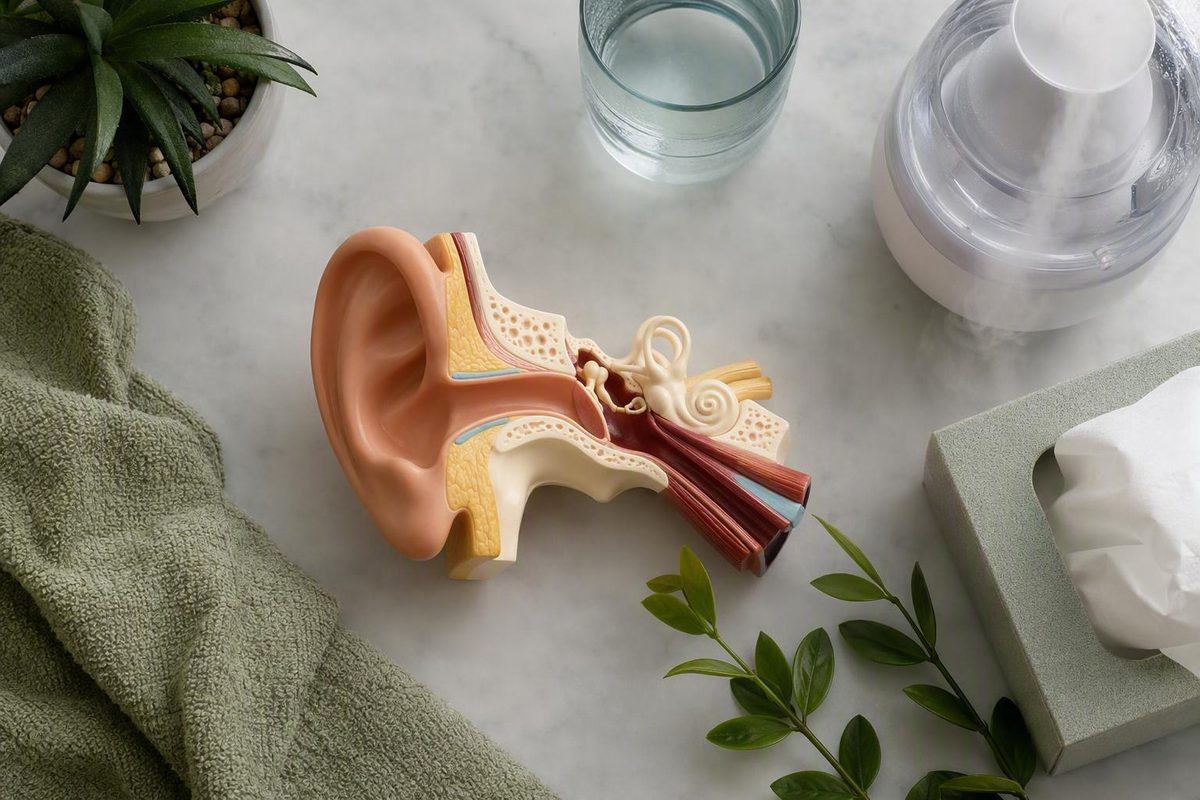
Sinusitis can occur alongside a middle-ear infection, and nasal inflammation may contribute to ear problems.
The short answer: possibly, but not usually through simple direct spread
A sinus infection can coincide with an ear infection, but simultaneous symptoms do not prove that one caused the other. Both conditions may develop during or after the same viral upper-respiratory illness.
A cold or similar infection can inflame the nose and nearby tissues. That inflammation may produce sinus symptoms while also interfering with the Eustachian tube, which helps ventilate the middle ear. In some cases, the resulting conditions allow an acute middle-ear infection to develop. A medical review describes acute otitis media and acute bacterial sinusitis as potential secondary complications after viral upper-respiratory infections, particularly in children, rather than presenting sinusitis as a routine direct cause of ear infection (review of acute otitis media and acute bacterial sinusitis).
This distinction matters because “my sinuses became congested, then my ear started hurting” can describe several different situations:
- One respiratory illness is affecting both areas.
- Nasal inflammation is creating ear pressure without infection.
- Fluid has accumulated behind the eardrum but is not infected.
- A secondary middle-ear infection has developed.
- The ear symptoms have a separate cause that began around the same time.
Children develop middle-ear infections more often than adults, and much of the research on acute respiratory illness progressing to acute otitis media comes from pediatric populations. Findings in young children should not be treated as estimates of adult risk.
How sinus and respiratory inflammation can affect the middle ear
The Eustachian tube connects the middle ear with the upper throat behind the nose. When respiratory or sinonasal tissue becomes inflamed, that system may stop working efficiently.
A simplified progression is:
- A respiratory or sinonasal illness causes inflammation.
- The Eustachian tube does not open or clear fluid normally.
- Middle-ear ventilation decreases, creating pressure differences.
- Fluid may collect behind the eardrum.
- In some—but not all—cases, a secondary infection develops.
This pathway is described in research on acute otitis media following viral respiratory illness, including impaired Eustachian-tube function as part of the process (medical review).
The same pathway helps explain why congestion may be accompanied by ear fullness, popping, crackling, pressure, or temporarily muffled hearing. They do not establish that bacteria or viruses routinely travel directly from a sinus cavity into the middle ear.
One pediatric study found that 37% of documented upper-respiratory-infection episodes were complicated by acute otitis media. The study involved otherwise healthy children ages 6–36 months; it did not find that 37% of sinus infections cause ear infections, and it cannot be used to calculate adult risk.
Ear infection, trapped fluid, or sinus pressure? A practical comparison
The location and pattern of symptoms can offer clues, but they cannot confirm a diagnosis or show that sinusitis caused an ear infection.
| Condition | Typical symptoms | What distinguishes it |
|---|---|---|
| Sinusitis | Nasal congestion or drainage, facial pressure, headache, cough, and sometimes fever | Symptoms center more on the nose, face, forehead, or cheeks than inside the ear |
| Acute otitis media | Localized ear pain, fever, reduced hearing, pressure, and possible ear drainage | An active infection is present behind the eardrum |
| Otitis media with effusion | Fullness, popping, or muffled hearing, often with little or no pain | Fluid is present in the middle ear without an active infection |
These patterns are reflected in clinical descriptions of sinus and ear symptoms, while CDC guidance distinguishes acute middle-ear infection from middle-ear fluid without infection (ENT symptom overview; CDC ear infection guidance).
The categories can overlap.
Otitis media with effusion is especially easy to mistake for an infection. It means fluid has accumulated behind the eardrum without an active middle-ear infection. The fluid may follow a cold or an ear infection and usually causes little or no pain. Because it is not itself an active infection, antibiotics should not be assumed to help; a professional-association guideline recommends against systemic antibiotics for treating this condition in children.
Symptoms alone cannot reliably show whether middle-ear fluid is present or whether it reflects an acute infection. Acute otitis media is generally diagnosed by examining the eardrum with an otoscope. A clinician-observed eardrum that appears distinctly full or bulging is an important diagnostic finding; this is different from a patient’s subjective feeling of ear fullness.
What chronic-disease research does—and does not—prove
A 2023 systematic review found chronic otitis media in 991 of 20,867 patients with chronic rhinosinusitis, a co-occurrence rate of 4.75% across four included studies (systematic review of chronic rhinosinusitis and chronic otitis media).
That figure describes how frequently chronic otitis media appeared among the chronic-rhinosinusitis populations in those studies. It is not the probability that an acute sinus infection will cause an acute ear infection, and it does not establish which condition occurred first.
Researchers proposed several possible explanations for the association:
- Shared inflammation across connected upper-airway tissues
- Impaired Eustachian-tube ventilation
- Bacterial factors or biofilms
- Similar epithelial lining in the sinuses, Eustachian tubes, and middle ear
- Structural or inflammatory problems affecting ventilation or drainage in more than one location
These mechanisms are plausible, but association does not prove direction or causation. Only four studies met the review’s criteria, and the authors called for better-designed research to clarify the relationship.
The available evidence therefore cannot provide a defensible percentage for how often acute sinusitis causes acute otitis media in either children or adults. Chronic co-occurrence data and pediatric respiratory-infection findings address different questions and should not be converted into an individual acute-risk estimate.
When ear symptoms need medical evaluation
Contact a clinician for ear discharge, notable or new hearing loss, severe or worsening pain, a fever of 102.2°F (39°C) or higher, or possible middle-ear infection symptoms lasting longer than two to three days. These are among the circumstances in which the CDC advises seeking medical care for a possible ear infection (CDC ear infection guidance).
Evaluation is also appropriate when the diagnosis is unclear. Sinusitis, acute otitis media, and noninfected middle-ear fluid can all cause discomfort, pressure, or hearing changes, but they are not managed in the same way.
Do not assume antibiotics are necessary simply because sinus and ear symptoms occur together. Viruses can cause middle-ear infections, and many ear infections improve without antibiotics. Otitis media with effusion is fluid without active infection, so it should not automatically be treated as a bacterial ear infection. Treatment depends on the diagnosis, age, symptom severity, examination findings, and medical history. Antibiotics, steroids, antihistamines, and decongestants should not be treated as a universal plan for combined sinus and ear symptoms.
Sinus and middle-ear symptoms often share a respiratory trigger and an Eustachian-tube pathway, but ear pressure or fluid does not automatically mean infection. Drainage, new hearing loss, high fever, severe or worsening pain, symptoms lasting more than two to three days, or uncertainty about the cause calls for a clinical ear examination. This article provides general medical information, not an individual diagnosis.