
How Long Does a Clogged Ear Last? Timelines by Cause
A mildly clogged ear after flying or swimming may clear within hours to a couple of days. Fullness associated with a cold, allergies, an ear infection, middle-…
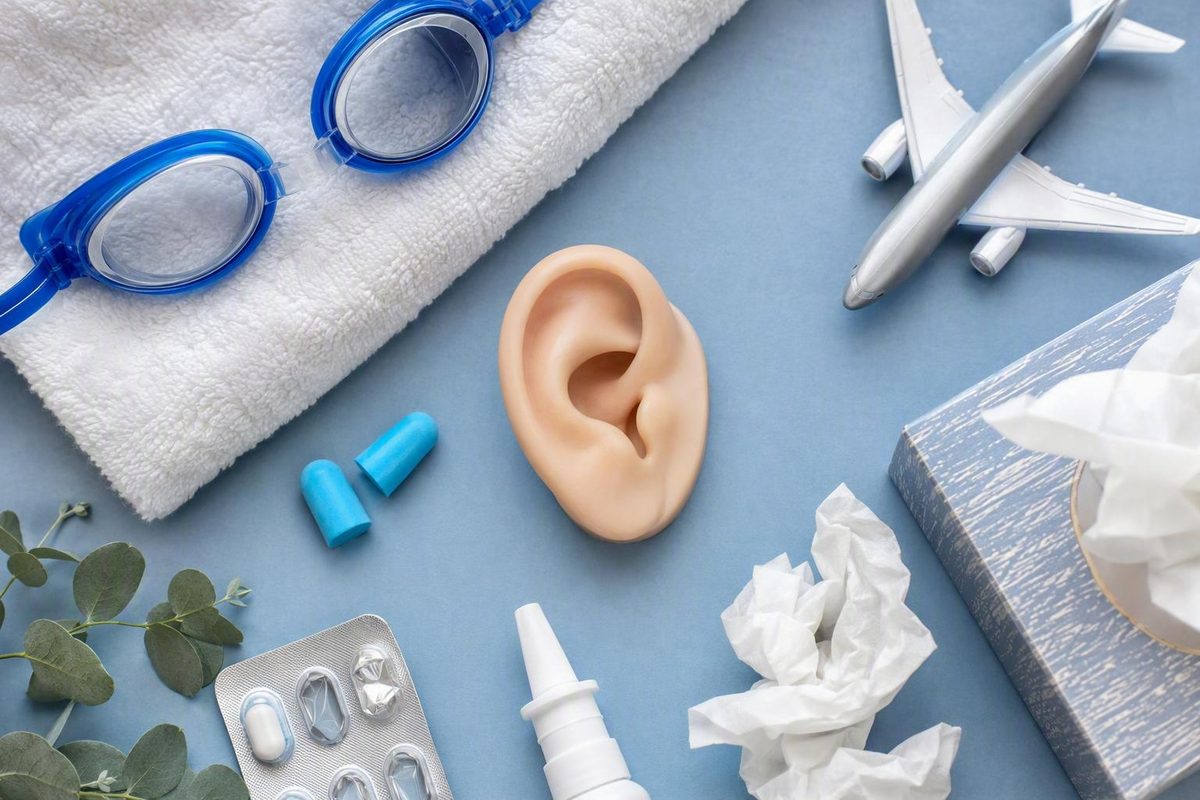
The short answer: from hours to weeks, depending on the cause
A mildly clogged ear after flying or swimming may clear within hours to a couple of days. Fullness associated with a cold, allergies, an ear infection, middle-ear fluid, earwax, or Eustachian tube dysfunction may last several days to one or two weeks—and sometimes longer if the underlying problem persists or requires treatment. Most uncomplicated clogged-ear sensations improve within a few days, but this is a typical pattern rather than a guaranteed recovery time, according to cause-by-cause patient guidance from The Woodlands Hearing Center.
Do not wait a week if your hearing suddenly or noticeably drops, especially in one ear. Sudden or new hearing loss can feel like fullness, pressure, wax, or an ear that needs to pop. Contact an appropriate medical service promptly for guidance rather than relying on home treatment or routine watchful waiting. Clogged-ear symptoms can sometimes represent hearing loss rather than a removable obstruction, and prompt evaluation is advised for a new hearing change in GoodRx’s overview of clogged ears.
If symptoms are mild and there are no warning signs, focus on the trend rather than treating a particular day as a firm medical deadline:
- Improving during the first few days: Continued monitoring may be reasonable.
- Not improving after about one week: Arrange an examination. This is a cautious practical review point, not a universal cutoff.
- Still present after one to two weeks: Seek assessment, particularly if the blockage remains on one side, keeps returning, or affects hearing.
- Worsening or accompanied by significant pain, fever, drainage, tinnitus, dizziness, vertigo, balance difficulty, or a noticeable hearing change: Seek care earlier.
Expected recovery time and the safe duration of home treatment are not the same. Wax may take longer to leave the canal after it has been softened, for example, but that does not make indefinite use of drops or repeated irrigation appropriate. Likewise, cold-related fullness may take a week or two to settle, but a sudden hearing change should not automatically be blamed on congestion.
All timelines in this article are broad estimates based on a possible cause. They are not diagnostic tests, guaranteed recovery periods, or maximum safe waiting times.
Clogged-ear timeline by likely cause
The most useful clues are what happened before the blockage, whether symptoms are improving, and whether warning signs are present. Pressure changes and retained water often settle more quickly than inflammation, middle-ear fluid, or impacted wax.
| Likely cause | Contextual clues | Broad duration estimate | Safe next step | When to seek an examination |
|---|---|---|---|---|
| Altitude or air-pressure change | Recent flight, mountain travel, rapid elevation change, pressure, popping, or temporary muffling | Often hours; sometimes a couple of days according to broad pressure-related estimates | Swallow, yawn, chew gum, sip water, and allow time for pressure to equalize. Use only gentle pressure-equalizing efforts. | If it is not improving after about a week, or sooner for severe pain, drainage, dizziness, balance trouble, or a noticeable hearing change |
| After swimming: retained water or swimmer’s ear | Water-like movement or mild fullness suggests retained water; canal pain, itching, tenderness, or drainage makes swimmer’s ear more concerning | Retained water may clear within hours to a couple of days. With appropriate treatment, swimmer’s ear may improve over one to two weeks, but the timeline cannot establish the diagnosis according to patient guidance on ear blockages | For painless water-like fullness, tilt the affected ear downward and let it drain naturally. Keep objects out of the canal. Pain or drainage calls for clinical assessment rather than repeated drying or probing. | Seek care earlier for pain, outer-ear tenderness, discharge, worsening blockage, or a substantial hearing change |
| Cold or uncomplicated congestion | Stuffy or runny nose, sinus pressure, sore throat, recent respiratory illness, or symptoms affecting one or both ears | Several days to one or two weeks as inflammation settles; longer symptoms do not prove that congestion is the cause according to cold-related patient guidance | Stay hydrated, consider plain saline nasal spray, swallow normally, and monitor for steady improvement. | Arrange an examination after about a week without improvement; seek assessment if symptoms persist beyond one to two weeks or worsen |
| Eustachian tube dysfunction | Fullness, pressure, popping or clicking, muffled hearing, recent cold or allergy flare, or symptoms affected by altitude | Acute symptoms may improve within a few days to one or two weeks. Chronic dysfunction can persist for weeks, months, or longer according to Cleveland Clinic’s medically reviewed guidance | Try gentle swallowing, yawning, or chewing and address associated nasal symptoms appropriately. Recurrent or nearly constant symptoms need assessment. | Seek care for severe pain, worsening symptoms, or symptoms continuing beyond a couple of weeks |
| Earwax blockage | Gradual fullness, commonly in one ear, reduced hearing, possible ringing, and no obvious cold or altitude trigger | Softening treatment commonly lasts three to five days, but wax may dissolve after about a week or fall out over roughly two weeks. Impacted wax may remain until removed under NHS earwax guidance | Ask a pharmacist or clinician whether a wax softener is suitable for your ear and medical history. | Seek advice if symptoms have not cleared after several days, the ear is so blocked that hearing is severely affected, or pain or reduced hearing continues |
| Middle-ear infection or residual fluid | Ear pain, fever, recent cold, pressure, or muffled hearing; fullness may remain after pain or other illness symptoms improve | Infection-related blockage may take around a couple of weeks to improve in some cases, while residual fluid may last longer. Neither duration proves that an infection is present according to broad hearing-clinic estimates | Obtain a clinical diagnosis if an infection is suspected. Treatment depends on the cause rather than the blocked sensation alone. | Seek earlier care for severe or worsening pain, fever, drainage, significant dizziness, balance difficulty, or a sudden hearing change |
These ranges overlap because “clogged ear” is a symptom, not a diagnosis. A cold, wax, middle-ear fluid, and hearing loss can all produce muffled sound, yet they require different responses.
The one-week review point is intentionally cautious. It is most applicable to mild, stable symptoms without warning signs. It should not be interpreted to mean that every blockage is safe to treat at home for seven days or that symptoms become dangerous on a particular day.
Why different causes produce the same blocked feeling
Several parts of the ear can produce fullness, pressure, popping, or muffled sound.
An external ear-canal obstruction occurs between the ear opening and the eardrum. Impacted wax may cause fullness, reduced hearing, earache, ringing, or dizziness.
A middle-ear pressure or fluid problem occurs behind the eardrum. The Eustachian tubes connect the middle ears to the upper throat. They help equalize air pressure and allow fluid to drain. When one of these tubes becomes swollen or does not open and close properly, pressure or fluid may build behind the eardrum.
Colds, allergies, and sinus inflammation can interfere with this pressure-regulating system. Swelling around a Eustachian tube can make the ear feel “underwater” even though nothing is physically lodged in the ear canal. Swallowing and yawning may briefly open the tube, which helps explain why an ear can pop and then feel blocked again.
Wax causes similar muffling through a different mechanism: it obstructs the external canal instead of changing pressure behind the eardrum. A treatment directed at nasal congestion therefore will not remove impacted wax, while earwax drops will not correct middle-ear pressure caused by a cold.
A blocked sensation can also be how someone perceives hearing loss. The difference may not be obvious from the sensation alone. GoodRx lists hearing loss, Eustachian tube problems, respiratory illnesses, allergies, infections, altitude changes, swimmer’s ear, and impacted wax among possible causes of a clogged feeling in its consumer health guidance.
Without looking in the ear—and, when appropriate, testing hearing or middle-ear function—it may be impossible to distinguish among:
- Impacted wax
- Retained water
- Canal inflammation
- Middle-ear infection
- Fluid behind the eardrum
- Eustachian tube dysfunction
- A hearing change that only feels like an obstruction
Even a seemingly obvious trigger can mislead. An ear that feels clogged after swimming may contain water, but increasing pain and drainage point away from harmless retained water. An ear that becomes full during a cold may reflect congestion, but a sudden noticeable hearing change still warrants prompt assessment.
Use the trigger and symptom pattern to narrow the possibilities
This checklist can help organize your next step. It cannot replace an ear examination or hearing assessment.
Did it begin during a flight or rapid elevation change? Pressure-related fullness is more plausible when symptoms start during ascent or descent and the ear pops with swallowing or yawning. Mild cases often settle as pressure equalizes. Severe pain, drainage, significant dizziness, balance trouble, or a marked hearing change does not fit a simple “wait for it to pop” approach.
Did it begin during or after a cold, allergy flare, or sinus symptoms? Congestion or Eustachian tube dysfunction becomes more plausible when ear pressure occurs with a stuffy nose, sneezing, sinus pressure, sore throat, or fluctuating popping. One or both ears may be affected. The fullness can outlast the most obvious respiratory symptoms because inflammation, pressure, and fluid do not necessarily resolve at the same speed.
Did it develop gradually in one ear without a respiratory illness? Earwax is one possibility, particularly when the main symptoms are slowly increasing fullness and muffled hearing. The absence of pain does not prove that wax is responsible.
Did it start after swimming or bathing? Painless, mild water-like fullness may drain naturally. Pain, itching, tenderness when touching the outer ear, discharge, or progressive symptoms should be assessed instead of managed with repeated attempts to probe, irrigate, or dry the canal.
Is there pain or fever? Either can occur with infection. Drainage—especially pus or blood—requires earlier evaluation because it may accompany canal inflammation, infection, or eardrum injury.
Is the problem mainly fullness and popping, or has your hearing suddenly changed? Fullness that fluctuates with swallowing may be more consistent with a pressure problem, but it is not diagnostic. Treat the situation more urgently if sounds suddenly become much quieter or distorted in one ear, speech becomes unexpectedly difficult to understand on that side, or you notice a clear new difference between the ears. You are not expected to measure the loss yourself.
Is it in one ear or both? A cold or altitude change can affect either one or both ears. Gradual one-sided fullness can occur with wax, but a persistent one-sided blockage should be examined—particularly if it continues beyond one to two weeks or interferes with hearing.
Does it keep returning? Recurrent clogging deserves evaluation even if each episode eventually clears. Repeated symptoms can reflect recurring congestion, allergies, wax, Eustachian tube dysfunction, infection, or another condition that requires a more specific management plan.
Is the overall trend improving? A mild symptom that becomes less noticeable each day is different from one that remains unchanged, repeatedly returns, or progressively worsens. Monitoring should involve looking for improvement, not simply waiting for a calendar deadline.
Safe measures for pressure and congestion—and their limits
The measures in this section are intended only for mild pressure- or congestion-related symptoms without sudden hearing loss, severe or worsening pain, fever, drainage, significant dizziness, vertigo, or balance difficulty.
For mild fullness after a flight or elevation change:
- Swallow several times.
- Yawn naturally.
- Chew gum.
- Sip water.
- Allow time for the pressure to equalize.
- Avoid repeatedly forcing the ear to pop.
If you attempt pressure equalization, keep the effort gentle and stop if it hurts. The objective is a slight pressure change, not a forceful pop. Repeatedly or forcefully blowing against a closed nose may worsen discomfort, and forceful techniques are not appropriate when there may be an injury or another cause for the symptoms.
When nasal congestion accompanies the blocked feeling:
- Stay hydrated.
- Consider a plain saline nasal spray.
- Continue normal swallowing and jaw movement.
- Monitor for a gradual reduction in pressure or muffling.
- Avoid escalating to multiple remedies simply because the ear does not open immediately.
Cleveland Clinic lists swallowing, yawning, chewing gum, and saline spray among conservative measures for mild Eustachian tube dysfunction. It also advises discussing decongestants with a healthcare provider because they can worsen the condition in some cases in its Eustachian tube dysfunction guidance.
Medication choices depend on the likely cause, other medical conditions, and medicines already being used. Decongestants and antihistamines should not be presented as universally effective or appropriate. An antihistamine aimed at an allergy trigger, for example, is not a treatment for impacted earwax. A decongestant also cannot establish whether muffled hearing is caused by pressure, fluid, infection, or hearing loss.
No self-care method is guaranteed to open an ear immediately. If a technique does not work, repeating it more forcefully may add irritation without treating the actual cause.
Use a monitoring plan:
- Note whether pressure and muffling are becoming less noticeable.
- Pay attention to whether hearing is returning to normal rather than simply whether the ear “pops.”
- Stop a technique if it causes pain.
- Arrange an examination if mild symptoms show no improvement after about a week.
- Seek care earlier if the condition worsens or a warning sign appears.
Those situations need professional guidance rather than a trial-and-error sequence of remedies.
Earwax treatment is different from treating congestion
Earwax sits in the external ear canal. Congestion-related pressure usually involves the Eustachian tube or middle ear. Because these are different locations and mechanisms, the same treatment does not address both.
Do not assume that every blocked ear should receive peroxide, oil, commercial drops, or irrigation. If wax is suspected, a pharmacist or clinician can help determine whether a softener is appropriate.
Alberta’s clinician-reviewed care instructions describe clinician-recommended wax-softening treatment for up to five days and advise contacting a healthcare professional if pain or reduced hearing remains after one week of home treatment. They also note that tightly packed wax may require professional removal in Alberta’s earwax blockage care guidance.
The treatment period is not a promised clearance period. A softener can change the consistency of the wax without immediately restoring hearing. Softened material may take longer to move outward, and tightly impacted wax may stay in place until it is removed professionally.
NHS guidance gives a similarly important distinction: wax-dissolving medicine may work after about a week, while lumps of wax may fall out and symptoms may improve over roughly two weeks. The NHS also advises seeking non-urgent help if symptoms have not cleared after five days or the ear is so blocked that hearing is severely affected.
Avoid putting the following into the ear canal:
- Cotton swabs
- Fingers
- Hairpins or other sharp objects
- Ear candles
- Ear vacuums
Inserted objects can push wax farther inward or damage the ear. Ear candles and ear vacuums should not be relied on as wax-removal treatments.
Drops, peroxide, or irrigation may be unsafe or inappropriate when there is:
- Ear pain
- Pus, blood, or other drainage
- A known or possible perforated eardrum
- Ear tubes
- Previous ear surgery
- A sudden hearing change
- Significant uncertainty about the cause
Commercial audiology guidance likewise advises against home irrigation when an ear is painful or draining or there is a history of eardrum perforation or ear surgery in its safety guidance for clogged ears.
Do not follow a universal peroxide, oil, drop, or irrigation protocol. Product choice and technique should be individualized, especially when the ear has a complicated medical or surgical history. If you are uncertain whether treatment is safe, ask a pharmacist or clinician before putting anything into the canal.
When a clogged ear needs prompt medical assessment
Seek prompt medical assessment for a sudden or new noticeable drop in hearing, especially in one ear. This can feel like ordinary pressure, wax, or an ear that needs to pop. Do not spend several days testing wax drops or forceful pressure maneuvers before asking for medical guidance.
A noticeable hearing change can mean that:
- Sounds suddenly seem much quieter on one side.
- Speech becomes unexpectedly difficult to understand through one ear.
- There is a clear new difference between the ears.
- Hearing changes along with new tinnitus, dizziness, vertigo, or balance difficulty.
You do not need to identify the cause or quantify the degree of loss before seeking help. Contact an appropriate medical service promptly and describe when the change began, whether it affects one or both ears, and whether it is accompanied by other symptoms. The service can determine the appropriate level of urgency.
Other reasons to seek earlier care include:
- Severe or worsening ear pain
- Fever
- Pus or blood draining from the ear
- A substantial or progressive hearing change
- Significant dizziness or vertigo
- Difficulty with balance
- New or prominent tinnitus, especially with a hearing change
- Worsening pressure rather than gradual improvement
- Symptoms following an ear injury
- Symptoms after a forceful pressure-equalizing attempt
- Repeated infections or recurrent episodes of blockage
Physician-reviewed ENT guidance lists worsening pain or pressure, hearing loss, drainage, dizziness, tinnitus, balance problems, and recurrent infections among reasons for professional evaluation. It also recommends assessment when blockage remains unimproved for more than about a week in its clogged-ear safety guidance.
The one-week and one-to-two-week estimates apply only to mild, stable symptoms without warning signs. They should not be used to postpone care when hearing changes suddenly or significant pain, fever, drainage, vertigo, or balance difficulty develops.
For mild blockage, a practical escalation schedule is:
- Monitor initially when there is an obvious low-risk trigger, symptoms are mild, and hearing has not suddenly changed.
- Arrange a routine examination after about one week when there has been no meaningful improvement.
- Seek assessment when fullness persists beyond one to two weeks, remains on one side, repeatedly returns, or continues to interfere with hearing.
- Ask for earlier professional guidance if you may have a perforated eardrum, have ear tubes, previously had ear surgery, or are uncertain whether drops or irrigation are safe.
This is triage guidance, not an individual diagnosis. A clinician may recommend a different level of urgency after considering how quickly the symptoms began, the extent of the hearing change, associated symptoms, medical history, and examination findings.
What lingering or recurrent fullness can mean
The ear may remain full after a cold or infection because inflammation and middle-ear fluid can resolve more slowly than nasal congestion, pain, fever, or other symptoms. Feeling generally better does not prove that pressure has normalized or that fluid behind the eardrum has cleared.
After a respiratory illness, a Eustachian tube may remain swollen and open inconsistently. This can produce changing pressure, intermittent pops, crackling, or muffled hearing. Fluid may also remain behind the eardrum after the initial illness begins to improve.
Otolaryngology Plastic Surgery Associates notes that post-cold fullness can take days or even weeks to resolve as the Eustachian tube reopens and drains. It recommends evaluation when the ears remain plugged for more than one or two weeks after a cold in its discussion of lingering post-cold congestion.
Symptoms lasting weeks or recurring repeatedly can also be associated with chronic Eustachian tube dysfunction, particularly when allergy or sinus symptoms return frequently. Duration alone cannot establish that diagnosis, however. Persistent fullness may instead reflect:
- Impacted wax
- Ongoing middle-ear fluid
- Canal inflammation
- Infection
- A hearing change
- More than one contributing problem
An examination becomes more important when the blockage:
- Remains consistently on one side
- Continues to reduce hearing
- Has shown no improvement after about a week
- Persists beyond one to two weeks
- Returns frequently
- Is accompanied by tinnitus, dizziness, pain, or drainage
The practical rule is straightforward: seek prompt assessment for sudden hearing loss or warning signs; arrange an examination after about a week without improvement; and do not ignore fullness that continues beyond one to two weeks or repeatedly returns.
Mild pressure- or water-related blockage may clear within hours to a few days. Congestion, Eustachian tube dysfunction, infection, residual fluid, or wax may last one to two weeks or require treatment. Monitor the direction of improvement instead of relying on a rigid deadline, and remember that safe treatment depends on the cause. Objects, forceful pressure, and unsuitable drops or irrigation can make some ear problems worse.
This article provides general educational information for adults and cannot diagnose the cause of an individual clogged ear. Seek individualized advice from an appropriate clinician, particularly if symptoms are severe, persistent, recurrent, one-sided, or associated with a hearing change.
Frequently asked questions
How long does a clogged ear last after a flight?
Pressure-related fullness after a flight often clears within hours, although it can take a couple of days. Swallowing, yawning, chewing gum, sipping water, and allowing time for gentle pressure equalization may help. These are broad expectations rather than a guaranteed maximum according to pressure-related patient guidance.
Arrange an examination if the ear is not improving after about a week. Seek care earlier for severe pain, drainage, significant dizziness, balance trouble, or a sudden noticeable hearing change. A post-flight onset does not prove that pressure is the only cause.
How long can an ear stay clogged after a cold?
Cold-related fullness may last several days to one or two weeks as nasal inflammation settles and the Eustachian tube begins opening normally again. The ear can remain full after the runny nose, sore throat, or other obvious cold symptoms improve because middle-ear pressure and fluid may resolve more slowly according to cold-related ear guidance.
Arrange an examination if there is no improvement after about a week or if the problem persists beyond one to two weeks. Seek help sooner for worsening pain, fever, drainage, significant dizziness, balance difficulty, or a sudden hearing change.
How long does an earwax blockage take to clear?
Wax-softening treatment commonly lasts several days, but complete clearance may take around one to two weeks. Wax-dissolving medicine may work after about a week, while loosened wax can take roughly two weeks to fall out. Impacted material may remain until it is professionally removed under NHS earwax guidance.
The treatment period is not a guaranteed recovery time. Ask a pharmacist or clinician for advice if symptoms have not cleared after several days, pain or reduced hearing remains, or the blockage is severe. Do not insert cotton swabs, fingers, candles, vacuums, or sharp objects into the canal.
Should I worry if only one ear has been clogged for two weeks?
A one-sided ear that has remained clogged for two weeks should be examined, even if it is not painful. Wax and lingering pressure are possible, but duration and symptoms alone cannot exclude middle-ear fluid, infection, Eustachian tube dysfunction, or hearing loss. Commercial audiology guidance similarly recommends professional attention for one-sided blockage lasting longer than two weeks in its clogged-ear assessment guidance.
Seek more urgent guidance if the hearing change began suddenly or if the blockage occurs with severe pain, fever, drainage, prominent tinnitus, vertigo, significant dizziness, or balance difficulty.
Can sudden hearing loss feel like a clogged ear?
Yes. Sudden hearing loss may be perceived as fullness, pressure, muffling, or an ear that needs to pop. Because it can resemble wax or congestion, the sensation alone cannot show that the problem is harmless. Hearing-care guidance specifically cautions that hearing loss can feel similar to an ordinary blockage in its overview of clogged-ear causes.
A sudden or new noticeable drop in hearing—especially in one ear—requires prompt medical assessment. Do not spend several days trying wax drops, forceful popping, or repeated home remedies while waiting to see whether it clears.