
Can TMJ Cause Dizziness? An Association, Not a Diagnosis
TMJ disorders can occur with dizziness, but causation is uncertain. Learn the useful clues, safer first steps and signs that need urgent care.
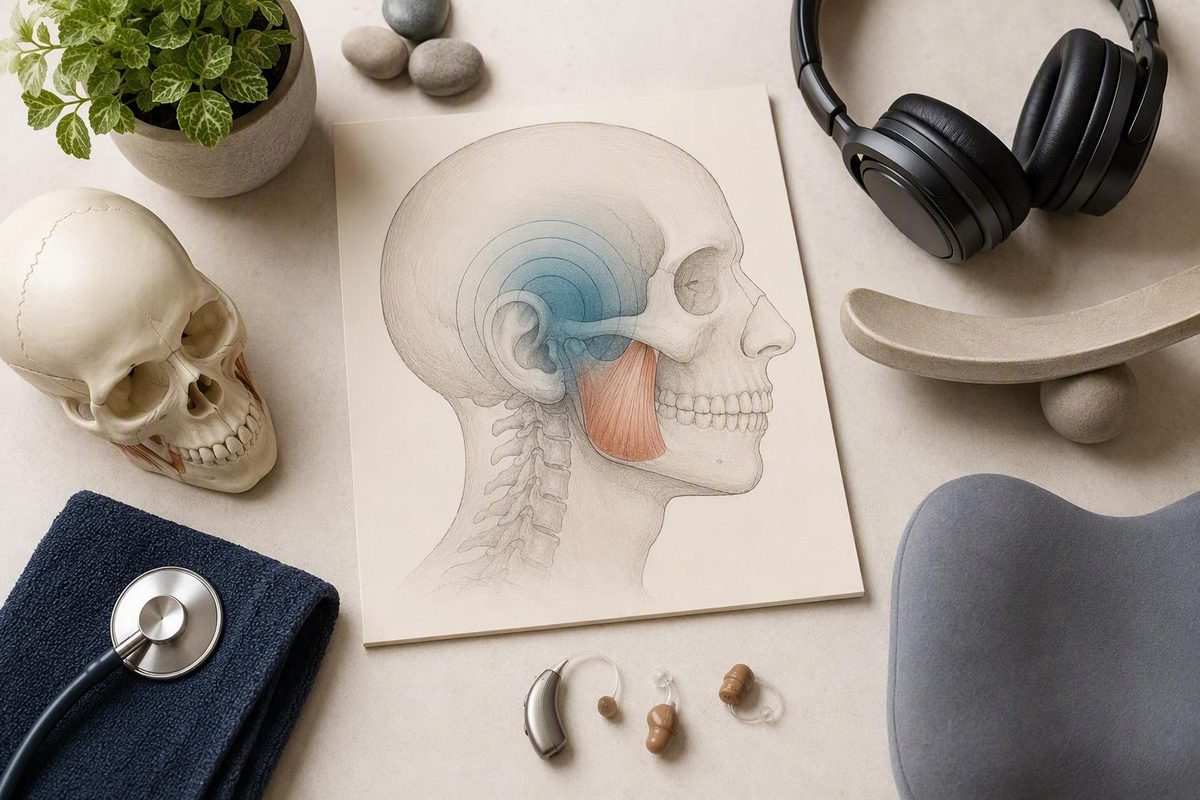
Yes—dizziness can occur with a temporomandibular disorder (TMD), the name for a problem involving the jaw joints or chewing muscles. “TMJ” technically means the joint itself. The National Institute of Dental and Craniofacial Research includes dizziness among possible TMD symptoms.
That does not mean TMD is the cause of every dizzy spell. A recent systematic review found an association between TMD and dizziness, but could not establish causation because the included studies were observational and varied substantially. In its analytical studies, the pooled association was not statistically significant (systematic review).
Clues that make a jaw connection more plausible
A TMD contribution is more plausible when dizziness occurs alongside several jaw-related features, such as:
- pain or tenderness in the jaw joint or chewing muscles;
- pain spreading into the face, temple or neck;
- jaw stiffness, limited opening or locking;
- painful clicking, popping or grinding;
- symptoms that flare with chewing, clenching or prolonged jaw use.
These clues support an evaluation; they do not confirm the cause. Painless jaw clicking is common and does not require treatment by itself, and there is no single widely accepted test that diagnoses every TMD (NIDCR). If muffled hearing or fullness is part of the picture, see how clinicians separate TMD symptoms from hearing loss.
Also describe what “dizzy” means. Lightheadedness feels faint or woozy, imbalance feels unsteady, and vertigo feels as though you or the room is spinning. These patterns have many possible causes, including dehydration, blood-pressure changes, medicines, migraine and inner-ear disorders (MedlinePlus). A jaw diagnosis should not be used to skip an ear, neurological or medication assessment when the pattern points elsewhere.
Who should assess it?
Start with a primary-care clinician if the dizziness is new, recurrent, persistent or hard to characterize. They can review timing, triggers, medicines, blood pressure, neurological signs and balance.
A dentist or clinician experienced in TMD or orofacial pain is useful when jaw pain, restricted movement or painful clicking is prominent. An audiologist or ear, nose and throat clinician may be appropriate when dizziness comes with hearing change, tinnitus or ear fullness. An ear examination and hearing test can help separate a jaw complaint from an ear disorder.
While arranging non-urgent care, note:
- whether the sensation is spinning, faintness or imbalance;
- how long each episode lasts;
- whether chewing, clenching, standing up, rolling in bed or head movement triggers it;
- jaw pain, locking, tinnitus, fullness or hearing change;
- recent illness, medication changes, falls or head injury.
Safer first steps for suspected TMD
For mild jaw symptoms, NIDCR recommends beginning conservatively: temporarily choose softer foods, use heat or cold with gentle exercises, and reduce clenching, gum chewing and nail biting. Over-the-counter pain medicine may be an option if it is safe for you. Many TMD symptoms improve without treatment, while evidence for many treatments remains limited (NIDCR).
Avoid treatments designed to permanently change your bite or teeth merely to treat unexplained dizziness. NIDCR says evidence does not support a strong link between dental misalignment and TMD and warns that irreversible occlusal treatments can make matters worse.
Until the dizziness settles, sit down when it starts and avoid driving, cycling, ladders or machinery if your balance is impaired.
When dizziness needs urgent help
Do not assume a sudden or severe episode is “just TMJ.” Get emergency help for dizziness or vertigo with new weakness or numbness, trouble speaking, confusion, double vision or vision loss, inability to stand, or a sudden severe headache or neck pain (Johns Hopkins Medicine).
Sudden hearing loss—often in one ear—can occur with dizziness, ear fullness or tinnitus and should be treated as a medical emergency rather than attributed to the jaw (NIDCD).
The practical answer is therefore possibly, but only after considering other causes. The closer the dizziness tracks with painful jaw dysfunction, the more reasonable a TMD assessment becomes; prominent spinning, hearing change or neurological symptoms shifts the priority toward medical and hearing/balance evaluation.