
Can TMJ Cause Ear Pain? Signs It May Be Referred Pain
TMJ disorders can refer pain to the ear. Learn the clues, safe first steps, and when ear pain or sudden hearing changes need prompt care.
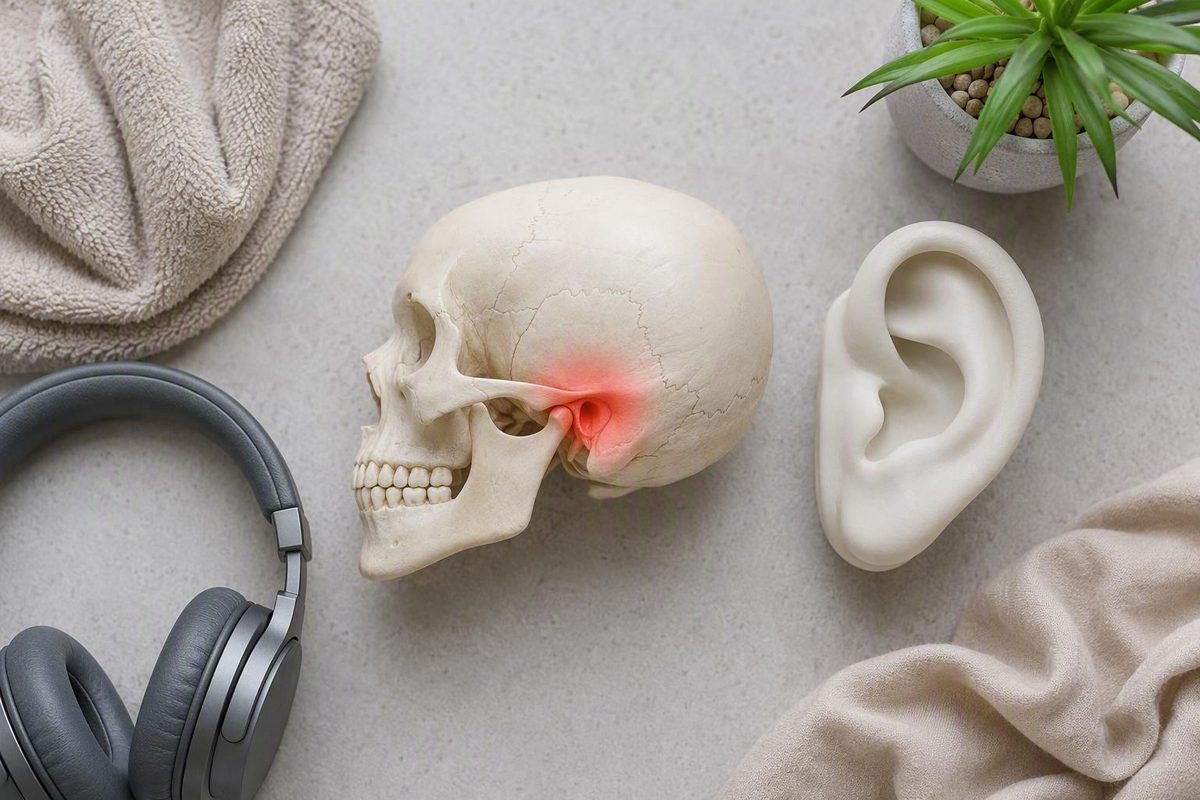
Yes. A temporomandibular disorder can cause pain around or seemingly inside the ear, even when the ear itself is healthy. The more precise term is TMD for disorders involving the jaw joint or chewing muscles; TMJ is the joint itself. The joints sit just in front of the ears, and pain from nearby structures can be referred to the ear. The ear still needs to be considered separately because infections, pressure problems, wax and other conditions can also hurt. The MSD Manual lists the TMJ among the nearby structures that can refer pain to the ear.
Clues that the pain may come from the jaw
TMD becomes more plausible when the ear pain:
- gets worse while chewing, yawning or opening wide;
- occurs with tenderness in front of the ear or in the chewing muscles;
- follows clenching, grinding or prolonged gum chewing;
- comes with painful jaw clicking, stiffness, limited opening or locking; or
- is accompanied by temple, cheek or neck pain.
NHS guidance includes pain around the jaw, ear and temple among TMD symptoms and notes that it may worsen with chewing. Jaw noises and difficulty opening the mouth can also occur. However, painless clicking or popping alone is common and does not necessarily need treatment, according to the National Institute of Dental and Craniofacial Research (NIDCR).
TMD is less convincing when pain has no relationship to jaw movement and comes with ear drainage, marked canal swelling, fever or recent swimming. An examination matters because symptoms alone cannot confirm where the pain starts. Clinicians generally inspect the ear and assess jaw movement and tenderness; they may also examine the teeth, throat, face and neck. NIDCR notes that there is no single standard test for TMD and that other causes of mouth, jaw or facial pain may need to be ruled out.
If your main symptom is muffling or reduced hearing rather than pain, see whether TMJ can cause hearing loss. Crackling specifically triggered by jaw movement has its own set of TMJ and ear-related clues.
What you can try for mild, jaw-linked pain
For a short-lived episode without warning signs, start conservatively:
- Choose softer foods temporarily and avoid very chewy or hard foods.
- Stop gum chewing, nail biting and other habits that repeatedly load the jaw.
- Notice daytime clenching. At rest, let your teeth remain slightly apart rather than holding them together.
- Apply wrapped heat or cold to the painful jaw area, whichever feels better.
- Consider an over-the-counter pain reliever only if it is normally safe for you, and follow its label or a clinician’s advice.
These measures align with NIDCR’s recommended first steps, which emphasize soft foods, heat or cold and reducing clenching and gum chewing. Many TMD symptoms improve without invasive care. NIDCR recommends beginning with conservative treatment and avoiding procedures that permanently change the teeth, bite or jaw joint unless a properly evaluated condition warrants them.
Arrange a dental or medical assessment if the pain persists, repeatedly returns, disrupts eating or sleep, or the jaw locks or will not open normally. A dentist may be especially helpful when grinding, tooth pain or bite-related damage is suspected. A medical clinician can examine the ear and evaluate other sources of referred pain.
Do not assume sudden hearing loss is TMJ
Seek immediate medical care for an unexplained, rapid hearing decrease in one ear, whether it happens at once, on waking or over a few days—even if the ear also feels full or rings. The National Institute on Deafness and Other Communication Disorders calls sudden sensorineural hearing loss a medical emergency and warns that delaying diagnosis and treatment can reduce treatment effectiveness.
Prompt evaluation is also appropriate for ear pain with drainage or bleeding, severe ear-canal swelling, redness or swelling behind the ear, significant fever, or new facial weakness, severe dizziness or neurological symptoms. These features do not establish a particular diagnosis, but they are not good candidates for TMJ self-care alone.
The practical distinction is not simply “jaw or ear.” Jaw-triggered pain makes TMD more likely, while an ear examination helps exclude an ear condition. When hearing changes are part of the picture, a clinician may also arrange formal hearing testing rather than attributing the symptom to the jaw.