
Jabra Enhance Select 700 Favors Connectivity
In a lab fitting for mild sloping to moderate loss, speech scored 3.1/5 in quiet but only 0.8/5 in noise, pinpointing the model's main trade-off.
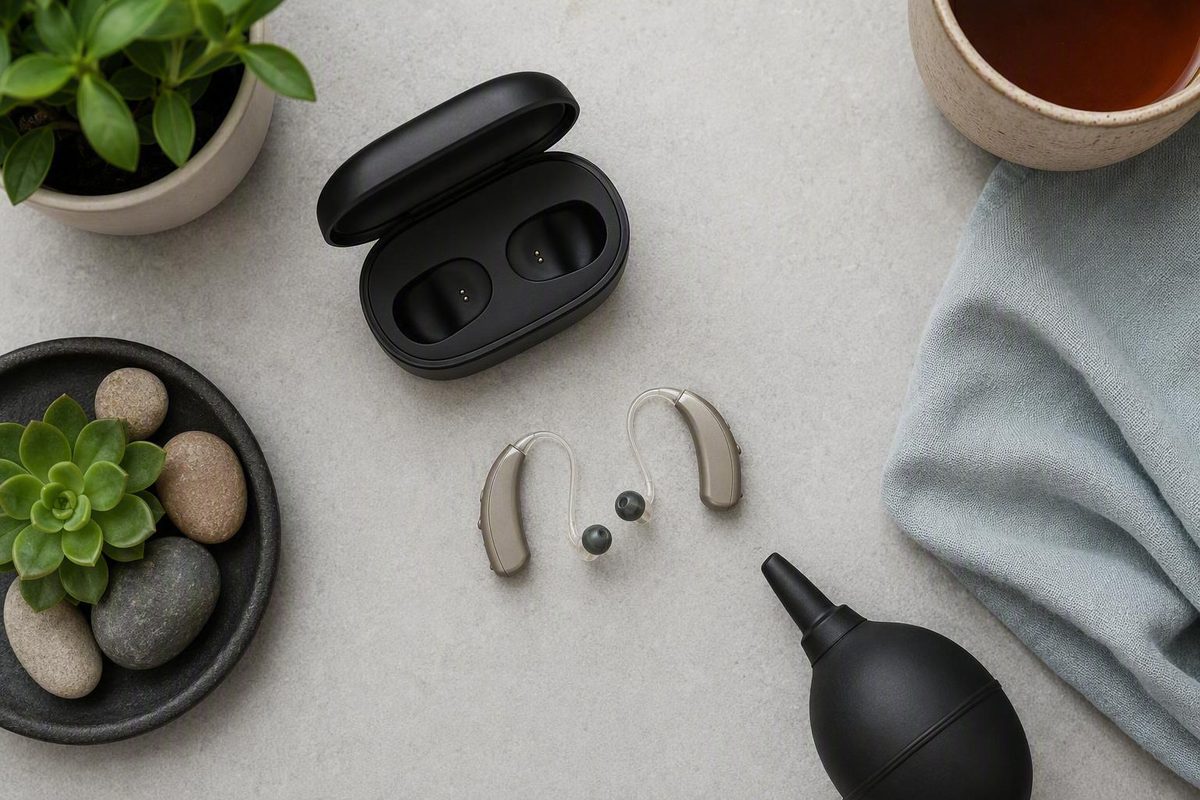
- A connectivity-first OTC hearing aid with one important trade-off*
By Dale Freeman, Hear Review editorial team Evidence review updated: August 10, 2026
How this review was prepared: This is an evidence-led desk review based on manufacturer documentation, seller terms, independent measurements, reviewer assessments, and clearly identified customer anecdotes. Hear Review did not personally test the Select 700, and this article was not clinically reviewed. Dale Freeman is a veterans-benefits writer, not an audiologist or physician.
Medical disclaimer: This article provides general information, not diagnosis or individualized medical advice. Seek qualified medical or hearing care when symptoms are sudden, one-sided, painful, fluctuating, severe, or otherwise concerning.
Jabra Enhance Select 700 at a glance: the short verdict
The Jabra Enhance Select 700 is a rechargeable, over-the-counter receiver-in-ear hearing aid for U.S. adults age 18 or older with self-perceived mild-to-moderate hearing loss. As of August 10, 2026, Jabra’s direct-purchase reference price was $1,995 per pair. Seller prices, membership requirements, professional-care periods, warranties, supplies, and return procedures vary by channel, according to the official Jabra Enhance Select 700 product page.
Its clearest strengths are convenience and connectivity. The hearing aids are compact, reviewer feedback on comfort is favorable, and the portable case can recharge them away from an outlet. The companion app provides listening programs and sound controls, while eligible packages include remote programming and follow-up care. Advertised wireless functions include media streaming, hands-free calls, TapControl, Bluetooth LE Audio, Android ASHA, and Auracast, subject to phone, operating-system, and firmware compatibility.
The central qualification concerns difficult speech environments:
- Manufacturer claim: Jabra describes Auto Focus and SoundScape as technologies designed to support speech clarity and background-noise management.
- Independent measurement: HearingTracker reported 3.1/5 for speech in quiet but only 0.8/5 for speech in noise in a laboratory fitting configured for mild sloping to moderate hearing loss.
- Reviewer impressions: Assessments are more consistently positive about comfort, design, app features, and Bluetooth than about measured speech-in-noise performance.
- Customer anecdotes: Experiences in restaurants range from meaningful improvement to continued difficulty following conversation.
HearingTracker’s comparison contains affiliate links, and its quick verdict was AI-summarized from human-researched information. This review relies on its reported laboratory results and disclosed expert ratings rather than treating the summary as independent proof. The comparison reported a 3.9/5 SoundScore, SoundGrade B, and 16th-place rank among 63 tested OTC hearing aids, alongside the weak speech-in-noise result (HearingTracker comparison, updated July 30, 2026).
The practical verdict is:
- Potentially strong fit: A technology-comfortable buyer who wants discreet daily wear, rechargeable travel convenience, extensive advertised phone features, and professional help without routine clinic visits.
- Less certain fit: Someone whose overriding priority is maximum speech clarity at crowded restaurant tables, parties, or other loud, diffuse environments.
- Value proposition: The premium buys remote care, wireless functionality, app control, warranty coverage, and convenience more clearly than it buys proven class-leading speech-in-noise performance.
Jabra’s direct package lists three years of remote audiology care, a three-year warranty with loss-and-damage protection, a 100-day trial, free shipping and returns, and customer support while Jabra continues to support the device. “Lifetime support” does not mean support for the buyer’s lifetime.
The charging case is stated to provide three additional full charges, producing as much as approximately 96 hours of total listening under specified conditions. That is a maximum travel figure, not a promise for every pattern of streaming and call use.
The 100-day trial is therefore central to the buying decision. Laboratory measurements cannot predict every fitting, while an enthusiastic individual review cannot establish typical performance. Test the aids in the places where you actually struggle before deciding whether their convenience justifies the price.
Who the Select 700 is for—and who should get an in-person evaluation
The Select 700 is intended for adults age 18 or older in the United States who perceive their hearing loss as mild to moderate. It can be purchased without a required in-person professional fitting because it is an OTC hearing aid. That designation removes a purchasing barrier; it does not mean every hearing problem can be diagnosed or managed safely online.
A likely candidate is comfortable with:
- Ordering hearing aids online
- Completing an online hearing test or supplying a recent audiogram
- Pairing the devices with a smartphone
- Using an app for volume, sound, and program changes
- Attending virtual orientation and adjustment appointments
- Wearing the aids consistently while adapting to amplified sound
- Describing specific listening problems to a remote audiology team
The official user guide makes two limitations particularly important. Hearing aids do not restore normal hearing, and they may not eliminate difficulty understanding speech in noise.
Symptoms that should not be handled as a routine OTC purchase
Seek medical evaluation—preferably from an ear, nose, and throat physician—before relying on an OTC hearing aid if you have:
- An unusual ear shape, deformity, or previous ear injury
- Blood, pus, or other drainage from an ear
- Ear pain or persistent discomfort
- Excessive wax or a suspected object or obstruction
- Vertigo or a spinning or swaying sensation
- A sudden hearing change
- Hearing that fluctuates between better and worse
- Hearing that has become notably worse in one ear
- Ringing or buzzing confined to one ear
The guide also instructs users to remove a device that causes pain or uncomfortably loud output. Hearing aids are not hearing protection and should be replaced with appropriate protective equipment in dangerously loud environments. Damaged devices and units suspected of battery leakage should not be used (Jabra Enhance Select user guide).
The Select 700 should not be treated as the default solution for severe or profound loss, sudden changes, marked asymmetry, fluctuating hearing, or other medically complicated patterns. Remote audiologists can program the aids from an online test or audiogram, but seller materials warn that some hearing losses are not suitable for remote programming.
An in-person hearing examination is also worth considering when your main complaint is understanding speech in noise.
Price and packages: compare the service, not just the hardware
The Select 700’s hardware name does not describe the complete value of the purchase. One seller may include three years of professional adjustments and protection, while another may display the same hardware price without establishing equivalent care or warranty terms.
The following comparison reflects displayed information reviewed on August 10, 2026. Prices, promotions, eligibility rules, and package terms can change.
| Seller or channel | Displayed price | Eligibility | Remote audiology period | Warranty and loss protection | Trial or return period | Shipping | Notable supplies or conditions |
|---|---|---|---|---|---|---|---|
| Jabra Enhance direct | $1,995 per pair; financing advertised from $65 per month | U.S. adults 18+ within the OTC candidacy range | Three years | Three years, including loss-and-damage protection; separate terms apply | 100 days | Free shipping and returns advertised | Portable charger, fitting supplies, custom programming, and customer support while the device remains supported |
| AARP Hearing Solutions Complete Bundle | $1,695, reduced from a stated $1,995 | Eligible AARP members | Two years | Two years, with loss protection subject to a deductible | 100 days | Free shipping advertised | Expanded upkeep kit with domes, wax guards, cleaning supplies, measuring tools, and replacement tools |
| Best Buy | $1,995 displayed | Standard retailer eligibility | Do not assume the direct Jabra care period without confirmation | Do not assume direct-purchase protection terms without confirmation | Confirm before purchase | Confirm before purchase | Visible evidence identifies the hardware but does not establish an identical direct-care package |
| HearingTracker listing | $1,795 per pair | Subject to linked seller terms | Listed three-year remote service | Confirm with seller | Confirm with seller | Confirm with seller | Illustrates why prices must be tied to a seller, package, promotion, and date |
| UnitedHealthcare Hearing | No public price displayed | Depends on the member’s plan and account access | Purchase details list three years, but an FAQ separately mentions 100 days of Premium Care | Three years listed; loss-and-damage claims are subject to a deductible | 100 days listed | Free shipping listed | Price, coverage, and availability are plan-specific |
Jabra’s advertised financing amount is not enough to determine whether financing is economical. The reviewed materials do not disclose the interest rate, repayment term, credit requirements, or total financed cost. A $65 monthly payment should not be compared with a cash price until those terms are known.
The AARP Complete Bundle listed a member price of $1,695, two years of licensed virtual audiology services, a two-year warranty and loss protection, a 100-day return period, and an expanded maintenance kit. Against the $1,995 direct reference price, that is a $300 upfront saving in exchange for one fewer listed year of audiology care and warranty coverage (AARP Complete Bundle terms).
Best Buy displayed a $1,995 price and a 4.9/5 rating from 33 reviews on the review page examined August 10, 2026. Hardware price and retailer ratings do not prove that the package includes the same professional service, loss protection, shipping terms, or trial administration as a direct Jabra order. Several prominently displayed reviews were incentivized or submitted by Tech Insider Network members, and only part of the 33-review set was visible. The rating therefore should not be treated as representative proof of performance (Best Buy Select 700 review page).
UnitedHealthcare availability cannot be assessed without the member’s plan information. Its materials also contain an unresolved distinction between “100 days of Premium Care” and three years of licensed audiology service. Buyers should ask what each term covers rather than assuming they describe the same benefit. Public materials list free shipping, a 100-day return period, three years of warranty and loss protection, and a deductible for loss-and-damage claims, but no public price (UnitedHealthcare Hearing listing).
Financing, protection, and ownership costs
FSA and HSA eligibility is advertised, but the evidence does not establish whether those funds can be combined with financing, insurance benefits, AARP pricing, or another promotion. The AARP offer states that FSA or HSA payment must be made in full and that split payments are not accepted.
Loss-and-damage protection may involve a deductible. Complete deductibles, exclusions, replacement limits, and out-of-warranty costs were not available in the reviewed evidence. Ask for the full policy before treating protection as equivalent to a free replacement.
Also clarify:
- Whether replacement receivers, domes, wax guards, and microphone filters are included after the initial supplies run out
- Whether return shipping remains free for the entire trial
- Whether the trial starts on the order, shipment, or delivery date
- How many loss-and-damage claims are permitted
- What professional care costs after the included two- or three-year period
- Whether a seller’s return process is administered by Jabra or by the retailer
The best package depends on whether the third year of direct remote care and warranty coverage is worth $300 to you. An experienced hearing-aid user may prefer the lower AARP price and larger maintenance kit. A first-time wearer who expects repeated programming changes may place more value on the longer direct-care period.
Design, fit, battery life, and day-to-day wear
The Select 700 uses a mini receiver-in-ear design. The main hearing-aid body sits behind the outer ear, while a thin receiver wire runs forward to a dome in the ear canal.
Manufacturer specifications: Each aid is listed at 1.04 by 0.30 by 0.47 inches and 2.12 grams. Available colors are Sparkling Silver, Sand, Gold, Bronze, Warm Gray, and Red. The portable charging case is listed at 145 grams. These are Jabra’s specifications, not dimensions or weights independently confirmed for this review (Select 700 specifications and package details).
Battery and charger
Sales materials state more than 24 hours of listening from one charge in some conditions. The portable case holds three additional full charges, producing a stated maximum of approximately 96 hours before the case itself needs external power.
That figure is best understood as a travel ceiling, not a promise. The user guide specifically states that wireless streaming consumes power more quickly and may stop before basic hearing-aid operation when the battery becomes low. Frequent streaming and calls can therefore shorten practical listening time.
The case is portable, but its 145-gram listed weight is substantial relative to the two hearing aids. One visible Best Buy reviewer called it large and heavy. That is an individual impression, not a general finding. Travelers should decide whether several charges away from an outlet outweigh the case’s pocket or bag bulk.
Domes, receiver wires, and retention
The fitting system includes open, closed, and tulip domes. Open and closed versions come in several sizes, while tulip domes use an overlapping design. Receiver wires are replaceable, optional sport locks can improve retention during activity, and blue and red markings identify the left and right sides respectively.
These components materially affect fit and sound:
- Dome style and size influence seal, bass response, feedback, comfort, and how blocked the wearer’s own voice feels.
- Receiver-wire length affects whether the body rests securely behind the ear and whether the wire pulls on the dome.
- Microphone position can change if the body rides too high, too low, or too far from the ear.
- Sport locks may help if domes loosen during walking or exercise, but they should not create painful pressure.
In a November 2025 forum discussion, two owners said Jabra supplied longer wires after the original wires felt too short. That does not establish a universal fitting defect, but it illustrates why persistent wire tension should be reported rather than accepted as an unavoidable part of adaptation.
Comfort and durability
Reviewer assessments: NCOA’s testers awarded 5/5 for setup and 5/5 for fit. HearingTracker separately rated comfort, design, and build quality at 5/5. These scores reflect reviewer experience, not guaranteed outcomes for every ear.
NCOA discloses that it may earn commissions through affiliate links. Its testers also observed Bluetooth audio at more than 50 feet during broader testing of Jabra Enhance devices, although that observation is not a guaranteed range for every Select 700, phone, building, or source of interference (NCOA Jabra Enhance review).
The aids carry an IP68 rating and are described as resistant to dust, sweat, and rain. That does not make them suitable for swimming, showering, deliberate immersion, or water exposure outside the manufacturer’s permitted conditions.
During the trial, evaluate more than whether the aids feel comfortable for ten minutes. Wear them with your usual glasses, hat, or mask. Check for:
- Soreness after a full day
- Receiver-wire tension
- Dome movement while chewing
- Microphone contact with hair
- Interference with eyeglass arms
- Own-voice quality
- Retention during walking
- Real battery endurance under normal streaming habits
Sound quality in quiet and noise: where the evidence conflicts
The evidence is stronger for comfort, usability, and connectivity than for difficult speech-in-noise performance.
Manufacturer description: Jabra says SoundScape and Auto Focus are designed to support speech clarity and background-noise management. “Designed to” is important. It describes intended behavior, not a guarantee or proof that the Select 700 outperforms competing products.
Independent laboratory results: HearingTracker reported:
- HearAdvisor SoundScore: 3.9/5
- SoundGrade: B
- Rank: 16th of 63 tested OTC hearing aids
- Speech in quiet: 3.1/5
- Speech in noise: 0.8/5
Testing was configured for mild sloping to moderate hearing loss, and the reported audio samples were cut off above 10 kHz. The results should not be treated as a universal prediction for every hearing profile, dome, programming configuration, or listening environment. Neither the Select 700 nor the compared Lexie Powered by Bose B2 produced a strong speech-in-noise score in the cited test (HearingTracker laboratory comparison).
Reviewer impressions: NCOA testers were favorable about setup, fit, and general sound. HearingTracker’s expert ratings were also much stronger for comfort, Bluetooth, design, and build quality than the laboratory speech-in-noise subscore.
Retailer anecdotes: Best Buy reviewers frequently mentioned sound quality, comfort, and battery life favorably, but the visible reviews included incentivized submissions and did not represent the complete review set.
Forum anecdotes: Some owners reported clearer conversation, pleasant sound, and useful control of sudden loud sounds. Others still struggled in restaurants. In one November 2025 discussion, an owner initially described major improvement but later reported inadequate clarity at a four-person restaurant table despite trying several settings. Participants had different hearing-loss patterns, so their experiences are not directly comparable (HearingTracker community discussion).
Why restaurant results vary
A restaurant is a demanding acoustic test.
Results can change with:
- The degree and configuration of hearing loss
- How accurately the programming matches that loss
- Whether both aids are connected and operating correctly
- Dome seal and venting
- Receiver-wire length and microphone position
- Distance from the speaker
- Whether the speaker is in front, beside, or behind the wearer
- Table shape and seating arrangement
- Reverberation and overall noise level
- Adaptation time and use of visual cues
Restaurant mode uses forward-facing directional microphones to emphasize sound from the front and reduce amplification from behind. That means seating strategy matters: face the person you most need to hear, place a wall behind you when possible, and avoid putting the dominant noise source directly in front. This is intended behavior, not a guarantee of clear conversation (Jabra app sound-control guide).
A realistic expectation is greater confidence for one-to-one conversation, television dialogue, and ordinary daily listening than for consistently effortless speech in a loud, diffuse crowd.
During the trial, repeat practical tests such as:
- A restaurant table with three or four people
- A group meeting with speakers at different distances
- Television dialogue at your normal volume
- Conversation in a moving car
- Outdoor speech in wind
- Live and streamed music
Keep brief notes on the program, seating position, volume, and problem. “Speech is clear until the server stands behind me” gives a remote audiologist more useful information than “restaurants sound bad.”
App controls, streaming, calls, and compatibility limits
Connectivity is one of the Select 700’s strongest reasons for consideration, but advertised support should not be confused with universal compatibility.
Jabra advertises:
- Media streaming
- Hands-free calling on compatible devices
- TapControl
- Bluetooth LE Audio
- Android ASHA
- Auracast support
- Remote programming through the Enhance Select app
The reviewed evidence does not provide a complete phone-by-phone compatibility matrix.
TapControl lets the wearer accept or end a call by tapping. Jabra specifically states compatibility with iPhone 11 or newer or a compatible Android device. Even then, call routing and outgoing microphone behavior should be tested rather than assumed.
Auracast is better treated as future readiness than as an immediately useful service for every buyer. Compatible hearing aids may receive broadcasts from suitably equipped televisions, public-address systems, or venue transmitters, but the evidence does not establish that useful Auracast broadcasts are widely available in a particular buyer’s local theaters, airports, houses of worship, or meeting rooms.
UnitedHealthcare’s package page similarly lists compatible Apple and Android streaming, hands-free calls, TapControl, Bluetooth LE Audio, and Auracast while warning that device compatibility must be checked separately (UnitedHealthcare Select 700 connectivity details).
What the app controls
The Enhance Select app provides four listening programs:
- All Around: A general-purpose program for varied listening situations.
- Restaurant: Uses forward-focused directionality to prioritize sound in front.
- Music: Intended to preserve musical richness.
- Outdoor: Reduces emphasis on wind and road noise.
Users can adjust left and right volume together or separately, change bass, middle, and treble, view individual battery levels, and check connection status. Professional programming changes can also be delivered remotely when audiology service is included.
The app displays 50% as its startup volume reference. That does not mean the hearing aid is delivering half the prescribed amplification. It is a visual midpoint for temporary user adjustments.
HearingTracker rated Bluetooth 5/5 and app features 4.5/5. Those favorable reviewer scores should be balanced against individual reports of one aid connecting later than the other, calls failing to route correctly, an Android phone using its own microphone, and muffled outgoing-call audio. These reports identify possible failure modes; they do not establish that the problems are typical.
If calls are essential to your work or safety, verify your exact phone model and operating-system version before ordering. During the return window, test:
- Incoming call audio in both ears
- Outgoing speech in a quiet room
- Outgoing speech in moderate background noise
- Call acceptance and ending through TapControl
- Media resuming correctly after a call
- Reconnection after restarting the phone and aids
- Whether the expected phone or hearing-aid microphone is being used
“Works with iPhone” or “Android compatible” is not proof that every advertised feature will work on every recent device.
Remote audiology, setup, maintenance, and troubleshooting
The direct-purchase process is designed around supported self-care. Programming can be based on an online hearing test or an existing audiogram. The aids are shipped to the buyer, connected to the app, and used with virtual orientation and follow-up appointments. Remote professionals can adjust the fitting without requiring the aids to be mailed back for each programming change.
Licensed audiology service is distinct from general customer support. The direct package lists three years of remote audiology care; the AARP bundle lists two. The available evidence does not establish what licensed professional care costs after the included period ends.
Jabra provides an online quick-start guide for initial operation and app connection. Its introductory page points users toward the setup process but does not itself contain the complete instructions.
Routine maintenance
Owners should expect to:
- Wipe the aids and domes regularly
- Inspect domes for tears, wax, or looseness
- Replace blocked or damaged domes
- Inspect and replace wax guards
- Keep charging contacts and the case clean and dry
- Watch receiver wires for stiffness, damage, or poor positioning
- Use the same dome style and size unless fitting guidance calls for a change
- Keep microphone openings and filters free of debris
Jabra recommends replacing wax filters during a monthly deep clean. That is manufacturer guidance, not a universal schedule for every ear. Practical warning signs include declining or distorted output and visible blockage.
If one hearing aid has no sound
Use a structured sequence rather than immediately assuming electronic failure:
- Confirm power and charging. Place the aid in the charged case and look for a pulsing green charging indication.
- Check app status. If it appears connected but produces no sound, a physical blockage is plausible. If startup tones work but the app says disconnected, investigate pairing.
- Inspect the dome and receiver opening. Replace the dome and wax guard, using the same dome style and size unless advised otherwise.
- Replace both Select 700 microphone filters if sound remains weak or distorted after changing the dome and wax guard.
- Test the receiver. Sound returning after a receiver swap points toward a receiver-wire problem; continued failure may indicate a problem in the hearing-aid body.
- Contact support if the problem persists.
This sequence, including the two model-specific microphone filters, comes from Jabra’s one-hearing-aid troubleshooting guide.
Maintenance is directly connected to performance.
Stop using a visibly damaged device or one suspected of battery leakage. Contact Jabra instead of attempting an unsafe repair.
Alternatives and the final buying decision
The Select 700 should be compared on more than its hardware. Its price supports a model of care: online ordering, remote programming, app-based adjustments, and a lengthy home trial. A cheaper product may provide better upfront value but less professional assistance or fewer wireless features.
Select 700 versus Lexie Powered by Bose B2
In its July 2026 comparison, HearingTracker favored Jabra for wireless connectivity and remote audiology support but favored Lexie for measured speech clarity and value. At the time, the Select 700 was listed at approximately $900 more than Lexie. That gap was seller- and date-specific, not a permanent price difference.
The comparison does not establish that either product is universally better. A buyer who streams frequently and wants remote professional fine-tuning may reasonably value Jabra’s package. A price-sensitive buyer willing to accept fewer connectivity or support advantages may prefer a lower-cost self-fitting OTC product, particularly when measured speech performance and value are the main priorities.
Select 700 versus Jabra Enhance Pro at Costco
Jabra Enhance Select and Jabra Enhance Pro are different product and care channels. Select is an online OTC range for perceived mild-to-moderate hearing loss with telehealth support. Enhance Pro is a separate prescription-grade range sold and serviced through Costco (Jabra hearing-aid category comparison).
That distinction does not establish that the Select 700 is technically equivalent to the Enhance Pro 30, nor does it prove that either is categorically better. The reviewed evidence does not contain a complete feature-by-feature or fitting comparison.
When prescription care may be worth more
Consider local prescription care when:
- You have a medical warning sign or uncertain diagnosis
- Your hearing loss may be beyond the OTC mild-to-moderate range
- One ear is substantially worse than the other
- Remote adjustments do not produce acceptable speech clarity
- You cannot obtain a secure or comfortable physical fit
- You prefer in-person testing and verification
- You want a local provider for repairs and ongoing follow-up
- Speech in noise remains your dominant problem after a serious OTC trial
A local fitting does not guarantee perfect restaurant performance, but it can provide more direct troubleshooting of acoustics, physical fit, and hearing-loss configuration.
Decision framework
Choose the Select 700 when your priorities are:
- Remote professional programming
- Small receiver-in-ear styling
- Rechargeable travel convenience
- App-based sound controls
- Broad advertised streaming and calling support
- A long home-trial window
Compare cheaper OTC products when your priorities are:
- Lower initial cost
- Simpler self-fitting
- Measured value over advanced connectivity
- Less need for ongoing professional adjustment
Consider prescription care when your priorities or needs are:
- Medical assessment
- Complex or greater hearing loss
- Hands-on fitting and verification
- Local repairs and follow-up
- Persistent difficulty in noise despite appropriate OTC adjustments
Before ordering, verify:
- [ ] The current seller-specific price
- [ ] Exactly what comes in the package
- [ ] The included audiology period
- [ ] Warranty exclusions and loss deductibles
- [ ] The return deadline and return procedure
- [ ] Compatibility with your exact phone and operating system
- [ ] Whether hands-free calls use the expected microphone
- [ ] Financing rate, term, and total repayment cost
- [ ] Restrictions on FSA, HSA, insurance, or discount combinations
- [ ] Several difficult real-world settings to test before the trial ends
The restrained conclusion is that the Jabra Enhance Select 700 is a plausible premium OTC choice for connectivity and supported self-care. Its compact design, rechargeable case, app control, wireless functionality, and remote audiology package form a credible value proposition. Buyers focused primarily on speech in noisy rooms should compare alternatives because independent speech-in-noise testing was weak and restaurant reports were inconsistent. Confirm candidacy, seller terms, and phone compatibility—and treat the 100-day trial as essential.
Frequently asked questions
How long does the Jabra Enhance Select 700 battery last?
Jabra states more than 24 hours of listening per charge in some sales materials. The charging case holds three additional full charges, producing a stated total of up to approximately 96 hours under specified conditions.
Actual endurance can be shorter with frequent media streaming, calls, or other wireless use. The user guide specifically states that wireless streaming drains the battery faster and may stop before basic hearing-aid operation when charge is low (Jabra Enhance Select user guide).
Are Jabra Enhance Select 700 hearing aids good in restaurants?
They may help, but the evidence does not support a guarantee. Restaurant mode uses forward-facing directionality to prioritize speech from the front, and some owners reported improvement. Others continued to struggle.
Independent testing reported a weak 0.8/5 speech-in-noise result in a fitting configured for mild sloping to moderate hearing loss. Fit, programming, dome selection, seating, distance, and room acoustics can materially change the result. A November 2025 community discussion likewise contained both favorable and disappointing restaurant experiences (Select 700 user discussion).
Are the Select 700 hearing aids FDA approved?
It is more accurate to say that seller materials describe the Select 700 as listed with the FDA as required and sold in compliance with applicable hearing-aid regulations. That statement comes from seller documentation rather than a product-specific FDA approval record reviewed for this article.
FDA listing and OTC regulatory status do not mean the product received a product-specific approval proving effectiveness or superiority. The device is intended for U.S. adults age 18 or older with self-perceived mild-to-moderate hearing loss (AARP Hearing Solutions regulatory information).
Can I buy Jabra Enhance Select 700 hearing aids at Costco?
Jabra identifies Enhance Select as an online OTC range sold and serviced through Jabra Enhance, not as its Costco line. Costco carries the separate prescription-grade Jabra Enhance Pro range (Jabra’s hearing-aid channel overview).
Availability can change, but buyers should not assume that a Costco Jabra product is the Select 700 or that an Enhance Pro model is technically identical. Check the exact model name, care channel, and included services before comparing prices.
Can the Select 700 stream calls and media from iPhone and Android phones?
The Select 700 advertises media streaming and hands-free calling for compatible Apple and Android devices, along with Android ASHA, Bluetooth LE Audio, TapControl, and Auracast. Not every function works with every phone or operating-system version.
Jabra specifically associates TapControl with iPhone 11 or newer or a compatible Android device. Before buying, confirm support for your exact phone and test incoming audio, outgoing microphone quality, call routing, media playback, and reconnection during the return period.