
Top Hearing Aids for Tinnitus: Three Options to Compare
Compare Widex, Oticon and Phonak tinnitus features, understand the evidence, and learn which fitting and trial checks matter before buying.
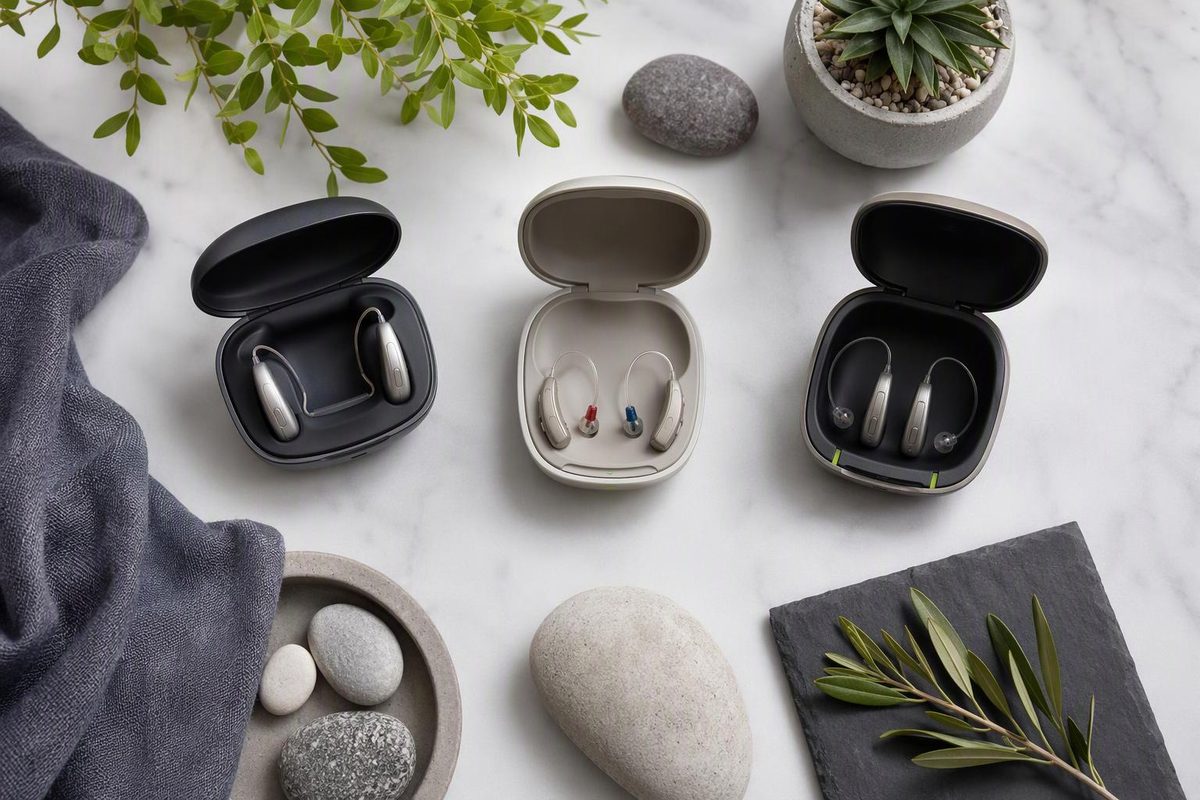
Widex Moment Sheer, Oticon Intent and the Phonak Audéo Infinio (Ultra) Sphere family are useful options to discuss with an audiologist if you have tinnitus and hearing loss. Their built-in sound options differ: changing chime-like tones, ocean-like sounds, or adjustable noise.
These are feature-based recommendations, not a hands-on ranking or proof that one brand provides better tinnitus relief. The first priority is a hearing aid that improves your hearing comfortably; a tinnitus program is an optional tool, not a cure.
Who should consider hearing aids for tinnitus?
Hearing aids amplify everyday sounds, which can make tinnitus less noticeable while improving communication. The 2024 VA/DoD tinnitus guideline suggests hearing aids for adults with tinnitus and hearing loss, but rates the supporting evidence as low quality. Benefit is possible, not guaranteed.
A dedicated sound generator is not necessarily better than amplification alone. The same guideline discusses a systematic review that found no significant difference in tinnitus functional impact between hearing aids with the sound generator activated and hearing aids alone. Prioritize a comfortable, verified fitting rather than collecting branded tinnitus features.
Before shopping: seek immediate medical care for a sudden hearing drop, including one noticed on waking; NIDCD treats sudden hearing loss as a medical emergency. Severe vertigo or neurological symptoms also call for emergency assessment under the VA/DoD guideline. Ringing only in one ear, unequal hearing, ear pain or drainage, and significant dizziness warrant medical evaluation before choosing a device, according to FDA hearing-aid guidance. A sound that follows your heartbeat also needs evaluation rather than masking alone; NIDCD explains how doctors assess it.
Three prescription options worth comparing
The following comparison uses manufacturer-listed features as of October 2026, not comparative tinnitus-treatment results.
Widex Moment Sheer: consider it if steady noise feels distracting
Widex Moment Sheer includes SoundRelax, a palette of fractal sounds. “Fractal” here means sounds generated by an algorithm: they change while maintaining a familiar pattern rather than repeating a fixed recording. Widex’s Moment Sheer page confirms the feature, and its SoundRelax guide describes nature-inspired, chime-like tones alongside broadband-noise options.
This is worth a demonstration if white noise irritates you or you prefer a less uniform background sound. That preference does not establish better treatment effectiveness—it helps identify something you might comfortably use.
What to test: listen to several tones while having a conversation, not just in a silent fitting room. Ask whether the sound remains pleasant, whether speech stays clear, and how much control you have over the program and volume. Confirm the exact sound options in the model and technology level being quoted.
Oticon Intent: consider it for ocean-like relief sounds
Oticon Intent miniRITE offers optional Tinnitus SoundSupport. Its U.S. instructions for use describe it as a sound generator for temporary relief within a tinnitus-management program, fitted by a qualified hearing care professional. It can be activated in up to four programs. The manual also advises a medical evaluation by an ear physician before using a sound generator to identify any treatable cause of tinnitus.
Oticon’s U.S. tinnitus feature guide describes steady noise and ocean-like relief sounds, with app adjustments available after professional activation on compatible hearing aids.
What to test: ask the audiologist to demonstrate amplification alone and a separate relief program. Check that you can switch between them easily. Also request your permitted volume range and any daily-use limit in writing: the Intent manual warns that sufficiently loud generator settings can damage hearing with prolonged use. More volume is not a better treatment.
Phonak Audéo Infinio (Ultra) Sphere family: consider it for adjustable noise
Phonak lists Tinnitus Balance in its Audéo Infinio (Ultra) Sphere feature comparison. Its professional fitting guide describes white noise, pink noise and noise shaped to the wearer’s audiogram—the chart of hearing-test results.
The clinician can place the generator within an automatic listening program or make it a separate manual program. They can also enable tinnitus-volume control in the myPhonak app.
What to test: compare the available noises at a comfortable level. Ask for a demonstration of the app’s tinnitus control, which needs clinician activation. Confirm the exact model, technology level and app compatibility before buying; do not assume every device carrying the Infinio name has identical controls.
Can an OTC hearing aid be enough?
Possibly, if your hearing needs fit the category. In the U.S., OTC hearing aids are intended for adults 18 and older with perceived mild-to-moderate hearing loss. They are not a tinnitus-only treatment category.
Because amplification alone can help some people, a dedicated tinnitus generator is not a prerequisite. Compare sound quality, physical comfort, adjustment support and return terms—not just whether the box mentions tinnitus. Our OTC hearing-aid comparison covers that buying route separately.
If your hearing test is normal, do not assume you need amplification simply because you hear ringing. The VA/DoD guideline notes that its hearing-aid evidence did not establish benefit in normal-hearing populations. Discuss other approaches, including sound for tinnitus relief, with your clinician.
What to ask for before paying
Use the trial to answer two separate questions: Am I hearing better? Is tinnitus interfering less with my life?
- Verified amplification. Ask for real-ear measurements—a tiny microphone tube measures the hearing aid’s output inside your ear. The VA/DoD guideline identifies this as the standard method for objectively verifying appropriate amplification.
- A comparison with the generator off. Find out whether hearing better is enough before committing to an added relief sound.
- A baseline and follow-up measure. Ask about the Tinnitus Functional Index or Tinnitus Handicap Inventory, questionnaires the guideline recommends for monitoring treatment effectiveness.
- Written costs and return terms. Request the total price for the devices, fitting, follow-up visits, charger and service. Confirm the return deadline and any nonrefundable fees before purchase.
If hearing improves but tinnitus remains distressing, the next step need not be a more expensive hearing aid. The VA/DoD guideline also suggests provider-delivered cognitive behavioral therapy for bothersome tinnitus. Our tinnitus-focused CBT guide explains how it can reduce the condition’s impact without promising to silence the sound.