
Yes, a Sinus Infection Can Cause an Ear Infection
Inflammation or mucus can block the Eustachian tube and trap fluid behind the eardrum. Because pressure signs overlap, an ear exam may be needed.
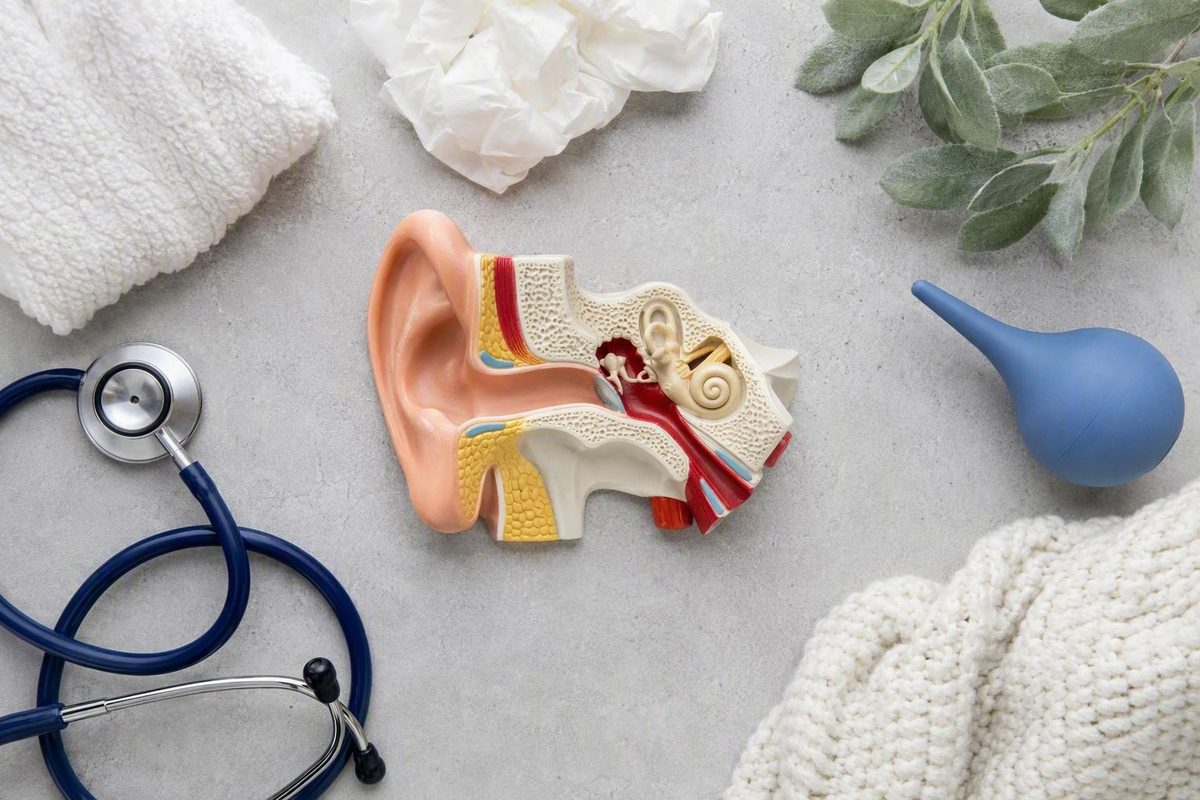
Yes. A sinus infection can contribute to a middle-ear infection when inflammation or mucus blocks the Eustachian tube, reduces drainage, and allows fluid to collect behind the eardrum. However, fullness, popping, pressure, and mild muffled hearing during a sinus illness often result from blockage or noninfected fluid—not an active infection. A clinician generally needs to examine the eardrum to tell the difference.
The short answer: sinusitis can set the stage for a middle-ear infection
The relevant ear infection is acute otitis media—an infection of the middle ear, the space behind the eardrum. It is different from swimmer’s ear, which affects the outer ear canal, and from conditions involving the inner ear.
The connection usually involves blockage and trapped fluid rather than infection moving directly from a sinus cavity into the ear:
- Sinus or upper-airway inflammation causes swelling around the Eustachian tube.
- The Eustachian tube—the passage that ventilates and drains the middle ear—narrows or becomes blocked.
- Fluid accumulates behind the eardrum.
- Bacteria or viruses may then infect the middle-ear space.
Colds and sinus infections are among the conditions that can swell or block the Eustachian tubes, according to MedlinePlus guidance on acute ear infections. Sinusitis can therefore set the stage for acute otitis media, but it does not make an ear infection inevitable.
A bacterial sinus infection is not required for ear pressure or fluid to develop. Viruses cause most sinus infections, and the resulting inflammation can obstruct drainage. Antibiotics do not treat viral sinusitis; a healthcare professional determines whether they are appropriate based on the diagnosis and clinical course, according to the CDC’s sinus-infection guidance.
Sinus pressure, trapped fluid, or an ear infection?
Symptoms overlap among sinusitis, Eustachian-tube blockage, middle-ear fluid, and acute otitis media. Their location and severity can help determine what to do next, but symptoms alone cannot confirm the cause.
| Possible problem | Common pattern | What it means |
|---|---|---|
| Sinusitis | Nasal congestion or runny nose, postnasal drip, facial pain or pressure, headache, cough, or sore throat | Symptoms are centered mainly in the nose, face, and throat, although congestion can affect the ears. |
| Eustachian-tube blockage or noninfected middle-ear fluid | Ear fullness, pressure, popping or crackling, mild discomfort, or muffled hearing | These findings do not prove an infection. Blocked ventilation or fluid alone can cause them. |
| Possible acute otitis media | More substantial or worsening localized ear pain, fever, drainage, or pronounced hearing difficulty | These symptoms raise concern and justify an ear examination, but they do not confirm infection by themselves. |
The CDC distinguishes acute otitis media from otitis media with effusion. Otitis media with effusion means fluid has collected in the middle ear without an active infection. Acute otitis media involves infection and inflammation as well as fluid behind the eardrum.
For example, congestion with mild popping and muffled hearing may reflect blocked drainage. Increasing one-sided ear pain, fever, drainage, or a notable decline in hearing is more concerning and warrants an examination.
Sinusitis commonly causes a stuffy or runny nose, facial pressure, headache, postnasal drip, sore throat, and cough. These symptoms can occur alongside ear pressure, so having both nasal and ear symptoms does not establish that two separate infections are present.
Why fluid can temporarily muffle hearing
Sound normally vibrates the eardrum and the three small bones of the middle ear. When pressure is abnormal or fluid sits behind the eardrum, those structures cannot move as freely. This can produce conductive hearing difficulty, meaning that sound is mechanically obstructed before reaching the inner ear.
Voices and other sounds may seem distant, muted, or as though they are coming through water. This can occur while the Eustachian tube is blocked, even if the middle-ear fluid is not infected.
Fluid can also remain after an acute ear infection has resolved, so muffled hearing may outlast the worst pain or fever. NIDCD provides a residual-fluid estimate for children, but the supplied evidence does not establish a fixed recovery timeline for adults.
Middle-ear fluid is one possible cause of conductive hearing loss, but hearing changes can also arise from problems involving the ear canal, eardrum, middle ear, or inner ear. MedlinePlus identifies fluid remaining after an infection as a possible cause in its overview of hearing loss.
Mild muffling that fluctuates with congestion is different from sudden, marked, painful, or persistent hearing loss. Seek urgent medical assessment for sudden, unexplained, or rapidly worsening hearing loss rather than waiting for congestion to clear.
Why children are more susceptible than adults
Both children and adults can develop middle-ear infections after upper-airway inflammation, although children are affected more often. Children’s Eustachian tubes are smaller and more level than adults’, which makes fluid drainage harder and blockage more likely.
Young children may not be able to describe pressure, muffled hearing, or pain. Possible signs include:
- Pulling or tugging at an ear
- Unusual fussiness or crying
- Difficulty sleeping
- Fever
- Fluid draining from the ear
- Balance problems or clumsiness
- Reduced response to quiet sounds
These anatomical differences and possible childhood signs are described in the NIDCD guide to ear infections in children. Ear pulling by itself does not prove an infection; a child may touch an ear for several reasons, so the overall symptom pattern and an examination matter.
Much of the published guidance on observation periods and antibiotic decisions concerns children. Pediatric timelines should not be transferred unchanged to adults. Adults with new or worsening symptoms need recommendations based on their own examination, symptom severity, medical history, and clinical course.
How a clinician tells pressure from infection
Ear pain, pressure, fullness, and muffled hearing cannot confirm acute otitis media on their own. A clinician considers when symptoms began, whether they are improving or worsening, whether fever or drainage is present, and how the ear symptoms relate to the sinus or respiratory illness.
The central step is an examination with an otoscope. The clinician examines the ear canal and eardrum for findings such as inflammation, bulging, visible fluid, drainage, or a perforation. MedlinePlus describes these findings as part of the evaluation for an acute ear infection.
If middle-ear fluid is suspected, the clinician may use:
- Pneumatic otoscopy, which applies a small change in air pressure to assess how well the eardrum moves
- Tympanometry, which measures how the eardrum responds to pressure changes
- Hearing testing, when the hearing change is meaningful, persistent, or otherwise concerning
Distinguishing acute otitis media from noninfected fluid matters because the conditions do not necessarily require the same management. Some middle-ear infections improve without antibiotics, while others may require treatment. Decisions depend on the eardrum examination, age, severity, likely cause, and symptom course—not simply on congestion, pressure, or ear pain.
When to arrange care—and when to seek it promptly
There is no single waiting period that fits every sinus-related ear symptom. Use the severity and direction of the symptoms to choose the next step.
Monitor mild symptoms that are improving
Mild fullness, popping, or muffling that follows nasal congestion and improves as the congestion clears may reflect temporary Eustachian-tube blockage. Monitor whether hearing and comfort are returning rather than assuming an ear infection is present.
Arrange a medical evaluation
Contact a healthcare professional for:
- Persistent or worsening ear symptoms
- Substantial or increasingly localized ear pain
- Fever with ear symptoms
- Fluid, pus, or blood draining from the ear
- Meaningful or ongoing hearing difficulty
- Repeated episodes involving both sinus and ear symptoms
- Sinus symptoms that worsen after initially improving
- Sinus symptoms lasting more than 10 days without improvement
Worsening after initial improvement and symptoms lasting more than 10 days without improvement are among the CDC’s reasons to seek medical care for a possible sinus infection. An ear examination may be appropriate sooner when pain, drainage, or hearing changes are prominent.
Seek urgent medical assessment
Seek urgent care rather than waiting for routine congestion to clear if you develop:
- Sudden, unexplained, marked, or rapidly worsening hearing loss
- Severe ear pain
- High fever
- Significant dizziness or balance difficulty
- Swelling around or behind the ear
- Severe headache
- Rapid worsening or worsening despite treatment
MedlinePlus identifies severe pain, high fever, dizziness, severe headache, swelling around or behind the ear, and worsening despite treatment as reasons for urgent contact in its acute ear-infection guidance. Its hearing-loss guidance also supports prompt assessment of sudden severe hearing loss.
Sudden yellow or green drainage after severe ear pain can indicate that the eardrum has ruptured. Even if the pressure or pain decreases afterward, the ear should still be evaluated; improvement in pressure does not establish that the underlying problem has resolved.
A sinus infection can cause a middle-ear problem by blocking the Eustachian tube and trapping fluid, but pressure and muffled hearing do not show whether that fluid is infected. This article provides general health information and cannot determine whether an individual has sinusitis, Eustachian-tube dysfunction, fluid without infection, or acute otitis media.