
Ears Ringing After Concert: What to Do and When to Get Help
If your ears are ringing after a concert, the first priority is to prevent another significant noise exposure—not to force the ringing to stop.
The short answer: what to do after you leave the concert
If your ears are ringing after a concert, the first priority is to prevent another significant noise exposure—not to force the ringing to stop.
For tonight and the next few days:
- Leave the loud environment and avoid additional hazardous sound. Pause concerts, clubs, fireworks, amplified rehearsals, power tools, and other loud activities while symptoms are present.
- Give headphones and earbuds a break. Do not turn up music, podcasts, or white noise to drown out the ringing.
- Use ordinary sound normally when it remains comfortable. Quiet conversation and routine household sound at comfortable levels are not the same as another high-volume event. Complete silence has not been established as necessary.
- Add gentle background sound if it helps. A quiet fan, soft nature sounds, or low-level ambient audio may make ringing less prominent at bedtime. Keep it clearly comfortable.
- Rest and follow the overall pattern. Notice whether the ringing, muffled hearing, fullness, pain, or balance symptoms are improving, remaining stable, or getting worse.
Low-level background sound can change how noticeable tinnitus feels, but it does not repair an auditory injury. The goal is comfort rather than aggressive masking. Audiologist-authored guidance similarly distinguishes avoiding excessive noise from avoiding all sound and suggests soft background audio when silence makes tinnitus more intrusive (Sound Relief Hearing Center’s tinnitus guidance).
Do not rely only on home measures if you experience a sudden or substantial hearing change. Prompt professional attention is advised when tinnitus begins with sudden hearing change, even if the concert appears to provide an obvious explanation (guidance from Sound Relief Hearing Center).
Other warning signs include severe dizziness or spinning vertigo, significant ear pain, or discharge or blood from the ear. These symptoms warrant medical assessment rather than continued experimentation with home remedies (Miracle-Ear’s overview of symptoms after loud-noise exposure).
Also seek medical guidance after a recent blow to the head or ear, or if the sound is synchronized with your heartbeat. Pulse-like internal sound can be associated with bodily or blood-flow sources rather than ordinary noise-triggered tinnitus and should be evaluated (American Tinnitus Association guidance on newly perceived internal sounds).
Medical-information note: This article offers general education and cannot determine whether your symptoms reflect a temporary hearing shift, lasting damage, or another condition. It cannot replace an ear examination or hearing evaluation. Much of the concert-specific evidence available here comes from commercial hearing-care publications rather than clinical guidelines, so estimates and care timelines should be treated cautiously. See the site’s terms and content limitations.
Why loud music can leave ringing, buzzing, or muffled hearing
Tinnitus is the perception of sound without a corresponding external sound. People may describe it as ringing, buzzing, humming, roaring, hissing, thumping, or static. After a loud concert, it may occur with muffled hearing, difficulty understanding speech, pressure, or a plugged-ear sensation.
Inside the cochlea are sensory hair cells involved in converting sound vibrations into electrical signals that the brain can interpret. Loud sound can stress or injure parts of this auditory system. Changes in the input reaching the brain, together with compensatory activity in auditory pathways, are proposed explanations for why a phantom sound may emerge after noise exposure.
These explanations describe plausible mechanisms; they do not diagnose what happened in an individual ear.
A temporary threshold shift means hearing sensitivity changes after noise exposure and subsequently improves. Speech may sound dull, music may lack detail, or the ears may feel blocked. A permanent threshold shift is lasting noise-related hearing loss. Tinnitus may accompany either pattern, and a person cannot reliably distinguish them at home from the ringing alone (American Hearing’s explanation of temporary and permanent threshold shifts).
Several practical conclusions follow:
- Loud or distressing ringing does not automatically prove extensive permanent damage.
- Mild ringing does not prove that no hearing change occurred.
- Ringing that fades does not establish that the exposure was harmless.
- The duration of tinnitus alone cannot identify the structures involved.
- Muffled hearing that improves is encouraging, but improvement cannot retrospectively measure the exposure’s effects.
The timing may make concert noise the most plausible trigger, but tinnitus has other possible contributors. Earwax, infection, medication effects, head injury, jaw-joint disorders, age-related hearing change, and other health conditions may produce or aggravate internal sounds. An examination may therefore consider the ear canal, recent illness or injury, medications, and other possible contributors rather than automatically assigning every symptom to the concert (Medical News Today’s medically reviewed discussion of post-concert tinnitus).
An atypical pattern makes that broader assessment more important. Examples include symptoms that persist in only one ear, pulse in time with the heartbeat, occur with discharge or substantial pain, or accompany significant balance trouble. These patterns do not necessarily indicate a serious condition, but they should not be dismissed solely because they appeared after loud music.
How long post-concert ringing may last
Many reported post-concert episodes improve within several hours or roughly one or two days. Some sources describe symptoms lasting a few days or longer after a more intense exposure or several loud events close together. One hearing clinic, for example, gives a typical range from a few hours to 48 hours while advising assessment when symptoms linger or worsen (NYC Hearing’s post-concert ringing guide).
That range is not a guarantee or diagnostic cutoff. Passing the 48-hour mark does not prove that tinnitus is permanent, and improvement within that period does not prove that no auditory effect occurred. The supplied sources give differing timelines—from the next day to several days or longer—and do not support declaring tinnitus irreversible after an arbitrary number of days or weeks.
Duration may vary with:
- The intensity of the sound at your location
- The length of the exposure
- Your proximity to speakers or amplifiers
- Whether you took breaks in substantially quieter areas
- Whether you had other recent loud exposures
- Previous hearing problems or tinnitus
- Individual sensitivity
Venue-wide estimates have limits. Sound exposure can differ between the front rail, a balcony, a position beside a speaker array, and a quieter rear section. Exposure may also change throughout a performance. Another person’s overnight recovery does not predict your course.
A more useful approach is to follow the trajectory.
More reassuring signs include:
- Ringing is becoming softer or less frequent.
- Hearing clarity is returning.
- Fullness is easing.
- No new pain, discharge, dizziness, or marked hearing loss appears.
More concerning patterns include:
- Symptoms show no trend toward improvement.
- Ringing becomes louder, constant, or increasingly intrusive.
- Muffled hearing or fullness persists.
- Symptoms repeatedly return after loud events.
- One ear remains affected.
- Hearing or balance changes accompany the ringing.
One unusually intense exposure can cause lasting tinnitus or hearing loss, and repeated exposure may have cumulative consequences even when each individual episode appears to resolve. Longer or repeated exposure, speaker proximity, previous hearing problems, and individual sensitivity may all affect the pattern (Amplifon’s guide to ringing after a concert).
The appropriate interpretation is therefore neither “it faded, so nothing happened” nor “it crossed a particular deadline, so it is permanent.” Improvement is reassuring. Even so, post-concert ringing is useful feedback that the combination of volume, duration, position, breaks, and protection was excessive for your ears.
A symptom-based guide to getting medical or hearing care
Advice about exactly how long to wait varies across the supplied sources. A safer decision framework considers the hearing change, associated symptoms, direction of progression, recurrence, and whether one or both ears are affected.
Seek prompt medical assessment for warning signs
Do not wait for a predetermined number of days if you experience:
- Sudden or substantial hearing loss
- Severe dizziness or spinning vertigo
- Significant ear pain
- Fluid, pus, or blood coming from the ear
- Recent head or ear trauma
- A sound synchronized with your heartbeat
A sudden hearing change remains important when it starts immediately after a loud concert. The apparent cause should not override the symptom. Guidance from hearing-care sources advises prompt attention when tinnitus accompanies sudden hearing change and identifies pain, vertigo, discharge, and other hearing symptoms as reasons for professional assessment.
Pulse-synchronous sound requires particular care because not every internally heard sound is ordinary tinnitus. Some internal sounds can arise from processes within the body, including blood-flow-related conditions, and should be medically evaluated (American Tinnitus Association guidance).
The appropriate care setting depends on the severity, timing, accompanying symptoms, and services available locally. This article cannot establish a universal emergency, urgent-care, or routine-care pathway. If you are uncertain where to go, contact a medical service promptly and describe the hearing change and associated symptoms, not only “ringing.”
Useful wording might be:
“My hearing changed suddenly after loud-noise exposure, and I also have muffled hearing and vertigo.”
That description communicates more than asking whether post-concert ringing is normal.
Arrange an evaluation when symptoms do not improve
Contact a doctor or audiologist if ringing, muffled hearing, or fullness:
- Does not begin to improve over the next few days
- Becomes worse or constant
- Keeps returning after concerts or other loud activities
- Remains limited to one ear
- Interferes substantially with sleep, concentration, or daily life
- Occurs with persistent difficulty understanding speech
Commercial hearing-care sources recommend professional assessment for post-concert tinnitus that persists, worsens, repeatedly returns, remains one-sided, or occurs with dizziness, discharge, pulsation, or fluctuating hearing (Bay Audiology’s post-concert tinnitus guidance).
One-sided ringing can follow uneven exposure—for example, if one ear faced a nearby speaker. That is a possible explanation, not a diagnosis. If unilateral symptoms persist, do not keep attributing them to your position in the venue without an evaluation.
Who does what?
An audiologist can measure hearing, assess tinnitus and sound tolerance, discuss hearing protection, and document whether measurable changes are present.
A physician can examine the ear and investigate medical contributors such as infection, injury, medication effects, or other conditions. Findings from either evaluation may lead to additional assessment.
Testing can identify a hearing change even when ordinary conversation seems normal. Conversely, tinnitus can occur when standard hearing-test results are normal, so a normal test does not necessarily explain every symptom or exclude every possible auditory change.
When arranging an appointment, provide concrete details:
- When the concert ended
- When the ringing or hearing change began
- Which ear is affected
- Whether hearing seems reduced, muffled, or distorted
- Whether speech has become harder to understand
- Whether you have fullness, pain, discharge, dizziness, or pulsation
- Whether symptoms are improving, stable, or worsening
- Whether there was recent additional noise exposure, illness, medication change, or injury
That information helps a clinician assess the pattern more effectively than duration alone.
What may help—and what has not been shown to heal the ear
Post-concert advice is easier to evaluate when separated into four purposes:
- Preventing another exposure
- Making the tinnitus less noticeable
- Reducing distress
- Obtaining diagnostic information
A measure that helps with one purpose should not be promoted as accomplishing all four.
Prevent another significant exposure
Avoid another concert, loud club, fireworks display, amplified rehearsal, power-tool session, or high-volume listening period while symptoms are active. Avoiding additional hazardous sound is the most consistent immediate recommendation across the supplied evidence.
This step reduces avoidable additional exposure. It does not guarantee a particular recovery time or outcome.
Do not treat paper, tissue, cotton, or another improvised material as equivalent to purpose-designed hearing protection. One consumer-health source mentions paper napkins only as an emergency way to muffle sound, not as a substitute for properly fitted earplugs (Medical News Today’s review of post-concert measures).
Make the ringing less noticeable
A quiet fan, nature recording, air purifier, soft music, or low-level white noise may reduce the contrast between tinnitus and the room. This can be particularly useful at bedtime, when the surrounding environment becomes quieter and the ringing attracts more attention.
Keep background audio comfortable and unobtrusive. It does not have to erase the tinnitus completely. Turning it up until it competes aggressively with the ringing creates unnecessary exposure and works against the immediate goal of avoiding more loud sound.
Masking changes awareness; it does not repair hair cells, establish that the auditory system is recovering, or predict whether symptoms will last.
Complete silence is not required. If silence feels comfortable, there is no need to add sound. If silence makes the ringing intrusive, gentle background audio is a reasonable comfort measure.
Reduce distress
Normal sleep, attention diversion, breathing exercises, meditation, gentle yoga, and other relaxation practices may make the experience easier to tolerate. Stress can draw attention toward tinnitus, so reducing distress may make the sound feel less dominant.
These are coping tools, not treatments for noise-related injury. A calmer response or better night’s sleep is valuable even when it does not alter the underlying auditory condition.
Be cautious with food, drinks, and supplements
Normal hydration is reasonable for general well-being, but the supplied evidence does not establish that drinking extra water accelerates auditory recovery.
The same caution applies to avoiding caffeine, alcohol, sodium, or particular foods. Some people report that an individual trigger changes how noticeable tinnitus feels, but that observation is different from evidence that dietary restriction repairs noise-related injury or reliably shortens recovery.
Do not treat ginkgo or other supplements as proven therapies for acute post-concert tinnitus. “Natural” does not establish effectiveness, safety, or suitability for an individual. The supplied evidence likewise does not show that anti-inflammatory foods repair concert-related auditory injury.
Online skull-tapping or finger-drumming techniques may produce no change or a brief subjective change for some people. Any reported effect is variable and temporary; it is not evidence that the ear has healed. Avoid forceful tapping, striking the head, or using such a maneuver as a reason to delay assessment of warning signs.
Obtain diagnostic information when needed
A hearing check will not necessarily make the ringing disappear, but it serves a different purpose. It may identify measurable hearing changes, establish a baseline, and help determine whether medical assessment is appropriate.
If symptoms persist, repeatedly return, remain one-sided, or include a hearing change, diagnostic information is more useful than extending the list of home remedies.
Headphones, ordinary sound, and the next few days
During the initial symptomatic period, pause nonessential headphone and earbud listening.
If audio is necessary for a call, navigation, work, or background sound, keep it clearly low and comfortable. Do not increase the level until it overwhelms the tinnitus. Whether the source is an earbud, headphone, television, or room speaker, the relevant principle is the same: avoid another excessive exposure.
Ordinary sound is not the same as hazardous sound
You generally do not need to withdraw from normal life. Comfortable conversation, quiet television, and routine household sounds at low levels are different from another high-volume event.
However, the label “household sound” does not itself guarantee safety. Machinery, appliances, tools, or amplified audio can still become excessive depending on intensity, proximity, and duration.
Examples of environments that may create significant additional exposure include:
- Another concert or nightclub
- Fireworks
- Power tools
- Loud machinery
- Amplified rehearsals
- High-volume headphones or earbuds
Use hearing protection when the environment is genuinely loud. Do not wear earplugs continuously in safe, comfortable everyday settings merely because tinnitus is present. Audiologist-authored guidance cautions against routine overprotection in normal environments while still recommending protection around excessive noise.
That distinction does not justify entering a hazardous environment without protection. The practical choice is not “earplugs always” versus “earplugs never.” It is appropriate protection for genuinely loud sound while continuing normal, comfortable sound exposure in ordinary settings.
If voices, dishes, running water, or traffic suddenly feel painfully loud or intolerable, mention that when seeking care. Reduced sound tolerance can accompany tinnitus and may need individualized assessment.
Keep a simple symptom log
A brief daily note can help you identify the overall direction without repeatedly checking the sound.
| What to track | Example entry |
|---|---|
| Ear | Left, right, or both |
| Ringing | Softer, unchanged, or louder |
| Hearing clarity | Speech clear or muffled |
| Fullness | None, mild, or increasing |
| Balance | Normal, unsteady, or spinning |
| Pain or discharge | Absent or present |
| Overall direction | Improving, stable, or worsening |
The purpose is to identify a trend and preserve useful details for a clinician. Constant monitoring can make the sound more attention-grabbing without clarifying whether an auditory change is temporary or lasting.
Change your plans if another loud event is scheduled before symptoms resolve. A ticket, work shift, rehearsal, or social commitment is not evidence that your ears are ready for another exposure. If ringing or muffled hearing remains active—or if the original episode included a meaningful hearing change—postpone the event or obtain professional advice first.
How to protect your hearing at the next concert
Recurring post-concert ringing is not an unavoidable admission price for live music. Treat it as a personal warning that the previous combination of volume, duration, position, breaks, and protection was excessive for your auditory system.
Put hearing protection in place before the loud set begins. Waiting until ringing, pain, or muffling starts means the exposure has already begun.
Choose an earplug you will fit and wear consistently
Common options include:
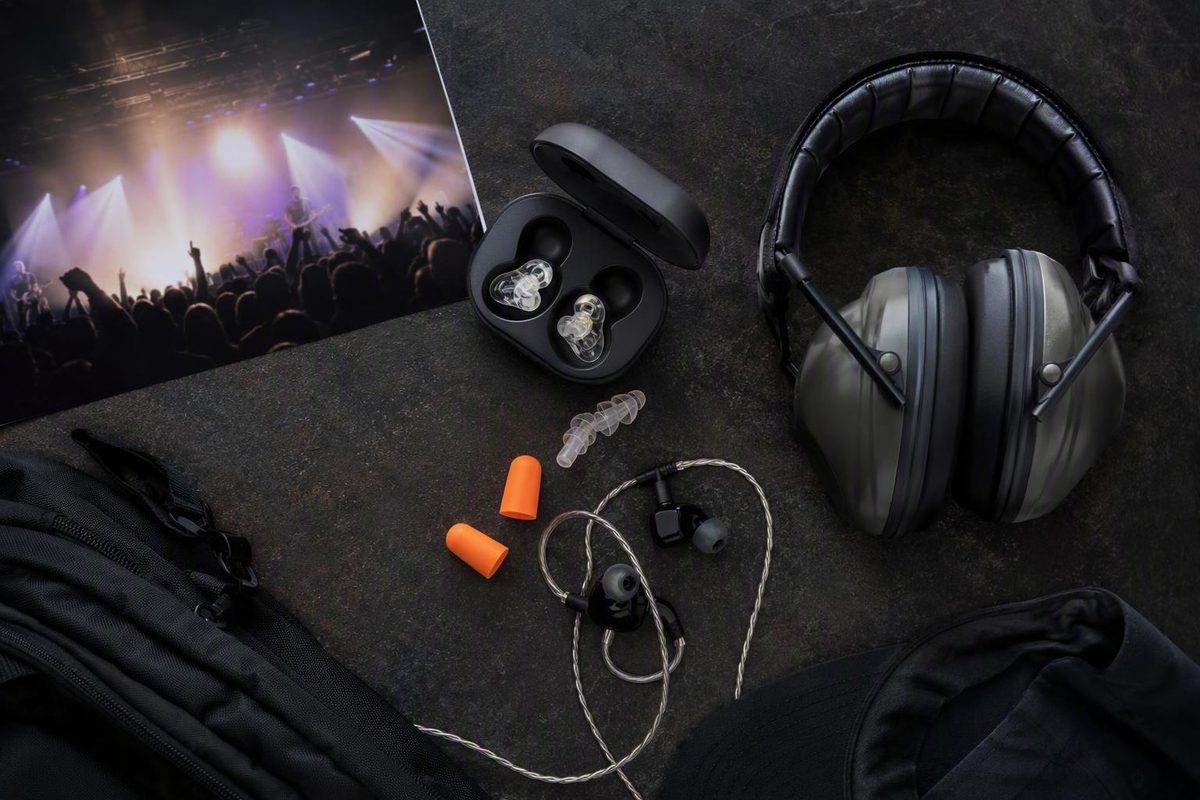
- Foam earplugs: Widely available and inexpensive. Their effectiveness depends heavily on suitable sizing and proper insertion.
- Filtered musician earplugs: Designed to reduce the overall sound level while retaining a more balanced listening experience than basic plugs may provide.
- Custom-fitted earplugs: Made for an individual ear and potentially useful for frequent concertgoers, performers, production staff, or venue workers.
No style guarantees a particular degree of protection for every wearer.
Filtered and custom-fitted options are commonly recommended for regular concert attendance, along with greater distance from speakers and breaks in quieter areas (NYC Hearing’s prevention guidance).
If an earplug will not remain comfortably in place or the fit seems markedly different between ears, seek fitting guidance or consider a different size or design. Custom options may be worth discussing with an audiologist if loud events are a frequent part of your work or recreation.
Reduce exposure beyond earplugs
Earplugs are one layer of protection, not permission to remain in the loudest position indefinitely. Also:
- Move away from speaker stacks and amplifiers.
- Take periodic breaks in a substantially quieter area.
- Keep protection in during loud opening acts and amplified music between sets.
- Space out loud events when symptoms recur.
- Leave if sound becomes painful or hearing changes abruptly.
There is no universal distance from a speaker that guarantees safety. Venue acoustics, speaker configuration, exposure duration, and position all matter. Moving farther away and taking quiet breaks remain practical steps without attaching unsupported percentages or fixed-distance rules to them.
Frequent concertgoers, musicians, production staff, and venue workers may benefit from a baseline hearing evaluation. A baseline provides a reference for future comparison and an opportunity to discuss protection before recurrent symptoms become the only warning used.
Reusable concert checklist:
- Bring suitable earplugs.
- Insert them before the loud set begins.
- Make sure they fit comfortably and remain in place.
- Avoid speaker stacks and amplifiers.
- Take breaks in quieter areas.
- Keep protection in consistently.
- Leave if sound becomes painful or hearing changes abruptly.
The long-term goal is not to stop enjoying live music. It is to prevent ringing and muffled hearing from becoming a routine aftermath.
Frequently asked questions
Does ringing after a concert mean I have permanent hearing damage?
Not necessarily. Ringing may accompany a temporary hearing change that improves, but it can also occur with lasting noise-related effects. Its presence, pitch, loudness, or duration alone cannot determine permanence.
Improvement over hours or days is reassuring. Even so, one unusually intense exposure or repeated loud exposures can cause lasting tinnitus or hearing loss, so a resolved episode should still be treated as evidence that the exposure was excessive (Miracle-Ear’s overview of temporary and permanent post-concert effects).
Seek prompt assessment for sudden or substantial hearing loss. Arrange an evaluation if symptoms fail to improve, worsen, recur, or remain one-sided.
Should I sleep in complete silence or use white noise?
Complete silence is not required. If a quiet room makes the ringing intrusive, try a fan, gentle nature sounds, or low-level white noise. Keep the sound comfortable rather than making it loud enough to cover the tinnitus completely.
Background sound may reduce contrast and redirect attention, particularly during sleep, but it does not repair a noise-related injury. If you prefer silence and can sleep comfortably, there is no need to add sound.
What if only one ear is ringing after I stood near a speaker?
Uneven speaker exposure could help explain why one ear is more affected, but it should not automatically be assumed to be the only cause. Follow whether the symptom is improving and whether that ear also has muffled hearing, fullness, pain, or distortion.
Persistent one-sided tinnitus is among the patterns for which hearing-care guidance recommends professional advice. Seek more prompt care if it occurs with sudden hearing change, severe vertigo, discharge, trauma, or pulse-synchronous sound (Bay Audiology’s guidance on one-sided and associated symptoms).
Can a hearing test find a problem if my hearing seems normal?
Yes. A hearing evaluation may identify changes that are not obvious during routine conversation, and it can establish a baseline for comparison.
Tinnitus may also occur when standard hearing-test results are normal. A normal result therefore does not necessarily exclude every possible auditory change or explain every symptom. An audiologist can interpret the findings in the context of the exposure and symptoms, while a physician can assess possible medical contributors.
Is it safe to attend another concert if the ringing has stopped?
Stopping is reassuring, but it does not show that the previous exposure was harmless or that repeating the same setup is safe. Recurrent temporary episodes can signal repeated excessive exposure and possible cumulative consequences.
At the next event, use suitable earplugs from the beginning, move away from speaker stacks, and take breaks in quieter areas. If episodes keep recurring, space out loud events and consider a baseline hearing evaluation rather than continuing the same pattern.
Your next steps
Protect your ears from another hazardous exposure and watch for an overall trend toward improvement. Fading ringing and returning hearing clarity are reassuring, but they still indicate that the concert exposure was excessive for your ears.
Do not let an assumed concert cause override warning signs. Sudden or substantial hearing change, severe vertigo, significant pain, discharge, trauma, or pulse-synchronous sound supports prompt medical assessment. Ringing, muffled hearing, or fullness that persists, worsens, repeatedly returns, or remains one-sided justifies evaluation by a doctor or audiologist.
For future events, use appropriate earplugs before the loud set begins, move away from speaker stacks, take quieter breaks, and lower your threshold for arranging a hearing check when the pattern repeats.