
Hearing Aid for Unilateral Hearing Loss: Which Option Fits?
Compare a conventional hearing aid, CROS, BiCROS and implant options for hearing loss in one ear, with fitting checks to request before buying.
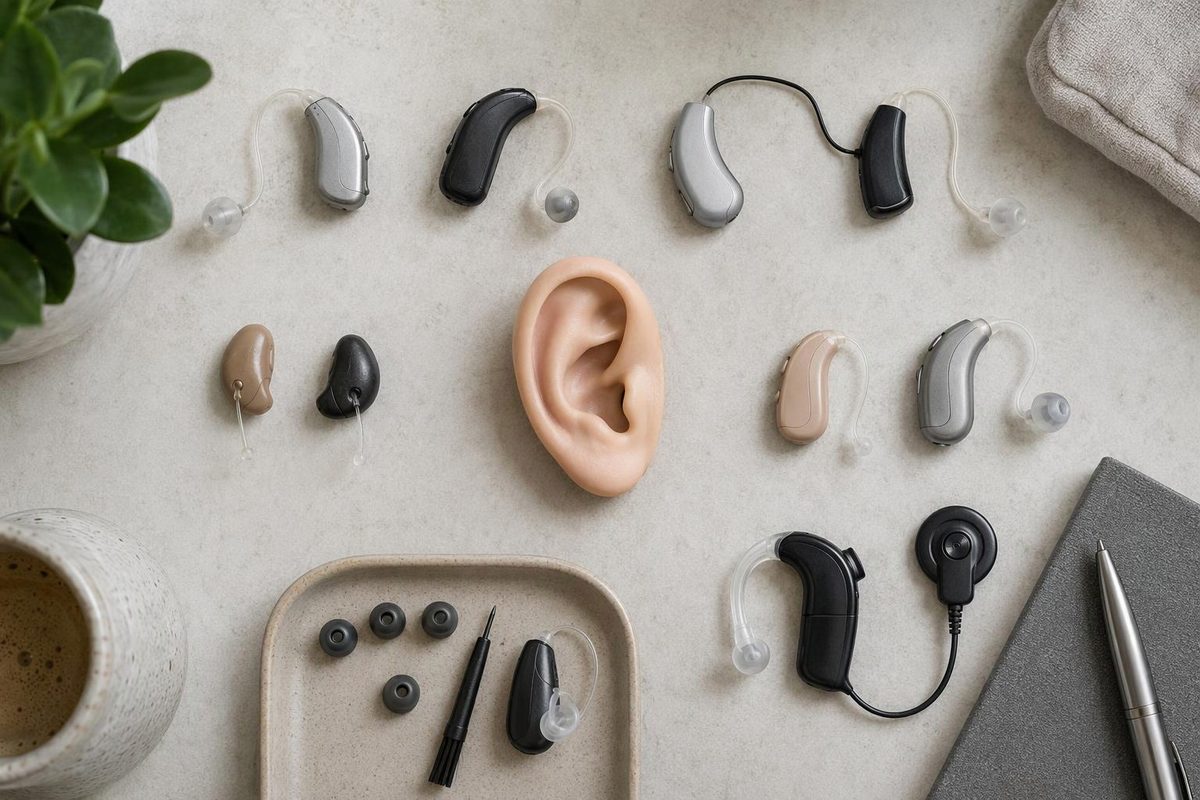
The right hearing aid for unilateral hearing loss depends first on whether the affected ear can benefit from amplification. If it can, a conventional hearing aid on that ear may help. If it cannot, a CROS system routes sound from that side to the better-hearing ear. BiCROS adds amplification when the better ear also has hearing loss.
Unilateral hearing loss means hearing loss in one ear, ranging from mild to profound. Single-sided deafness is the form in which the affected ear has no usable hearing. Those are different fitting problems—not reasons to buy the same device. The American Academy of Audiology explains this distinction and the treatment options.
This guide focuses on adult device choices after assessment.
Get the one-sided change assessed before shopping
If hearing dropped suddenly—all at once, overnight or over a few days—seek medical care immediately, today. Do not wait for a hearing-aid appointment or assume it is wax. The NIDCD calls sudden deafness a medical emergency, because delaying diagnosis and treatment can reduce treatment effectiveness.
For gradual or longstanding one-sided loss that has not been evaluated, arrange a comprehensive audiology assessment and medical review. The FDA lists worse hearing in one ear as a reason to see a doctor, preferably an ENT. An OTC hearing aid is therefore not a sensible substitute for investigating an unexplained difference between ears.
Match the device to what each ear can use
| Hearing situation | Option to discuss | What it does |
|---|---|---|
| The affected ear can benefit from amplified sound | Conventional hearing aid on that ear | Delivers amplified sound to the affected ear |
| The affected ear cannot benefit from a conventional aid; the other ear hears normally | CROS system | Sends sound from the affected side to the hearing ear |
| One ear is unaidable; the better ear also needs amplification | BiCROS system | Routes sound across and amplifies it for the better ear |
| Single-sided deafness, with limited benefit from routing or goals routing cannot meet | Bone-conduction trial and/or cochlear implant evaluation | Compares another routing method with a device that stimulates the affected ear’s auditory pathway |
These pathways are described in Academy guidance and a clinical review of CROS and BiCROS. If testing finds hearing loss in both ears, the decision is about asymmetric hearing loss rather than strictly unilateral loss.
When a conventional hearing aid is appropriate
“Aidable” means that amplification can provide useful benefit—not simply that the ear detects some sound. Ask the audiologist whether a conventional aid improves access to conversation and whether that benefit holds up in the situations that trouble you.
Do not skip directly to CROS just because one ear is worse. The Academy supports amplification on the affected ear when appropriate, with potential improvements in conversation access, sound balance and awareness.
For a conventional aid, request real-ear measurement: a small probe tube placed in your ear connects to a microphone to measure the sound delivered and check it against fitting targets. Programming software alone does not establish that the output is appropriate. A review of hearing-aid verification explains why this check matters; our hearing-aid fitting guide covers what else to request.
When CROS or BiCROS makes more sense
CROS stands for contralateral routing of signal. A microphone worn on the unaidable side transmits sound to a receiver worn on the better-hearing ear. You usually wear two devices, even though only one ear processes the sound. BiCROS uses the same routing principle but also amplifies sound for the better ear.
The practical benefit is access to a speaker on your poorer side. Your head otherwise acts as a barrier that weakens some sounds before they reach the hearing ear.
The limitation is equally important: CROS and BiCROS do not restore two-ear hearing or normal sound localization—the ability to identify where a sound comes from. They can also make speech harder to understand when noise on the transmitter side is routed into the better ear. These benefits and trade-offs are documented in the CROS clinical review.
When to compare bone conduction or a cochlear implant
For single-sided deafness, a bone-conduction device sends sound through skull vibration to the better-hearing inner ear. It remains a routing solution rather than restoring hearing in the deaf ear. The Academy recommends a nonsurgical trial before bone-anchored surgery. See our bone-conduction hearing-aid guide for that pathway.
A cochlear implant is different: it stimulates the affected ear’s auditory pathway. It can improve speech perception in noise and sound localization in suitable candidates. The AAO-HNS position statement, updated May 2026, endorses cochlear implantation for adult unilateral or asymmetric sensory hearing loss. That does not mean every patient qualifies; specialist assessment considers factors including hearing history and inner-ear anatomy.
Make the trial answer your actual problem
Before paying, identify two or three listening goals—such as hearing a colleague on your poorer side or following a restaurant conversation. Then ask for:
- Comparisons with and without the device, including speech in noise with speech and noise coming from different sides.
- The right fitting checks. For CROS, verify transmission from the poorer side and that the receiver does not unnecessarily block natural hearing in the better ear. For BiCROS, also verify amplification against that ear’s targets.
- Instructions for difficult noise situations, including whether and how to reduce or mute the transmitter.
- Written trial and return terms, including deadlines, nonrefundable fees and included follow-up visits.
The CROS review supports spatial speech-in-noise testing and routing verification. A remote microphone is also worth discussing when your main difficulty is a particular speaker at a distance or in noise, an option included in Academy guidance.
The useful buying question is not “Which brand is best for one-ear loss?” It is “Should this device amplify my affected ear or send sound to my better ear—and can the trial demonstrate useful benefit?”