
Can Allergies Affect Your Ears? Symptoms, Relief, and Red Flags
Yes. Nasal and seasonal allergies can affect your ears, usually indirectly by inflaming tissue around the Eustachian tubes. These narrow passages regulate…
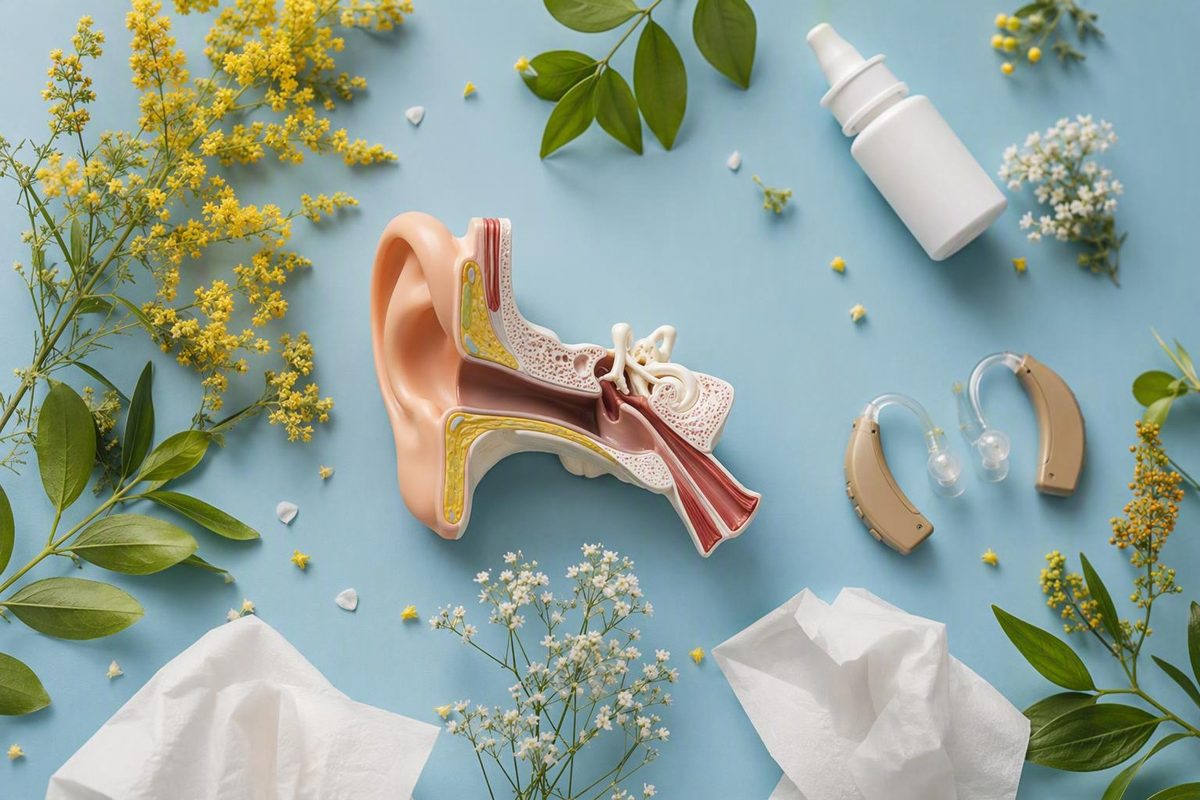
The short answer: allergies can affect your middle ears
Yes. Nasal and seasonal allergies can affect your ears, usually indirectly by inflaming tissue around the Eustachian tubes. These narrow passages regulate pressure and drain fluid from the middle ear. When inflammation interferes with those functions, you may experience:
- Pressure or fullness
- A clogged or “underwater” sensation
- Popping or crackling
- Mild aching or discomfort
- Temporarily muffled or distant-sounding hearing
This pattern is often called Eustachian-tube dysfunction. Nasal congestion caused by allergies can partially or completely block the Eustachian tubes, producing pain, pressure, and muffled sensations, according to Cleveland Clinic’s overview of allergies and ear pain.
These symptoms are compatible with allergies, but they do not prove that allergies are responsible. A cold, middle-ear infection, earwax blockage, altitude change, eardrum problem, and other hearing disorders can feel remarkably similar. Sudden or substantial hearing loss is especially important not to dismiss as ordinary congestion.
The sections below explain why allergies affect ear pressure, which symptoms fit the pattern, what may provide safe relief, how allergies differ from other possible causes, and when a “clogged” ear needs professional assessment.
How nasal allergies create pressure behind the eardrum
Each Eustachian tube connects a middle ear—the air-filled space behind the eardrum—to the back of the nose. The tubes have two essential jobs:
- Pressure regulation: They briefly open during swallowing and yawning, allowing middle-ear pressure to adjust.
- Drainage: They carry mucus and other fluid away from the middle ear.
When a Eustachian tube becomes blocked, trapped air is absorbed and negative pressure develops in the middle ear. That pressure can pull the eardrum inward, causing pain, pressure, or reduced hearing clarity. Continued blockage may allow fluid to collect behind the eardrum, as explained in Stanford Medicine’s guide to Eustachian-tube dysfunction.
The allergy-to-ear-pressure sequence typically looks like this:
- You encounter an allergen. Pollen, dust mites, mold, and pet dander are commonly cited environmental triggers.
- Your immune system reacts. Tissue inside the nose becomes inflamed and may produce more mucus.
- The Eustachian-tube opening narrows. Because this opening sits at the back of the nose, nearby swelling can interfere with it.
- Pressure equalization becomes less effective. The tube may not open normally when you swallow or yawn.
- Drainage slows. Fluid and mucus may remain in the middle ear instead of draining efficiently.
- The ear feels blocked or sounds become muffled. An inward-pulled eardrum, poor middle-ear ventilation, or retained fluid can interfere with hearing clarity.
If blockage continues, noninfected fluid may accumulate behind the eardrum. This is sometimes called serous otitis media or otitis media with effusion. Fluid alone does not establish that you have an ear infection; bacteria or viruses would have to contaminate the retained fluid for an infection to develop. An examination is needed to confirm whether fluid is present and assess whether it appears infected.
Not everyone exposed to pollen, mold, dust mites, or pets develops ear symptoms. An allergy-related mechanism is more plausible when ear pressure fluctuates alongside congestion, sneezing, a runny nose, or other familiar nasal-allergy symptoms.
Ear symptoms that may accompany allergies
Possible allergy-associated ear symptoms include:
- Ear fullness or pressure
- A clogged, plugged, or underwater feeling
- Popping or crackling
- Mild, intermittent aching
- Itching
- Temporarily muffled hearing
- Voices or environmental sounds seeming distant
- Ringing or buzzing
- Mild disequilibrium or a vague off-balance sensation
Symptoms can affect one ear or both. They may fluctuate as congestion and allergen exposure change, although symptoms occurring on only one side do not identify the cause. Pressure, fullness, pain, popping, crackling, and temporary hearing changes can accompany allergy-related inflammation around the Eustachian tubes, according to St. Joseph’s Health.
An allergy-related explanation becomes more plausible when ear symptoms:
- Begin during a known allergy season
- Follow exposure to a familiar trigger
- Worsen on high-exposure days
- Rise and fall with nasal congestion
- Occur with sneezing, a runny nose, itchy eyes, sinus pressure, or post-nasal drip
Timing is a clue, not a diagnosis. A viral cold can occur during allergy season, and earwax or another ear condition can worsen coincidentally while your allergies are active.
What about tinnitus?
Tinnitus is ringing, buzzing, humming, or another sound heard without an external source. Pressure changes or middle-ear fluid may coincide with tinnitus, but tinnitus has many possible causes and should not automatically be blamed on allergies.
Persistent, recurring, or significant tinnitus deserves professional assessment, particularly when it accompanies reduced hearing. Formal hearing and middle-ear testing may be needed when symptoms do not resolve or the cause remains unclear.
What about dizziness?
Dizziness and imbalance are less specific than pressure or popping. Congestion may coincide with a vague off-balance feeling, but pronounced spinning, persistent imbalance, difficulty walking, or dizziness accompanied by a sudden hearing change requires more caution.
When congestion truly is responsible, hearing changes are often temporary. That is not a guarantee, however. Hearing that remains reduced after congestion clears—or that declines suddenly or substantially—needs professional evaluation. Allergy and sinus-related ear symptoms may include muffling, ringing, dizziness, and imbalance, but persistent or sudden hearing changes should not be assumed to be routine congestion, notes the Capital Institute of Hearing & Balance.
Allergies, ear infection, earwax, or something else?
You cannot reliably distinguish middle-ear fluid, infection, earwax, eardrum abnormalities, and other hearing disorders by sensation alone. The surrounding pattern may help determine the next step, but an ear examination can be necessary.
| Possible cause | Likely pattern | Accompanying clues | Appropriate next step |
|---|---|---|---|
| Allergies | Fluctuating pressure, fullness, popping, itching, or muffling | Sneezing, congestion, runny nose, itchy eyes, known triggers, or seasonal exposure | Reduce relevant exposures and manage nasal allergies appropriately; seek an examination if symptoms persist, worsen, or significantly affect hearing |
| Possible middle-ear infection | Increasing or marked pain, pressure, or reduced hearing | Fever, ear drainage, feeling generally unwell, appetite change in a child, or symptoms not improving as expected | Arrange an examination; symptoms alone cannot confirm an infection |
| Viral cold or respiratory infection | Pressure or popping that develops with an acute illness | Sore throat, cough, congestion, fatigue, and symptoms that evolve over several days | Supportive care may be reasonable, but seek advice for severe, worsening, or persistent symptoms |
| Earwax blockage | Fullness or muffled hearing, sometimes developing gradually | Itching, tinnitus, odor, discomfort, or discharge | Do not insert swabs or other objects; ask a clinician or pharmacist about appropriate wax management |
| Altitude-related pressure | Symptoms begin during or after a rapid pressure change | Flying, mountain travel, a fast elevator ride, or diving | Swallowing or yawning may help; severe pain or hearing that does not recover warrants assessment |
| Sudden or substantial hearing loss | An abrupt hearing drop that may feel like a blocked ear | New tinnitus, dizziness, imbalance, or no obvious congestion | Seek prompt professional assessment; do not wait for allergy treatment to work |
| Another ear or hearing disorder | Persistent, recurrent, strongly one-sided, or unexplained symptoms | Significant tinnitus, balance problems, noise exposure, jaw symptoms, or progressive hearing difficulty | Arrange an ear and hearing evaluation |
A cold and allergies can both inflame or obstruct the Eustachian tubes, so congestion-related pressure is not unique to allergies. Earwax can also produce fullness, muffled hearing, itching, tinnitus, odor, discomfort, or discharge. Do not put cotton swabs, hairpins, or other objects into the ear canal in an attempt to remove wax, as advised in this guidance on common causes of ear pressure.
The most important exception is sudden or substantial hearing loss. A rapid hearing drop can be interpreted as “just blockage,” particularly if it happens during allergy season. The clogged sensation does not establish that allergies are responsible, so do not delay assessment while waiting to see whether an allergy medicine works.
What may relieve allergy-related ear pressure safely
Relief should focus primarily on reducing nasal inflammation and relevant allergen exposure rather than cleaning or manipulating the ear.
Reduce exposure to relevant allergens
If you know or strongly suspect your triggers, limiting avoidable exposure may reduce the nasal inflammation contributing to ear symptoms. Practical measures should be tailored to the relevant trigger, such as monitoring pollen conditions or addressing meaningful exposure to pollen, dust mites, mold, or pet dander.
Broad avoidance efforts can become expensive and burdensome. If symptoms recur and the trigger remains uncertain, an allergy assessment may be more useful than attempting to eliminate every possible environmental allergen.
Consider saline nasal rinsing
It is a non-drug option aimed at nasal congestion, not a treatment placed in the ear.
Follow the product or device instructions, including its directions for preparation, cleaning, and use. Stop and seek professional advice if rinsing causes significant pain or noticeably worsens your ear symptoms.
Understand nasal corticosteroid sprays
Intranasal corticosteroids reduce inflammation in the nose and around the Eustachian-tube openings. They act gradually rather than providing immediate relief and may require several days or longer of consistent use to reach their full benefit. Correct, regular use matters, so consult a pharmacist or clinician if you are unsure about technique or whether a product is appropriate for you.
These medicines are different from topical nasal decongestant sprays. A corticosteroid spray is intended to control inflammation over time, while a topical decongestant temporarily shrinks swollen nasal tissue. The distinction matters because excessive use of topical decongestant sprays can cause rebound congestion. St. Joseph’s Health discusses the gradual action of nasal steroid sprays and the risk of rebound congestion from decongestant overuse in its allergy-related ear symptom guidance.
Use antihistamines for the allergy—not as a guaranteed ear-clearing treatment
Antihistamines may reduce sneezing, itching, and a runny nose when allergies are driving the symptoms. Improving the nasal allergic reaction may indirectly help associated ear pressure.
They do not reliably or immediately clear middle-ear pressure in everyone. Follow the label and seek individualized advice from a clinician or pharmacist when needed.
Treat decongestants as short-term options
Oral or nasal decongestants may temporarily reduce congestion, but they are not suitable for everyone.
Check the label and consult a clinician or pharmacist if you have a medical condition, take other medicines, are pregnant, or are selecting a product for a child. Avoid using topical decongestant sprays longer than directed because overuse can cause rebound congestion.
Decongestants treat congestion temporarily; they do not resolve the underlying allergic tendency. Popping the ears likewise offers, at most, temporary pressure relief and does not treat the inflammation itself, as explained by Cleveland Clinic.
Avoid treatments aimed at the wrong part of the ear
- Antibiotics do not treat allergic inflammation. They should be used only when a clinician identifies an infection for which an antibiotic is appropriate.
- Outer-ear drops generally do not treat pressure arising behind an intact eardrum. Use them only for a condition for which they are appropriate.
- Cotton swabs, ear-cleaning tools, and ear candles do not correct Eustachian-tube dysfunction and may injure the ear.
- Aggressive nose blowing may worsen pressure.
- Forceful ear popping may cause pain or injury and does not resolve the underlying inflammation.
Swallowing, sipping water, or yawning may gently encourage the tubes to open. If you try pressure equalization, keep it gentle and stop if it hurts. Do not attempt self-inflation during a cold or when nasal discharge is present because material may be pushed toward the middle ear, according to Stanford’s Eustachian-tube guidance.
If you have a history of significant ear disease or previous ear procedures, obtain individualized advice before attempting pressure-equalization techniques.
Can allergies lead to fluid or an ear infection?
Allergies are not bacterial or viral ear infections.
They can, however, contribute to a sequence that makes an infection possible:
- Nasal-allergy inflammation narrows the Eustachian tube.
- Middle-ear ventilation and drainage become less efficient.
- Fluid remains behind the eardrum.
- If bacteria or viruses contaminate the retained fluid, an infection may develop.
The distinction between fluid and infected fluid matters. Fluid behind the eardrum can cause pressure and reduced hearing without proving that an active infection is present. Conversely, symptoms alone cannot confirm whether retained fluid is infected.
Do not start leftover antibiotics or someone else’s medication based on a blocked sensation. Fever, ear drainage, escalating pain, or worsening hearing are reasons to arrange an examination. The connection is indirect: allergy-related swelling can encourage fluid accumulation, and that retained fluid may then provide conditions in which an infection develops, as explained by Riverside.
Why children may be affected more often
Children are particularly prone to Eustachian-tube blockage and middle-ear fluid because their tubes are narrower and run more horizontally than adults’ tubes. That anatomy makes ventilation and drainage less efficient.
Caregivers should arrange assessment when a child has notable ear pain, fever, drainage, reduced hearing, balance problems, or persistent symptoms. These signs do not establish the cause, but they justify an examination rather than an assumption that allergies are solely responsible.
When ear symptoms need medical attention
Most mild pressure associated with congestion is not an emergency. The difficulty is that some important hearing problems can also feel like a clogged ear.
Seek prompt medical assessment for:
- Sudden or substantial hearing loss
- Severe or rapidly worsening ear pain
- Fluid, pus, or blood draining from the ear
- Fever with significant ear symptoms
- Severe dizziness, spinning, or difficulty walking
- New neurological symptoms occurring with the ear or balance problem
Persistent, recurring, sudden, or significant hearing changes should be professionally evaluated rather than attributed to allergy congestion, according to guidance on allergy- and sinus-related hearing changes.
Arrange a non-emergency evaluation if symptoms:
- Remain after nasal congestion improves
- Keep returning
- Become progressively worse
- Materially interfere with conversations, work, school, sleep, or balance
- Are strongly one-sided or notably different from your usual allergy pattern
- Include persistent tinnitus
- Do not respond as expected to an appropriate allergy-management plan
There is no single number of days that works for every person or symptom. Severity, speed of onset, hearing impact, balance symptoms, medical history, and whether congestion has cleared are more useful than a rigid deadline.
A clinician can look for wax, canal inflammation, eardrum changes, middle-ear fluid, and infection. If the ear examination does not explain the problem—or if hearing has changed—middle-ear and hearing tests may help identify what symptoms alone cannot.
Who to see and what an evaluation may involve
The right starting point depends on your symptoms and which services are available.
Primary care is a reasonable starting point when the cause is uncertain. A primary-care clinician can examine the ear, review allergy and respiratory symptoms, check your treatment plan, and decide whether specialist testing is needed.
An ENT, or otolaryngologist, may be appropriate for persistent or recurrent pressure, suspected middle-ear fluid, substantial pain, drainage, eardrum concerns, repeated infections, or symptoms affecting ear function. An ENT can evaluate both the nasal source of Eustachian-tube problems and the ear itself.
An audiologist or hearing specialist can help when hearing remains reduced, tinnitus persists, or formal hearing testing is needed. Testing may assess hearing at different pitches and how sound travels through the outer, middle, and inner ear.
An allergist may be useful when symptoms repeatedly follow particular exposures, seasonal control remains poor, the trigger is unclear, or a longer-term allergy-management strategy is needed.
Depending on the presentation, an evaluation may include:
- Looking into the ear canal and examining the eardrum
- Checking for wax, inflammation, perforation, eardrum retraction, fluid, or signs of infection
- Measuring middle-ear pressure and eardrum movement
- Testing hearing
- Reviewing nasal congestion, sneezing, itching, runny nose, and exposure patterns
- Reviewing medicines, medical conditions, and previous ear procedures
- Considering allergy testing when the symptom history supports it
Persistent or worsening symptoms that affect hearing or balance warrant professional evaluation, and an ENT may assess ear function or consider allergy testing when appropriate, according to this overview of ear pressure during allergy season.
The symptom pattern can guide where to start, but it cannot replace an examination or individualized medication advice.
Frequently asked questions about allergies and ears
Can allergies cause fluid behind the eardrum without an ear infection?
Yes. If allergy-related swelling obstructs the Eustachian tube, fluid can remain behind the eardrum even when no active infection is present. That fluid may cause pressure, popping, or muffled hearing.
An examination is needed to confirm fluid and assess whether infection is present. Fever, drainage, escalating pain, or worsening hearing should prompt medical assessment rather than an assumption that the fluid is harmless.
Can allergies cause permanent hearing loss?
Allergy-related congestion and middle-ear fluid more often cause temporary difficulty hearing clearly because they interfere with sound transmission.
Do not assume that every hearing change is temporary. Persistent, progressive, sudden, or substantial hearing loss may have another cause and should be professionally assessed. Hearing that does not return to its previous level after congestion improves also warrants testing.
Can allergies worsen tinnitus or cause dizziness?
Pressure changes or middle-ear fluid may occur alongside ringing, buzzing, dizziness, or imbalance. These symptoms are nonspecific, however, and have many possible causes.
Arrange assessment when tinnitus persists or accompanies reduced hearing. Pronounced spinning, ongoing imbalance, difficulty walking, or dizziness with a sudden hearing change needs prompt attention.
Is it safe to pop my ears when allergies make them feel blocked?
Gentle swallowing, yawning, or sipping water is a cautious first step. Gentle pressure equalization may offer temporary relief, but it does not treat nasal inflammation.
Never force the maneuver or continue if it causes pain. Avoid self-inflation during an acute respiratory illness or when nasal discharge is present unless a clinician has advised otherwise.
How long should clogged ears from allergies last before I seek care?
There is no universal cutoff. Mild pressure may improve as nasal inflammation settles, but the appropriate timing depends on severity and whether hearing or balance is affected.
Seek prompt assessment for a sudden or substantial hearing drop, severe or rapidly worsening pain, drainage, fever, severe dizziness, or neurological symptoms. Otherwise, arrange evaluation if the blockage persists after congestion improves, keeps recurring, worsens, or meaningfully interferes with hearing or balance.
Allergies can make ears feel clogged, pressured, popping, or muffled when nasal inflammation disrupts Eustachian-tube function. Controlling the underlying allergy may help, but ear sensations alone cannot establish the cause. Avoid forceful popping, aggressive cleaning, and medicines that may be inappropriate for you—and obtain prompt care for sudden hearing loss or other warning signs.