
Why Do My Ears Crack When I Swallow? Causes
Swallowing briefly opens the Eustachian tubes to equalize pressure; lingering fullness, pain, dizziness or hearing changes may signal a problem.
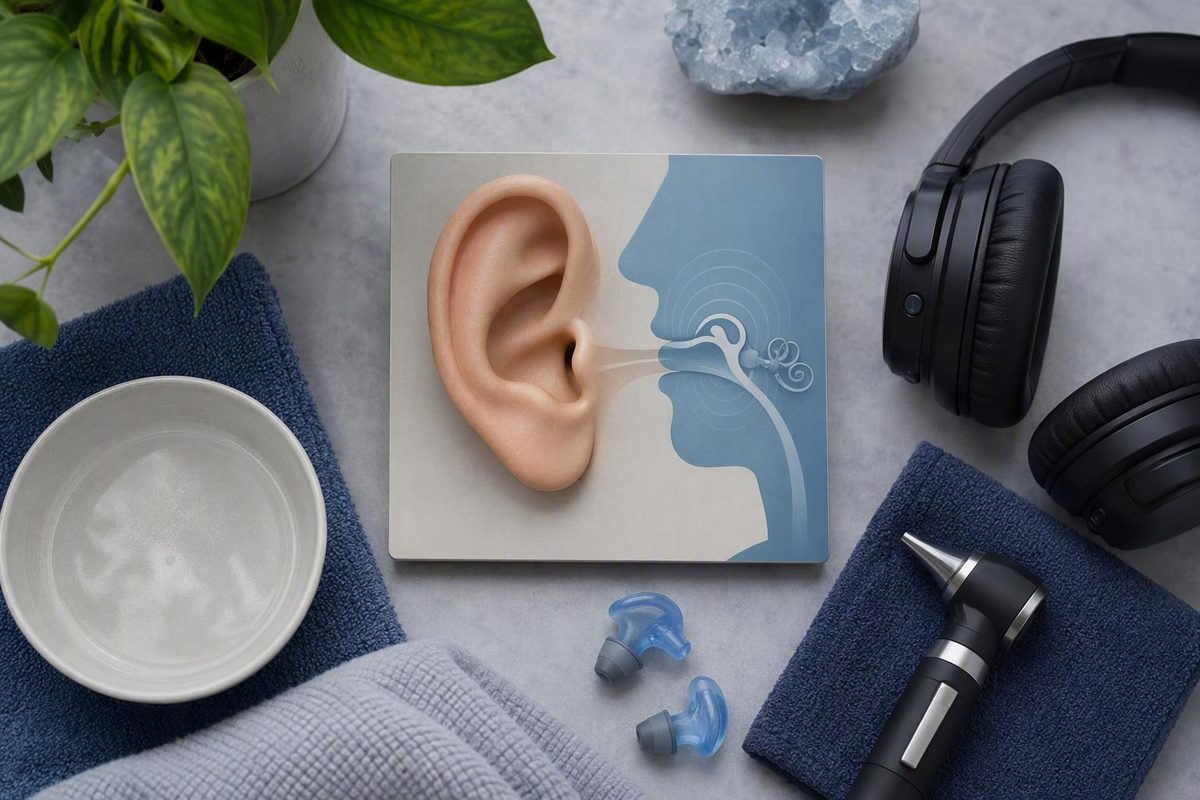
If you are wondering, “Why do my ears crack when I swallow?” a common explanation is that swallowing activates muscles that briefly open the Eustachian tubes. Air moves through these passages, pressure on the two sides of each eardrum becomes more even, and you may hear a short crack, click, or pop.
That sound is often part of normal pressure regulation. What matters more is what happens between swallows. Persistent blockage, pressure, muffled hearing, pain, dizziness, drainage, or progressive symptoms—especially in one ear—make an examination more appropriate.
The sound alone cannot identify the cause. Normal pressure equalization, congestion, Eustachian tube dysfunction, middle-ear fluid, infection, earwax, and jaw-joint movement can produce similar sensations.
This article provides general health information and cannot diagnose the cause of an individual ear symptom.
The short answer: swallowing briefly opens your Eustachian tubes
Each middle ear contains an air-filled space behind the eardrum. A narrow passage called the Eustachian tube connects that space with the back of the nose and upper throat. It helps balance middle-ear pressure and drain fluid.
Most of the time, the Eustachian tubes are not held wide open. Swallowing activates nearby muscles and briefly pulls them open. The sequence is simple:
- You swallow.
- Muscles around a Eustachian tube contract.
- The tube opens briefly.
- Air moves between the throat area and middle ear.
- Pressure across the eardrum becomes more equal.
- You may hear or feel a small crack, click, or pop.
Yawning and chewing use much of the same mechanism. That is why people often notice their ears popping while chewing gum during a flight or yawning during an altitude change. ENT Sheffield describes swallowing, yawning, and chewing as actions that briefly open the Eustachian tubes and allow pressure to equalize.
It does not necessarily mean that anything has broken or become damaged.
Nor does the exact word used to describe it identify the cause. People may call essentially the same sensation:
- A crack
- A click
- A pop
- A fizz
- A bubble bursting
- A soft rustle
- A sticky opening sensation
A brief swallowing-triggered sound often reflects ordinary tube movement. Similar noises can also occur when a tube is swollen, pressure is not balancing effectively, fluid is moving behind the eardrum, wax is shifting in the ear canal, or the jaw joint is moving near the ear. The accompanying symptoms are more informative than the sound’s label.
When the sound is likely normal—and when it may signal a problem
A brief crack is commonly part of normal pressure regulation when it:
- Happens during swallowing, yawning, or chewing
- Stops immediately
- Is painless
- Does not leave the ear feeling full or blocked
- Does not affect hearing
- Is not associated with dizziness or balance trouble
- Is not becoming more intrusive
An article cannot determine whether that is true in an individual case.
The key distinction is not simply occasional versus frequent. It is whether pressure appears to equalize and whether symptoms remain afterward:
- Likely normal equalization: A small pop occurs, the ear otherwise feels normal, and hearing is unchanged.
- Possible pressure dysfunction: Swallowing produces repeated pops, but the ear remains plugged, pressured, uncomfortable, or muffled.
- A pattern worth assessing: The symptom is new or worsening, repeatedly affects one ear, or occurs with pain, tinnitus, dizziness, fullness, or hearing change.
Eustachian tube dysfunction is an umbrella term for problems with how a tube opens or closes. In obstructive dysfunction, the tube does not open adequately. Fullness, pressure, discomfort, and muffled hearing are more suggestive than a swallowing sound by itself. Persistent or symptomatic crackling deserves more attention than a brief, isolated pop, according to this audiology overview of recurring ear crackling.
Each ear has its own Eustachian tube, and congestion, fluid, earwax, anatomy, or jaw movement may affect the two sides differently. A repeatedly one-sided pattern is more important when it persists, progresses, or comes with one-sided hearing change, tinnitus, pain, dizziness, or drainage.
There is no dependable universal number of days after which all ear cracking becomes abnormal. The supplied health sources use inconsistent timelines, so a rigid cutoff is less useful than the overall pattern. Consider persistence relative to your usual health, whether symptoms are worsening, whether they remain one-sided, and whether hearing or balance has changed.
Why colds, allergies, sinus congestion, and altitude make cracking louder
The Eustachian tubes open into an area behind the nose. During a cold, allergy flare, or sinus problem, inflammation, swelling, or mucus near that area can interfere with normal tube opening and middle-ear drainage.
You may then notice:
- More frequent popping with swallowing
- A blocked or underwater sensation
- Pressure that improves briefly and then returns
- Muffled or fluctuating hearing
- A delayed or sticky opening sensation
- Bubbling or wet crackling
Fluid may remain behind the eardrum after an upper respiratory illness. Movement of that fluid or nearby structures can sound more like fizzing or bubbles than a clean pop. Congestion, middle-ear fluid, and impaired pressure equalization are plausible when crackling occurs with fullness or muffled hearing, but none can be confirmed from the sound alone. Amplifon’s overview describes congestion, allergies, minor infections, altitude changes, and middle-ear fluid as possible contributors to popping or bubbling sounds.
Altitude creates a related problem: outside pressure changes faster than the middle ear can adjust. This can happen during:
- Airplane ascent or descent
- Diving
- Driving through mountains
- Other rapid elevation changes
- Sometimes a fast elevator ride
The Eustachian tubes must open to bring middle-ear pressure closer to the surrounding pressure. If they open effectively, you may notice a distinct but harmless pop. If congestion makes opening difficult, pressure, discomfort, muffled hearing, or repeated incomplete pops may occur. Flying, diving, and mountain travel are established settings in which pressure equalization becomes more noticeable or difficult, as explained in this ENT Memphis guide to pressure-related ear popping.
Timing can help narrow the possibilities:
- After a cold: Swollen tissues or residual middle-ear fluid may be involved.
- During an allergy flare: Nasal inflammation may be interfering with tube opening.
- After a flight or mountain trip: The ears may have struggled to equalize a rapid pressure change.
- During or after a dive: Substantial pain, hearing change, dizziness, bleeding, or continued blockage requires medical attention.
These circumstances provide clues, not diagnoses. A cold does not prove Eustachian tube dysfunction, and a recent flight does not rule out wax, infection, or another hearing problem. The evidence also does not establish one timeline in which every post-illness or post-flight symptom should resolve.
A symptom-based guide to the possible causes
Several conditions can create similar noises. Compare the timing and accompanying symptoms rather than trying to diagnose the cause from whether it sounds like a crack, pop, fizz, or bubble.
| Possible explanation | Supporting clues | Conflicting or cautionary clues | Appropriate next step |
|---|---|---|---|
| Normal pressure equalization | One brief sound tied closely to swallowing, yawning, or chewing; no lasting fullness, pain, dizziness, or hearing change | Persistent symptoms between swallows suggest more than an ordinary opening sound | Usually observe; use gentle natural actions if a pressure change makes the sound noticeable |
| Obstructive Eustachian tube dysfunction | Repeated popping with continuing fullness, pressure, discomfort, or muffled hearing; may follow congestion, illness, allergies, a flight, or a dive | A swallowing sound alone does not establish dysfunction | Arrange assessment if symptoms persist, worsen, or affect hearing or comfort |
| Patulous Eustachian tube dysfunction | Your own voice, breathing, or other internally generated sounds seem unusually loud | This is an abnormally open tube, so it should not automatically be treated as nasal blockage | Seek evaluation to distinguish it from obstructive dysfunction |
| Middle-ear fluid | Bubbling or wet crackling, fullness, pressure, or muffled hearing after a cold or infection | Pain, fever, drainage, or worsening illness raises greater concern for infection | Arrange an ear examination, especially if hearing is affected |
| Middle-ear infection | Ear pain or pressure, fever, reduced hearing, headache, illness, or drainage along with crackling | Crackling without these symptoms does not establish infection | Seek prompt assessment; treatment depends on examination findings |
| Impacted earwax | Canal fullness, itching, muffled hearing, or crackling that changes with jaw movement | Wax is in the outer ear canal; it does not block the Eustachian tube | Have the canal examined and do not probe the ear |
| TMJ or jaw involvement | Jaw clicking, soreness near the ear, headaches, stiffness, pain with chewing, or difficulty opening the mouth | A sound limited to swallowing without jaw symptoms may fit pressure equalization better | Discuss persistent jaw symptoms with a dentist or clinician |
| Tinnitus | A sound is perceived without an external source and may occur independently of swallowing | Ongoing tinnitus is not interchangeable with one mechanical crack at the instant of swallowing | Arrange a hearing assessment if it is new, persistent, one-sided, or associated with hearing change |
| Middle-ear muscle spasm | Repetitive clicking or fluttering independent of swallowing | Less consistent with one brief pop each time the tube opens | Seek evaluation if the sound is repetitive, intrusive, or accompanied by other ear symptoms |
The infection, wax, TMJ, and muscle-spasm patterns in the table are among the possible causes described in WebMD’s medically reviewed overview of ear crackling. These possibilities overlap, so the table is a guide to clues rather than a diagnostic tool.
Obstructive versus patulous tube dysfunction
Obstructive and patulous dysfunction can both be described casually as “Eustachian tube trouble,” but they involve opposite mechanics.
With obstructive dysfunction, the tube does not open adequately. Pressure may remain unequal, fluid may not drain normally, and the ear may stay full or muffled after swallowing. The important feature is not simply that the ear pops; it is that the pressure does not seem to settle and other symptoms remain.
With patulous dysfunction, the tube remains abnormally open. A useful clue is autophony: your own voice, breathing, or other internal sounds seem unusually loud or echoing in the affected ear. Because the problem is excessive openness rather than blockage, it should not automatically be treated as congestion. Some decongestants or antihistamines may worsen patulous symptoms, and treatment depends on which type of dysfunction is present. Johns Hopkins Medicine distinguishes obstructive, patulous, and pressure-related Eustachian tube disorders.
Fluid and infection
Fluid behind the eardrum can shift and produce a bubbling or crackling sensation. It may follow a cold when swelling has interfered with drainage. Muffled hearing, pressure, and fullness make fluid more plausible, but only an examination can show whether fluid is present.
Pain, fever, drainage, reduced hearing, or a generally worsening illness raises concern for infection or another ear problem. The sound cannot reveal whether fluid is infected; a clinician needs to inspect the eardrum and consider the full symptom pattern.
Earwax
Earwax affects the outer ear canal, not the Eustachian tube behind the eardrum. Impacted wax can interfere with sound transmission and may make crackling, rustling, or muffled sounds more noticeable, sometimes when the jaw moves. Canal fullness or itching may also occur.
Wax therefore belongs on the list of possibilities, but it should not be described as blocking the Eustachian tube. A clinician can look directly into the canal and determine whether wax is relevant.
TMJ and nearby jaw movement
The temporomandibular joint, or TMJ, sits immediately in front of the ear. Movement or irritation in this joint may be perceived as an ear noise even when the ear itself is healthy.
TMJ involvement becomes more plausible when the sound occurs during chewing, wide mouth opening, or other jaw movement and is accompanied by jaw clicking, soreness, headache, stiffness, or difficulty chewing. A normal Eustachian-tube pop and jaw-related clicking can coexist, so an evaluation may need to consider both areas.
Tinnitus and muscle spasms
Tinnitus is the perception of sound without an external source. It may be described as ringing, buzzing, clicking, or crackling, but it is not automatically the same as a mechanical crack produced at the exact moment of swallowing.
Middle-ear muscle spasms are another possible explanation for repetitive clicking or fluttering.
What you can safely try at home
If the cracking is mild and there are no warning signs, begin with actions that use the ear’s normal opening mechanism:
- Swallow several times
- Yawn naturally
- Sip water
- Chew gum if it is safe and comfortable for you
- Move the jaw gently rather than forcefully
- Stay hydrated
- Consider nonmedicated nasal saline when nasal congestion is present
These measures encourage natural swallowing or address nasal congestion without requiring anything to be placed in the ear. Drinking water, swallowing, yawning, chewing, and nasal saline are among the conservative options described in this audiology guide to crackling ears.
Be gentle with pressure equalization
Some people try to equalize pressure by closing the mouth, pinching the nose, and blowing very gently. This is not necessary for everyone.
Do not repeatedly force an ear that remains stubbornly blocked or painful. Increasing the pressure is not a substitute for an examination when natural swallowing and yawning do not help.
Do not put objects in the ear
Do not insert any of the following into the ear canal:
- Cotton swabs
- Bobby pins
- Fingers
- Ear-cleaning tools
- Pen caps or similar objects
Objects can push wax farther into the canal or cause injury. The same applies when wax seems likely: do not assume that wax is the cause solely because the ear crackles. The canal should be examined when blockage, hearing change, pain, or drainage is present. Oracle Hearing Center specifically advises against putting cotton swabs, bobby pins, or other objects into the ear.
Do not begin self-irrigation merely because the ear sounds blocked. Similar symptoms may come from the middle ear, Eustachian tube, jaw, or hearing system rather than earwax.
Be cautious with medication
Decongestants, antihistamines, and medicated nasal sprays are not universal treatments for popping ears. Their usefulness depends on the cause, and they are not suitable for everyone. Some products intended to reduce congestion may also aggravate patulous Eustachian tube dysfunction, in which the tube is already too open.
Ask a clinician or pharmacist whether a medicine is appropriate for your health circumstances and other medications. Do not follow a universal drug regimen for an ear sound that has not been evaluated.
Home measures do not replace assessment when symptoms persist, worsen, repeatedly affect one ear, interfere with hearing, or occur with warning signs.
When to schedule care—and when hearing changes are urgent
Use the entire symptom pattern to decide what to do. An online explanation cannot inspect the eardrum, test hearing, or rule out infection, pressure injury, or another hearing disorder.
Likely low concern
Observation is generally reasonable when the sound is:
- Brief
- Painless
- Occasional or stable
- Limited to swallowing, yawning, chewing, or a minor pressure change
- Followed by an ear that feels normal
- Not associated with hearing or balance symptoms
Gentle swallowing, yawning, hydration, and monitoring may be enough.
Arrange a routine assessment
Book an appointment with a clinician, audiologist, or ENT professional when symptoms:
- Persist or keep returning
- Become more frequent or intrusive
- Repeatedly affect only one ear
- Recur after respiratory infections
- Leave continuing fullness or pressure
- Cause muffled or fluctuating hearing
- Occur with persistent tinnitus
- No longer behave like your usual harmless ear popping
You do not need to wait for a fixed number of days if hearing is affected or the pattern concerns you. Conversely, frequency by itself does not prove that disease is present when the sound is stable, painless, and unaccompanied by other symptoms.
Seek prompt care
Seek a timely examination for:
- Significant or increasing ear pain
- Fever
- Fluid or pus draining from the ear
- Bleeding
- Marked dizziness or vertigo
- New balance trouble
- Repeated ear infections
- Pain or hearing change after diving or another major pressure exposure
These features can occur with infection, eardrum injury, pressure injury, or another condition that requires direct assessment.
Seek urgent assessment
Sudden or rapidly worsening hearing loss requires urgent medical assessment, especially when it affects one ear or occurs with sudden fullness or one-sided tinnitus. An abrupt hearing change can initially feel as though the ear is clogged, pressurized, or simply needs to pop. Girgis ENT identifies sudden ear fullness, rapid hearing loss, and one-sided ringing as reasons for urgent ENT assessment.
Do not rely only on swallowing, decongestants, wax remedies, or pressure maneuvers when hearing has dropped suddenly. The central safety distinction is that a crack alone is often benign, but a rapid hearing change should not be watched casually.
What a clinician may check
The evaluation begins with the pattern rather than the sound’s name. A clinician may ask:
- When did the symptom start?
- Does it affect one ear or both?
- Does it happen only during swallowing?
- Did it follow a cold, allergy flare, infection, flight, dive, or altitude change?
- Is there pressure, fullness, pain, tinnitus, or muffled hearing?
- Is there dizziness or imbalance?
- Does your own voice or breathing sound unusually loud?
- Does jaw movement reproduce the sound?
- Has there been drainage, bleeding, or fever?
- Is there a history of ear surgery, ear tubes, recurrent infections, or hearing loss?
The clinician will commonly inspect the ear canal and eardrum. This can identify impacted wax, canal irritation, drainage, visible infection, fluid behind the eardrum, or another structural finding. It also helps prevent an outer-ear problem such as wax from being mistaken for Eustachian tube dysfunction.
Possible tests include:
- A hearing test: Measures whether hearing has changed and helps characterize the pattern.
- Tympanometry: Assesses how the eardrum and middle-ear pressure system respond.
- Additional Eustachian-tube assessment: May be considered when the symptom pattern strongly suggests a tube-opening problem.
- Observation during breathing or swallowing: May help when an abnormally open tube is suspected.
Diagnosis of Eustachian tube disorders may include middle-ear pressure measurement and observation of the eardrum during breathing or swallowing, according to Johns Hopkins Medicine.
Treatment depends on the cause. Earwax, middle-ear fluid, infection, obstructive dysfunction, patulous dysfunction, and TMJ-related symptoms do not share one treatment plan. Specialist procedures may be considered in selected cases, but they are not automatic next steps for persistent cracking.
Before an appointment, make a short note covering:
- Onset
- Triggers
- One ear or both
- Pain
- Fullness or pressure
- Hearing change
- Tinnitus
- Dizziness or balance trouble
- Drainage or bleeding
- Recent cold, allergy flare, or infection
- Recent flight, dive, or altitude travel
- Jaw clicking, soreness, headache, or chewing difficulty
Frequently asked questions
Can my ears crack with every swallow and still be normal?
Yes. A stable, painless crack with each swallow can still reflect ordinary Eustachian-tube opening, particularly if there is no lingering pressure, blocked feeling, hearing change, tinnitus, dizziness, or pain.
Frequency alone cannot determine the cause. Arrange an examination if the pattern is new, worsening, repeatedly one-sided, or accompanied by other symptoms.
Why does only one ear crack when I swallow?
Each ear has its own Eustachian tube, and the two sides do not always behave identically. One side may be more affected by temporary congestion, fluid, earwax in the canal, anatomical differences, or nearby jaw movement.
One-sided cracking is not automatically dangerous. It deserves assessment when it persists or progresses, particularly with one-sided hearing change, fullness, tinnitus, pain, dizziness, or drainage.
Can earwax or TMJ problems cause a swallowing-related crack?
Yes, although neither is the same as Eustachian-tube pressure equalization.
Earwax in the outer canal can cause muffled sound or crackling, sometimes as the jaw moves. It does not block the Eustachian tube itself. TMJ movement can produce clicking near the ear and becomes more plausible when there is jaw soreness, headache, stiffness, clicking, or difficulty chewing.
An ear and jaw examination can help.
Can repeated cracking damage my hearing?
The supplied evidence does not establish that the frequency of ordinary swallowing-related cracking itself causes hearing damage. More important is whether an underlying problem—such as infection, pressure injury, middle-ear fluid, or another hearing disorder—is present.
Do not repeatedly force the ears to pop. Stop pressure maneuvers if they cause pain, dizziness, or worsening pressure, and seek assessment for continuing blockage or hearing change.
What symptoms with ear cracking need urgent medical assessment?
Sudden hearing loss in one ear requires rapid medical assessment, even when it initially feels like pressure or an ear that needs to pop. This urgent distinction is also made in the medical-advice discussion accompanying This Morning’s segment on persistent ear popping.
Prompt care is also appropriate for significant pain, bleeding, drainage, fever, marked dizziness, balance trouble, or concerning symptoms after diving or another substantial pressure change.
The bottom line
A brief crack during swallowing is often the sound of normal pressure equalization, not proof of disease. Focus on what remains between swallows: continuing pressure, fullness, hearing change, pain, dizziness, drainage, or progressive one-sided symptoms.
Use gentle, low-risk measures and avoid placing objects in the ear. Arrange an assessment when the pattern persists, worsens, or affects hearing or balance.
If hearing becomes suddenly or rapidly worse—particularly in one ear or with sudden fullness or one-sided tinnitus—seek urgent medical assessment. Sudden hearing loss can resemble an ordinary blocked ear at first and should not be managed only with attempts to make the ear pop. Urgent ENT assessment is advised for rapid hearing loss or sudden fullness with one-sided ringing.